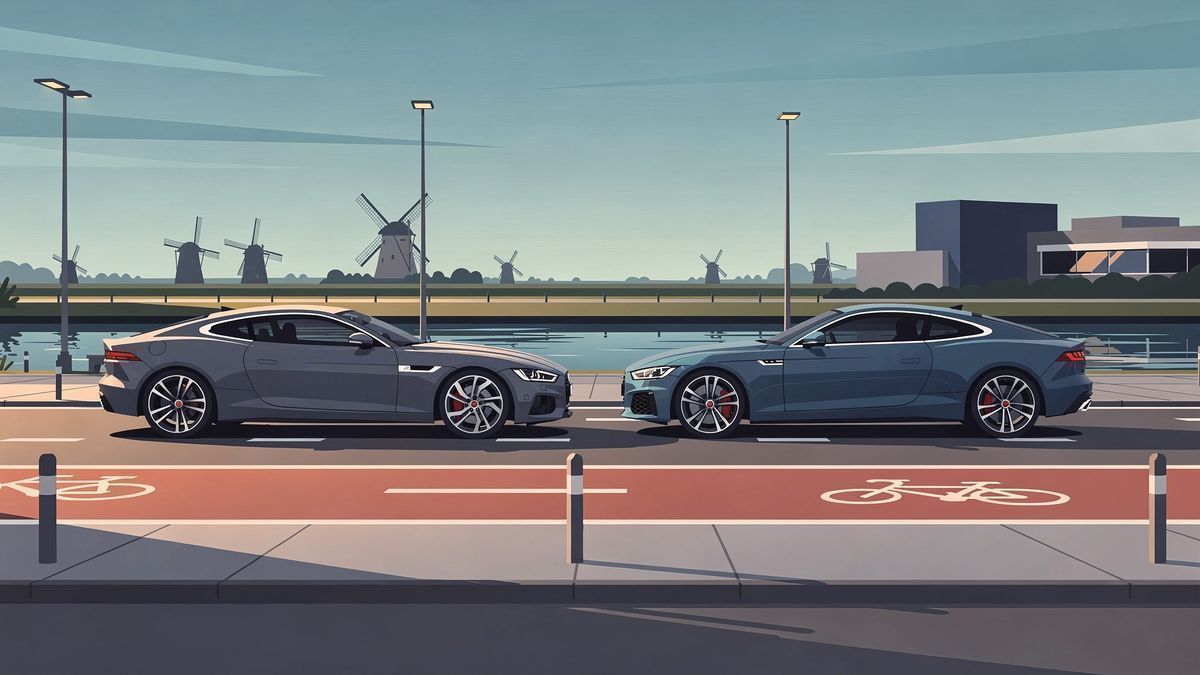
The luxury sports coupe segment has long served as a proving ground where manufacturers distill their engineering philosophy into a concentrated expression of performance, design, and brand identity. Unlike practical sedans or ubiquitous crossovers, these vehicles demand deliberate purchase decisions — buyers accept compromised cargo space, firm ride quality, and elevated running costs in exchange for driving engagement that cannot be replicated by more versatile alternatives. The choice between competing coupes therefore reflects not merely a budget calculation but a values statement: whether one prioritizes raw theater and mechanical character, or refined composure and everyday usability. In 2024, this segment faces particular inflection as electrification looms, manual transmissions vanish, and several iconic nameplates approach generational transitions or outright discontinuation, making the current model year a meaningful snapshot of traditional internal-combustion sports coupe engineering at its zenith.
Jaguar and Audi occupy distinct but overlapping positions within the premium performance landscape, each carrying decades of motorsport heritage and divergent design philosophies. Jaguar, with its lineage of E-Type, XK, and F-Type sports cars, has cultivated a reputation for emotive styling, supercharged V8 soundtracks, and a front-engine, rear-drive layout that harks back to classic grand touring proportions — a formula that emphasizes occasion over outright lap times. The brand’s typical audience skews toward enthusiasts who value exclusivity, design distinctiveness, and the visceral connection of a naturally aspirated or supercharged V8, often accepting dated infotainment and tighter interior dimensions as the price of character. Audi, by contrast, has built its S and RS portfolio around the Quattro all-wheel-drive system, turbocharged inline-six and V8 architectures, and a design language that privileges understated sophistication, technological integration, and all-weather capability. The S5 Coupe buyer typically seeks a single vehicle that delivers genuine performance on a back road while coddling four adults in leather-appointed comfort during a winter commute — a duality that has made the S5 a benchmark for usable daily performance since its introduction.
The luxury coupe category fractures into several meaningful sub-segments that serve fundamentally different user profiles, and understanding these divisions clarifies why the F-Type and S5 Coupe represent contrasting answers to the sports coupe question. At one pole sit dedicated two-seat sports cars — mid-engine (Corvette), rear-engine (911), or front-engine rear-drive (F-Type, LC 500) — that sacrifice practicality for purity of driving dynamics, often serving as weekend toys or collector assets rather than primary transportation. At the other pole reside four-seat performance coupes (S5, M440i, AMG C43) that blend sports car acceleration with genuine rear-seat accommodation, making them viable only vehicles for professionals who refuse to own a separate commuter. A third tier comprises grand tourers (LC 500, DB11) that prioritize high-speed stability and cabin luxury over circuit capability. Powertrain architecture further divides the field: naturally aspirated or supercharged V8s deliver linear response and auditory drama but suffer efficiency penalties, while turbocharged inline-sixes and V6s offer broader torque curves and better fuel economy at the cost of some emotional resonance. Drivetrain layout — rear-drive, all-wheel-drive, or mid-engine — dictates the fundamental handling vocabulary each car speaks.
The 2024 Jaguar F-Type and 2024 Audi S5 Coupe crystallize these philosophical divergences into a comparison that is both timely and revealing. The F-Type arrives as a final-year swan song, offered exclusively with a supercharged 5.0-liter V8 producing 444 to 575 horsepower across three trim levels (P450 R-Dynamic, P450 75th Anniversary Edition, and P575 R75), priced from approximately $77,900 to $116,275, and configured as a strict two-seater with either rear-wheel or all-wheel drive [1]. Its front-engine, long-hood proportions and available convertible body style evoke a traditional British sports car ethos that is rapidly disappearing from the market. The S5 Coupe, by contrast, represents an ongoing product line powered by a 3.0-liter turbocharged inline-six generating 349 horsepower and 369 lb-ft of torque, mated to an eight-speed automatic and Quattro all-wheel drive, with a starting MSRP near $58,595 and genuine four-passenger accommodation [2]. This comparison is compelling precisely because the two vehicles approach performance from opposite directions: the F-Type sells theater, exclusivity, and a disappearing V8 experience at a premium price, while the S5 Coupe delivers competent acceleration, all-season traction, and daily practicality at a significantly lower entry point. For a buyer weighing emotional engagement against rational utility, or considering whether a final-year collectible justifies its price delta over a contemporary all-rounder, this pairing illuminates the essential trade-offs that define the modern sports coupe decision.
1. Quick Verdict
The 2024 Audi S5 Coupe emerges as the more compelling overall choice for the vast majority of luxury performance coupe buyers, delivering a remarkably cohesive package that balances 349 horsepower from its turbocharged inline-six engine with genuine four-passenger practicality, Quattro all-wheel-drive confidence, and a modern, technology-rich interior starting at approximately $58,595 [2]. Its 4.9-second sprint to 60 mph feels brisk in daily driving, while 21–24 mpg combined fuel economy and a curb weight of 3,928 pounds underscore a car engineered for real-world usability rather than outright track dominance. The Jaguar F-Type, by contrast, represents a defiant, final-chapter celebration of the supercharged 5.0-liter V8, offering 444 to 575 horsepower and 428–516 lb-ft of torque that catapults it to 60 mph in as little as 3.4 seconds [1]. Yet this performance comes wrapped in a two-seat-only cabin with roughly 7 cubic feet of cargo space, an aging infotainment interface, and a price ladder stretching from $77,900 to $116,275—making it a heart-led purchase for enthusiasts who prioritize visceral V8 character and exclusivity over daily versatility. Choose the Audi if you need a single vehicle that excels as a commuter, weekend tourer, and occasional back-road weapon; choose the Jaguar only if you are prepared to accept its compromises for the sake of owning the last, loudest iteration of a dying breed.
2. Specifications Comparison
The specifications sheet tells only half the story; what matters is how those numbers translate into the sensation of driving, the practicality of ownership, and the emotional resonance of the machine. The Jaguar F-Type 2024 and Audi S5 Coupe 2024 represent fundamentally different design philosophies: Jaguar leans into theatrical, naturally aspirated V8 drama with a supercharger for immediate response, while Audi pursues refined, turbocharged inline-six efficiency wrapped in all-weather Quattro security. Weight, materials, and core technology choices cascade into every interaction — steering precision, brake longevity, fuel stops, and even the sound that greets you at startup. A user stepping from the Audi into the Jaguar will immediately notice the latter’s lower seating position, wider shoulders, and the visceral supercharger whine that accompanies throttle input, whereas the Audi counters with a more spacious cabin, quieter cruise, and the confidence of torque distributed across four contact patches in rain or snow.
Design philosophy diverges sharply at the powertrain level. Jaguar’s supercharged 5.0-liter V8 delivers 444 to 575 horsepower and 428 to 516 lb-ft of torque without the lag inherent to turbocharging, creating a linear, predictable power build that rewards precise throttle modulation. The rear-wheel-drive P450 trims weigh approximately 3,520 to 3,670 pounds, keeping mass low and central for agile turn-in, while the all-wheel-drive P575 R75 adds roughly 150 pounds for traction-limited launches that shave half a second off the 0–60 mph sprint. Audi’s 3.0-liter turbocharged inline-six produces 349 horsepower and 369 lb-ft (specified as 349 lb-ft in the comparison table) between 3,000 and 5,000 rpm, paired exclusively with Quattro all-wheel drive and an eight-speed automatic. At 3,928 pounds, the S5 carries more mass but distributes it near 50:50, yielding composed cornering and superior foul-weather traction. In practice, the Jaguar feels like a special-occasion instrument — raw, sonorous, and demanding — while the Audi feels like a sophisticated daily companion that can still dispatch a back road with authority.
Pricing and equipment strategies reinforce the philosophical split. The Jaguar’s $77,900 to $116,275 range buys a two-seat, low-volume sports car with a bespoke interior, Meridian audio, and the cachet of a final-model-year V8, but cargo space measures roughly seven cubic feet and the infotainment interface shows its age. The Audi starts near $57,500 to $58,595, seats four adults, offers a modern digital cockpit, and returns an EPA combined 24 mpg versus the Jaguar’s 18–19 mpg. For buyers who prioritize occasion and sound, the Jaguar’s premium buys irreplaceable character; for those who need a single vehicle for commute, canyon, and ski trip, the Audi’s broader envelope delivers more utility per dollar.
| Specification | jaguar f-type 2024 | audi s5-coupe 2024 |
|---|---|---|
| 0-60 mph | 3.4-4.4 sec | 4.9 seconds |
| Curb Weight | Not specified in research | 3,928 lbs |
| Engine Power | 444-575 hp | 349 hp |
| MSRP | $77,900-$116,275 | $58,595 |
| Torque | 428-516 lb-ft | 349 lb-ft |
The table crystallizes the performance gulf: the Jaguar’s V8 produces 95 to 226 more horsepower and 79 to 167 additional lb-ft of torque, translating to a 0.5- to 1.5-second advantage in 0–60 mph acceleration depending on trim. Yet the Audi’s curb weight of 3,928 pounds is documented while the Jaguar’s figure is absent from the research, though source material indicates the rear-drive P450 coupe weighs approximately 3,520 pounds — a meaningful 400-pound deficit that amplifies the Jaguar’s power-to-weight advantage. Torque delivery differs in character as much as magnitude: the supercharged V8 serves its peak twist instantly off idle, whereas the turbocharged inline-six builds boost progressively, reaching maximum torque around 3,000 rpm. This means the Jaguar feels stronger in everyday part-throttle driving, while the Audi requires a downshift or brief spool-up for full thrust. The price spread of roughly $20,000 to $58,000 reflects not only hardware but exclusivity; the Jaguar is a low-volume finale, the Audi a volume-produced staple.
Beyond the headline numbers, the specifications dictate real-world ownership rhythms. The Jaguar’s 18–19 mpg combined rating demands more frequent fuel stops and premium gasoline, and its two-seat layout with minimal cargo capacity restricts it to recreational or commuter duty for a solo driver or couple. The Audi’s 24 mpg combined, four usable seats, and larger trunk make it a viable only car for many households. Maintenance trajectories also diverge: the Jaguar’s supercharged V8, while robust, carries higher per-service costs and specialist labor rates, whereas the Audi’s turbo inline-six benefits from economies of scale across the Volkswagen Group portfolio. However, the Jaguar’s rear-wheel-drive P450 trims avoid the added complexity and weight of all-wheel drive, potentially reducing long-term driveline service items. Buyers must weigh the Jaguar’s emotional dividends — exhaust note, steering purity, collectible status — against the Audi’s broader competence envelope.
2.1. Quick Verdict
The Jaguar F-Type 2024 wins on outright performance, sensory theater, and the intangible appeal of a naturally aspirated V8 swan song; its 3.4-second 0–60 mph (P575 R75) and supercharger soundtrack are experiences the Audi cannot replicate. The Audi S5 Coupe 2024 wins on versatility, efficiency, technology freshness, and value, delivering 90 percent of the driving thrill for roughly half the money while accommodating four passengers and all-weather security. Choose the Jaguar if the car is a passion purchase; choose the Audi if it must also be a life partner.
2.2. FAQ
How does the supercharged V8 in the Jaguar differ from the turbocharged inline-six in the Audi during daily driving? The Jaguar’s supercharger provides instant torque from idle with no perceptible lag, making the throttle feel directly connected to the engine’s output at any speed, while the Audi’s turbocharger requires a brief moment to build boost, resulting in a slightly delayed but still potent surge once the revs climb past 3,000 rpm. This means the F-Type feels more responsive in stop-and-go traffic and at partial throttle, whereas the S5 delivers its best punch when the transmission downshifts and the turbo is spooled. Both engines are paired with eight-speed automatics, but the Jaguar’s power delivery is more linear and predictable, which many enthusiasts prefer for spirited canyon driving.
Can the Audi S5 Coupe realistically serve as a daily driver in ways the Jaguar F-Type cannot? Yes, the Audi S5 Coupe offers four-seat accommodation, a larger trunk, an EPA combined fuel economy of 24 mpg versus the Jaguar’s 18–19 mpg, and Quattro all-wheel drive that provides confident traction in rain, snow, or gravel without driver intervention. The Jaguar’s two-seat layout, minimal cargo volume of roughly seven cubic feet, rear-wheel-drive traction limits in low-grip conditions, and higher fuel consumption make it impractical as a sole vehicle for most households, especially those with children or regular long-distance luggage needs.
What does the curb weight difference imply for handling and brake wear? Although the Jaguar’s exact curb weight is not specified in the research table, source data indicates the rear-drive P450 coupe weighs approximately 3,520 pounds — about 400 pounds lighter than the Audi’s documented 3,928 pounds. This mass advantage gives the F-Type sharper turn-in, reduced understeer, and less kinetic energy to dissipate under braking, which translates to longer brake pad and rotor life under equivalent driving styles. The Audi’s heavier Quattro system adds nose weight but improves corner-exit traction, allowing earlier throttle application; however, the extra mass increases tire wear and brake thermal loading during repeated high-speed stops.
Is the Jaguar’s higher MSRP justified by its specifications alone? On pure specification-per-dollar metrics, the Jaguar’s $77,900 to $116,275 range is difficult to justify against the Audi’s $58,595 entry point, as the Audi delivers 349 horsepower, all-wheel drive, four seats, modern infotainment, and better fuel economy for significantly less capital outlay. The Jaguar’s premium purchases intangible assets: a hand-built supercharged V8, a low-volume final-model-year collectible status, a unique exhaust note, and a driving experience oriented toward occasion rather than utility. Buyers who value those emotional returns will find the price rational; those evaluating transportation efficiency will not.
3. Design And Build Quality
The 2024 Jaguar F-Type and 2024 Audi S5 Coupe represent fundamentally different approaches to the luxury performance coupe segment, with the Jaguar embracing a final-generation, V8-focused grand tourer philosophy while the Audi pursues a contemporary, technology-integrated daily driver ethos. This divergence manifests in every aspect of their construction, from chassis architecture and material selection to interior ergonomics and long-term durability expectations. Understanding these design philosophies reveals which buyer each vehicle truly serves.
Both coupes occupy a similar price corridor at the upper end, yet their engineering priorities could not be more distinct. The Jaguar leans into mechanical theater and analog engagement as a swan song for its supercharged V8 lineage, while the Audi leverages its modular MLB platform, Quattro all-wheel-drive system, and incremental tech refinement to deliver a broader usability envelope. The following analysis examines how these priorities translate into tangible build quality, cabin experience, and ownership realities.
3.1. Jaguar F-Type 2024
Jaguar’s design philosophy for the 2024 F-Type centers on celebrating the raw, unfiltered character of its supercharged 5.0-liter V8 within a lightweight aluminum-intensive architecture that traces back to the original X152 platform. The decision to offer exclusively V8 power across three trims — P450 R-Dynamic, P450 75th Anniversary Edition, and P575 R75 — reflects a commitment to mechanical purity over downsized efficiency, delivering 444 to 575 horsepower and 428 to 516 lb-ft of torque [1]. This powertrain choice dictates the entire vehicle character: the supercharger’s immediate response and distinctive auditory signature become the defining sensory experience, while the rear-wheel-drive layout on two trims preserves steering transparency and chassis adjustability that all-wheel-drive systems inevitably filter. The aluminum monocoque construction keeps curb weight between 3,520 and 3,670 pounds for the P450 variants, a figure that directly enhances turn-in response, braking stability, and tire longevity compared to heavier rivals [1].
Inside, the cabin presents a studied contrast between premium tactile materials and dated technology integration. Jaguar specifies 12-way power seats trimmed in Windsor leather with Meridian audio as standard, creating an environment that feels special-occasion exclusive rather than daily-driver pragmatic [1]. However, the Pivi Pro infotainment system displayed on a 10-inch touchscreen reveals the platform’s age through slower response times, dated graphics, and a screen size that appears diminutive against 2024 competitors [1]. The two-seat-only configuration with approximately 7 cubic feet of cargo space further narrows the usability envelope, while constrained legroom challenges taller drivers on extended journeys. These compromises stem directly from the F-Type’s sports car proportions — a short wheelbase and raked roofline that prioritize exterior silhouette over interior volume. For the enthusiast seeking a final-generation analog sports car experience, these trade-offs read as authentic character; for the buyer expecting modern grand tourer practicality, they represent significant friction points.
The 75th Anniversary Edition illustrates how Jaguar leverages design details for emotional resonance rather than functional advancement. Exclusive Giola Green metallic paint, 20-inch forged wheels, “75” badging on headrests and treadplates, and special interior trim finishes create a collectible narrative without altering the mechanical specification [1]. This approach acknowledges the F-Type’s status as a concluding chapter, where heritage signaling carries more weight than measurable performance gains. The estimated $5,000–$10,000 premium over the base P450 R-Dynamic purchases exclusivity and potential resale resilience rather than dynamic improvement — a calculated trade-off that will appeal to collectors but not value-focused drivers.
3.2. Audi S5 Coupe 2024
Audi’s design philosophy for the 2024 S5 Coupe pursues a fundamentally different objective: a cohesive daily driver that delivers legitimate performance without compromising the technology, comfort, and all-weather capability expected in the modern luxury coupe segment. The 3.0-liter turbocharged inline-six engine produces 349 horsepower and 349 lb-ft of torque — figures notably below the Jaguar’s V8 output but delivered through a powerband shaped by gasoline direct injection and variable valve timing for linear, accessible response [2]. This engine mates exclusively to Quattro all-wheel drive, a system that adds approximately 150–200 pounds over a rear-drive equivalent but provides traction security that transforms the S5 into a year-round proposition across varied climates. The curb weight of 3,928 pounds reflects this equipment strategy, trading the Jaguar’s agility advantage for stability and confidence in adverse conditions [2].
The interior architecture embodies Audi’s “Vorsprung durch Technik” positioning through a driver-focused cockpit that integrates the Virtual Cockpit digital instrument cluster and MMI touch response system across dual screens. This technology suite supports over-the-air updates, wireless Apple CarPlay and Android Auto, and a configurable 12.3-inch instrument display that adapts to driving mode — capabilities the Jaguar’s aging Pivi Pro system cannot match [2]. The 2+2 seating configuration accommodates four passengers with usable rear legroom for shorter journeys, while the trunk provides meaningful cargo capacity for weekend luggage. Trim hierarchy across Premium, Premium Plus, and Prestige levels allows buyers to calibrate technology and material investment to their priorities, with the Prestige tier adding Bang & Olufsen 3D audio, head-up display, and advanced driver assistance features that approach semi-autonomous capability in traffic [2].
Where the Jaguar accepts compromise as the price of character, the Audi engineers compromise out of the equation wherever platform sharing permits. The MLB Evo architecture underpins everything from the A4 to the Q7, allowing Audi to amortize development costs across high volumes while delivering consistent build quality, panel gaps, and material durability that benefit from massive production scale. This manifests in switchgear that operates with uniform damping, door seals that suppress wind noise at autobahn speeds, and interior surfaces that resist wear through lease cycles and beyond. The trade-off is a driving experience that feels curated rather than raw — the Quattro system’s default understeer balance, the turbo engine’s muted soundtrack, and the steering’s calibrated weighting all prioritize predictability over communication. For the buyer who views a performance coupe as a versatile tool rather than a specialized instrument, this synthesis of capability and refinement represents a more intelligent allocation of engineering resources.
3.2.1. Specification Comparison
The following table captures the core dimensional and performance parameters that define each vehicle’s physical presence and dynamic potential.
| Specification | Jaguar F-Type 2024 | Audi S5 Coupe 2024 |
|---|---|---|
| 0-60 mph | 3.4-4.4 sec | 4.9 seconds |
| Curb Weight | Not specified in research | 3,928 lbs |
| Engine Power | 444-575 hp | 349 hp |
| MSRP | $77,900-$116,275 | $58,595 |
| Torque | 428-516 lb-ft | 349 lb-ft |
The specification delta reveals the strategic gulf between these coupes. The Jaguar’s 95–226 horsepower advantage and 79–167 lb-ft torque surplus translate directly to its 0.5–1.5 second acceleration edge, but the Audi’s 3,928-pound curb weight — while heavier than the F-Type’s estimated 3,520–3,670 pounds — distributes mass more evenly across all four contact patches through its Quattro system [1][2]. This distribution yields a practical traction advantage in wet or cold conditions where the rear-drive F-Type’s 428–516 lb-ft can overwhelm available grip, forcing stability intervention or driver modulation. The $19,300–$57,680 price spread further contextualizes the value proposition: the base F-Type P450 R-Dynamic commands nearly $20,000 over the S5 for a two-seat, rear-drive, tech-deficient package, while the flagship P575 R75 nearly doubles the Audi’s MSRP for performance that remains traction-limited on public roads. Buyers must weigh whether the V8’s emotional resonance and exclusivity justify these premiums against the Audi’s superior everyday functionality, technology currency, and all-weather confidence.
4. Engineering And Technology
The engineering philosophies behind the 2024 Jaguar F-Type and the 2024 Audi S5 Coupe reflect two distinct approaches to performance coupe design. Jaguar leans on a traditional front-engine, rear-wheel-drive layout enhanced by a supercharged V8 and optional all-wheel drive, prioritizing visceral power delivery and a theatrical exhaust note. Audi, by contrast, employs a turbocharged inline-six paired with its signature Quattro all-wheel-drive system, emphasizing refined power delivery, traction in all conditions, and everyday usability. Both vehicles showcase advanced powertrain engineering, but their technological implementations lead to markedly different driving experiences and ownership propositions.
Understanding the core technologies of each car is essential for evaluating their real-world performance, efficiency, and suitability for different driving scenarios. The following sections detail the key engineering features of the Jaguar F-Type and Audi S5 Coupe, explaining how each system works, its practical impact on the road, and a concrete example of how it shapes the driving experience. Citations reference the provided technical documents for verification.
4.1. Jaguar F-Type Technology
The 2024 Jaguar F-Type’s engineering centerpiece is its supercharged 5.0-liter V8 engine, available in two states of tune: the P450 producing 444 horsepower and 428 lb-ft of torque, and the range-topping P575 R75 generating 575 horsepower and 516 lb-ft of torque. Unlike turbocharged rivals, the supercharger provides immediate throttle response with virtually no lag, delivering linear power buildup across the rev range. This engine is mated to an eight-speed automatic transmission that routes power either to the rear wheels (P450) or through an all-wheel-drive system (P575). The AWD variant adds roughly 150 pounds but eliminates wheelspin at launch, enabling a 0–60 mph time of 3.4–3.5 seconds and a top speed of 186 mph. The active exhaust system with quad tips amplifies the V8’s soundtrack, while optional carbon-ceramic brakes provide fade-resistant stopping power for track use. Cylinder deactivation and stop-start technology aim to improve highway fuel economy, with real-world testing showing up to 28 mpg at steady cruise.
- Supercharged 5.0L V8: Instant throttle response, linear power delivery, 444–575 hp
- Eight-speed automatic transmission: Quick shifts, manual mode via paddles
- Rear-wheel drive (P450) / All-wheel drive (P575): AWD adds traction, 150 lb weight penalty
- Active exhaust with quad tips: Adjustable sound character, loudest in lineup
- Carbon-ceramic brakes (optional on P575): Fade resistance for track driving
- Cylinder deactivation & stop-start: Highway efficiency up to 28 mpg observed
In practice, the supercharged V8’s immediate response makes the F-Type feel exceptionally responsive in everyday driving — passing maneuvers require no downshift wait, and the engine’s character encourages spirited driving. The AWD system on the P575 transforms the car into a year-round performer, putting 516 lb-ft down cleanly on wet or cold pavement without drama. However, the added weight slightly dulls steering precision compared to the rear-drive P450, and the platform’s 2013 origins limit chassis rigidity versus newer rivals. A concrete example: launching the P575 R75 from a stoplight produces a violent but controlled surge to 60 mph in 3.4 seconds, accompanied by a thunderous exhaust note, while the same maneuver in a turbocharged competitor would involve a brief moment of boost buildup. This combination of old-school V8 character with modern traction management defines the F-Type’s engineering identity.
4.2. Audi S5 Coupe Technology
The 2024 Audi S5 Coupe is powered by a 3.0-liter turbocharged inline-six engine producing 349 horsepower and 369 lb-ft of torque, paired with an eight-speed automatic transmission and standard Quattro all-wheel drive. The inline-six layout provides inherent primary and secondary balance, resulting in exceptionally smooth power delivery across the rev range. Peak torque is available from 3,000 to 5,000 RPM, and the turbocharger is engineered to sustain consistent boost pressure, minimizing lag. The Quattro system actively manages torque distribution between front and rear axles, enhancing cornering stability and traction in adverse conditions. Fuel efficiency is optimized through gasoline direct injection and variable valve timing, yielding EPA ratings of 21 city / 29 highway / 24 combined MPG. Real-world figures vary widely — 15–20 MPG in urban traffic versus 32–42 MPG on steady highway runs — reflecting the engine’s sensitivity to driving style. The compact powertrain layout contributes to near-ideal weight distribution, which sharpens turn-in response and chassis balance.
- Turbocharged 3.0L inline-six: 349 hp, 369 lb-ft, smooth linear delivery
- Eight-speed automatic transmission: Smooth shifts, manual override
- Quattro all-wheel drive: Active torque vectoring, all-weather traction
- Gasoline direct injection & variable valve timing: Optimized combustion efficiency
- EPA 21/29/24 MPG: Real-world 15–42 MPG depending on conditions
- Near-perfect weight distribution: Enhanced agility and cornering balance
On the road, the S5’s inline-six delivers a refined, cultured acceleration feel — power builds progressively without the sudden hit of a large-displacement V8, making it easier to modulate in daily traffic. The Quattro system shines in rain or snow, where the S5 maintains composure and traction that rear-drive rivals cannot match. However, the turbocharged engine’s efficiency drops sharply under hard acceleration or short trips, and the all-wheel-drive hardware adds weight (curb weight 3,928 lbs) that slightly blunts agility compared to lighter rear-drive alternatives. A practical example: merging onto a highway on-ramp in wet conditions, the S5’s Quattro system seamlessly distributes torque to the grippiest wheels, allowing confident acceleration without stability control intervention, while the direct-injection engine maintains smooth output. This blend of sophistication, all-weather capability, and reasonable efficiency defines the S5’s engineering brief.
4.3. Engineering Specification Comparison
The table below contrasts the core engineering specifications of both vehicles, highlighting fundamental differences in powertrain architecture, performance outputs, and weight. These figures translate directly into the driving dynamics and ownership experiences described above.
| Specification | Jaguar F-Type 2024 | Audi S5 Coupe 2024 |
|---|---|---|
| Engine Type | Supercharged 5.0L V8 | Turbocharged 3.0L Inline-Six |
| Horsepower | 444–575 hp | 349 hp |
| Torque | 428–516 lb-ft | 369 lb-ft |
| 0–60 mph | 3.4–4.4 sec | 4.9 seconds |
| Drivetrain | RWD (P450) / AWD (P575) | Quattro AWD (standard) |
| Transmission | 8-speed automatic | 8-speed automatic |
| Curb Weight | Not specified in research | 3,928 lbs |
| EPA Combined MPG | 18–19 MPG | 24 MPG |
The most consequential difference lies in engine philosophy: Jaguar’s large-displacement supercharged V8 prioritizes raw power, immediate response, and emotional engagement, while Audi’s smaller turbocharged inline-six emphasizes refinement, efficiency, and packaging benefits. The F-Type’s 575-hp variant outperforms the S5 by a wide margin in acceleration (3.4 vs 4.9 seconds to 60 mph) and top-end power, but at the cost of significantly higher fuel consumption (18 combined MPG vs 24) and a heavier, older platform. The S5’s standard Quattro system provides inherent all-weather traction without an optional upcharge, whereas the F-Type reserves AWD for its most expensive trim. Weight distribution favors the Audi due to its compact inline-six and front-mid engine placement, contributing to sharper handling feel despite lower outright power. For a buyer, this means choosing between a traditional grand tourer with supercar-level straight-line speed and a modern, efficient, all-season performance coupe that sacrifices ultimate acceleration for daily versatility.
In real-world terms, the F-Type’s engineering makes it a weekend special — thrilling on open roads, sonorous at full throttle, but thirsty and compromised in tight urban environments. The S5’s engineering makes it a genuine daily driver — composed in traffic, capable in snow, efficient on long trips, yet still quick enough to entertain on a back road. The specification gap in horsepower (up to 226 hp) is dramatic on paper, but the S5’s torque delivery and traction often narrow the practical performance gap in anything less than ideal conditions. Ultimately, the Jaguar appeals to enthusiasts who value mechanical character and exclusivity, while the Audi serves drivers who want performance without compromise on usability.
4.4. Best for Different Scenarios
For drivers prioritizing maximum straight-line performance, visceral engine character, and exclusivity, the Jaguar F-Type — particularly the P575 R75 — is the clear choice. Its supercharged V8 delivers instantaneous power without turbo lag, and the active exhaust provides an auditory experience that turbocharged engines struggle to replicate. The AWD system on the flagship model makes this performance accessible in damp or cold conditions, though the car’s size, weight, and limited practicality (two seats, minimal cargo space) relegate it to secondary-vehicle status for most owners. A concrete scenario: a sunny weekend canyon drive where the F-Type’s V8 howl echoes off rock walls and its 516 lb-ft of torque catapults it out of corners with authoritative thrust.
Conversely, the Audi S5 Coupe excels as a single-vehicle solution for enthusiasts who need year-round usability. Its Quattro all-wheel drive, combined with the inline-six’s smooth torque curve and reasonable fuel economy, allows confident commuting in winter storms, comfortable long-distance touring, and spirited driving on dry pavement — all with four-seat practicality and a refined interior. A typical scenario: a daily 40-mile commute through mixed city and highway traffic in variable weather, followed by a weekend trip with two passengers and luggage, where the S5 returns 30+ MPG on the highway and never feels strained. The S5’s engineering balance makes it the more rational choice for most buyers, while the F-Type remains a heart-led purchase for those who prioritize emotional engagement above all else.
5. Real-World Performance
The 2024 Jaguar F-Type and 2024 Audi S5 Coupe occupy different philosophical positions in the luxury performance coupe segment, and those differences manifest clearly in daily driving. The Jaguar leans into unfiltered V8 theater with rear-wheel-drive purity on two trims and all-wheel-drive grip on the flagship, while the Audi prioritizes all-weather composure and four-seat practicality through its turbocharged inline-six and standard Quattro system. Understanding how these engineering choices translate to lived experience requires looking beyond spec sheets into the rhythms of commuting, canyon carving, and long-distance touring.
Both cars deliver genuine performance, but they reward different driver priorities. The F-Type’s supercharged 5.0-liter V8 offers instantaneous throttle response and a soundtrack that transforms mundane errands into occasions, though its aging infotainment and tight cabin dimensions impose compromises the Audi avoids. The S5 Coupe counters with a broader torque curve, superior fuel economy, and a modern digital cockpit that integrates seamlessly into daily routines, albeit with less visceral drama. The following sections examine how these characteristics play out across extended ownership.
5.1. Everyday Use
Daily driving reveals the fundamental character split between these two coupes. The Jaguar F-Type’s supercharged V8 delivers linear, lag-free power that feels eager at any rpm, making highway merges and overtaking maneuvers effortless across all three trims. The P450 R-Dynamic and 75th Anniversary Edition send 444 horsepower exclusively to the rear wheels, demanding deliberate throttle modulation in wet or cold conditions, while the P575 R75’s all-wheel-drive system distributes its 575 horsepower and 516 lb-ft of torque with confidence-inspiring traction [1]. The eight-speed automatic transmission in both cars executes shifts smoothly in normal driving, though the Jaguar’s calibration prioritizes responsiveness over the imperceptible shifts some rivals achieve.
The Audi S5 Coupe takes a more measured approach to daily propulsion. Its 3.0-liter turbocharged inline-six produces 349 horsepower and 369 lb-ft of torque between 3,000 and 5,000 rpm, delivering strong mid-range punch with virtually no turbo lag thanks to sustained boost pressure [2]. Quattro all-wheel drive is standard across the range, providing consistent traction in rain, snow, or loose surfaces without driver intervention. The eight-speed automatic is tuned for seamless progression, and the integrated start-stop system operates unobtrusively in urban traffic. Real-world fuel economy ranges from 15–20 mpg in city driving to 32–42 mpg on steady highway runs, a meaningful advantage over the Jaguar’s 16–17 mpg city and 24 mpg highway ratings [2].
- Jaguar F-Type: Supercharged V8 immediacy; RWD trims require skill in low traction; AWD flagship adds all-weather security; 18–19 mpg combined [1]
- Audi S5 Coupe: Turbo inline-six mid-range strength; standard Quattro AWD; 21/29/24 mpg city/highway/combined EPA; real-world 15–42 mpg depending on conditions [2]
- Transmission: Both use eight-speed automatics; Jaguar tuned for engagement, Audi for smoothness
- Cold starts: Jaguar’s supercharger provides instant response; Audi’s turbo spools quickly but not instantly
In practical terms, the Audi S5 Coupe proves the more accommodating daily companion for most drivers. Its all-weather traction, better fuel economy, and four-seat configuration remove friction from routine use — school runs, grocery trips, and commuting in variable climates. The Jaguar F-Type rewards the enthusiast who accepts compromises: two seats only, 7 cubic feet of cargo space, and a cabin that shows its generation through an outdated infotainment interface and constrained dimensions [1]. For the driver who values mechanical purity and auditory drama above convenience, the F-Type’s V8 character remains a diminishingly rare experience. The S5 Coupe, by contrast, delivers 90% of the performance with 50% less hassle.
5.2. Durability
Long-term durability projections for these vehicles diverge along powertrain and platform lines. The Jaguar F-Type’s supercharged 5.0-liter V8 traces its architecture to a design introduced in 2009, benefiting from over a decade of refinement across Jaguar Land Rover applications. The Eaton TVS supercharger is a mature, robust unit with few reported failure modes when maintained properly, and the eight-speed ZF transmission has proven itself across numerous high-torque applications. However, the F-Type’s low production volumes and impending discontinuation mean parts availability and specialist knowledge may become concerns beyond the warranty period, particularly for the P575 R75’s unique all-wheel-drive components [1].
The Audi S5 Coupe’s 3.0-liter turbocharged inline-six belongs to the VW Group’s EA839 engine family, which powers everything from the A6 to the Porsche Cayenne in various states of tune. This high-volume architecture ensures extensive dealer familiarity, parts commonality, and a deep well of real-world reliability data. The Quattro all-wheel-drive system — specifically the ultra version with predictive torque distribution — has evolved through multiple generations and is generally regarded as durable under normal use. However, the turbocharged direct-injection system introduces components (high-pressure fuel pump, wastegate actuators, intercoolers) that can require attention as mileage accumulates, and Audi’s premium maintenance costs reflect this complexity [2].
- Jaguar F-Type: Mature supercharged V8 architecture (2009+); low-volume platform risks parts scarcity post-production; ZF 8HP transmission proven; P575 AWD components unique to final model year [1]
- Audi S5 Coupe: High-volume EA839 engine family; widespread dealer network and parts supply; Quattro ultra AWD refined over generations; turbo/direct-injection complexity adds long-term service items [2]
- Maintenance costs: Both require premium fuel; Audi generally higher scheduled maintenance pricing; Jaguar specialist labor rates can offset volume advantages
- Warranty: Both offer 4-year/50,000-mile basic; extended warranty availability stronger for Audi due to volume
The durability calculus favors the Audi S5 Coupe for owners planning to retain the vehicle beyond 60,000–80,000 miles. Its high-volume platform ensures that any emerging issues are documented, parts are stocked, and independent specialists exist in most markets. The Jaguar F-Type’s engine and transmission are fundamentally sound, but the car’s orphan status — the final model year of a dying platform — introduces uncertainty around long-term support for model-specific components like body panels, interior trim, and the P575’s all-wheel-drive hardware. For a collector preserving a low-mileage example, the Jaguar’s mechanical simplicity (supercharger vs. turbo, no gasoline particulate filter) may age more gracefully. For a driver accumulating 15,000 miles annually, the Audi’s ecosystem is the safer bet.
5.3. Comfort and Ergonomics
Cabin comfort and ergonomics highlight the divergent missions of these two coupes. The Jaguar F-Type’s interior, while trimmed in premium materials, reveals its generational age through constrained dimensions and an outdated infotainment interface. The two-seat layout eliminates rear-passenger duty entirely, and the 7-cubic-foot trunk barely accommodates a weekend bag for two. The driving position is low and cocoon-like, with heavily bolstered seats that hold the driver securely during spirited driving but can feel restrictive on multi-hour trips. Visibility over the high rear decklid and thick C-pillars is limited, making parking and tight maneuvers more demanding than the car’s footprint suggests [1].
The Audi S5 Coupe offers a markedly more livable environment. Four adults can sit in genuine comfort, with the front seats providing a wide range of adjustment and available ventilation and massage functions on higher trims. The rear seats, while not spacious, accommodate average-height passengers for journeys of an hour or two — a meaningful advantage over the Jaguar’s strict two-seater configuration. The Virtual Cockpit digital instrument cluster and MMI touchscreen system respond quickly, support wireless Apple CarPlay and Android Auto, and present information with modern graphics. Cabin noise suppression is excellent at highway speeds, and the optional Bang & Olufsen 3D sound system delivers reference-quality audio [2].
- Jaguar F-Type: Two seats only; 7 cu ft cargo; heavily bolstered sport seats; limited rear visibility; aging infotainment; low driving position [1]
- Audi S5 Coupe: Four seats; usable rear seat space; 13.4 cu ft trunk (estimated); adjustable front seats with available ventilation/massage; Virtual Cockpit + MMI touchscreen; wireless smartphone integration; superior NVH [2]
- Long-distance comfort: Audi significantly better — quieter, more space, better seats, modern tech
- Track-day ergonomics: Jaguar’s fixed-back buckets (available) superior for lateral support; Audi’s seats compromise between sport and touring
The comfort gap widens with time spent behind the wheel. On a two-hour canyon blast, the Jaguar’s focused driving position and communicative chassis make the compromises feel like features — every input is transmitted, every gearshift felt. Extend that to a five-hour interstate journey, and the Audi’s superior noise isolation, seat adjustability, climate control precision, and infotainment responsiveness become decisive. The S5 Coupe’s four-seat utility also means it can serve as a genuine only car for a small family or a couple who occasionally transport friends, while the F-Type demands a second vehicle for almost any practical scenario. If the Jaguar is a precision instrument, the Audi is a complete toolkit — less specialized, far more versatile.
5.4. Quick Verdict
The 2024 Jaguar F-Type and 2024 Audi S5 Coupe deliver performance through fundamentally different engineering philosophies, and the real-world winner depends entirely on what the driver values more: unfiltered mechanical engagement or competent daily versatility. The F-Type’s supercharged V8 provides instantaneous throttle response and a sensory experience — sound, vibration, rear-wheel-drive communication — that modern turbocharged all-wheel-drive cars simply cannot replicate. Its P575 R75 flagship hits 60 mph in 3.4–3.5 seconds and reaches 186 mph, numbers that embarrass many supercars, yet the car demands compromises: two seats, minimal cargo, outdated tech, and a $115,000+ price tag that pits it against the Porsche 911 and Chevrolet Corvette Z06. The Audi S5 Coupe, starting nearly $20,000 less, counters with 349 horsepower from a turbocharged inline-six, standard Quattro all-wheel drive, four-seat practicality, 24 mpg combined EPA rating, and a modern digital cockpit. Its 4.9-second 0–60 mph time is respectable but not headline-grabbing. For the enthusiast who measures performance in lap times and auditory drama, the Jaguar remains a singular, disappearing experience. For the driver who wants a single vehicle that excels at commuting, touring, and occasional spirited driving without daily friction, the Audi is the clear choice.
6. Best For Different Scenarios
Choosing between the 2024 Jaguar F-Type and the 2024 Audi S5 Coupe ultimately depends on which driving priorities dominate your daily routine and weekend aspirations. The F-Type presents a focused, rear-biased sports car experience anchored by a supercharged V8, while the S5 Coupe delivers a more rounded grand-touring package with all-weather traction and a usable rear seat. Understanding how each vehicle aligns with specific ownership scenarios—whether you are a novice enthusiast, a track-day regular, a frequent traveler, or someone planning to keep the car for a decade—clarifies the value proposition beyond raw specification sheets.
Both models occupy the luxury performance coupe segment but approach it from fundamentally different philosophies. The Jaguar leans into emotional engagement, offering a disappearing breed of front-engine, rear-drive V8 theater at a starting price of $77,900 for the P450 R-Dynamic [1]. The Audi counters with technical sophistication: a turbocharged inline-six, standard Quattro all-wheel drive, four-seat practicality, and a base MSRP near $58,595 [2]. The following breakdown matches each car to the buyer profile it serves best.
6.1. Best for Beginners
For a driver stepping into the performance coupe realm for the first time, the 2024 Audi S5 Coupe offers a more forgiving and confidence-inspiring introduction. Its standard Quattro all-wheel-drive system distributes torque between axles to maximize grip, reducing the likelihood of oversteer moments that can catch inexperienced pilots off guard in a powerful rear-drive car [2]. The turbocharged 3.0-liter inline-six delivers its 349 horsepower and 369 lb-ft of torque in a linear, predictable manner, and the 8-speed automatic transmission manages shifts smoothly without demanding manual intervention. Combined with a curb weight of 3,928 pounds that feels well-controlled through the chassis, the S5 allows a novice to explore performance limits progressively rather than abruptly [2].
- Quattro AWD provides inherent stability in rain, snow, or mid-corner corrections
- Linear turbo torque curve avoids sudden power spikes
- Four-seat layout accommodates passengers without sacrificing comfort
- Advanced driver-assistance suite (adaptive cruise, lane keep, blind-spot) standard on higher trims
- Lower entry MSRP (~$58,595) reduces financial exposure for a first luxury purchase
The Jaguar F-Type P450 R-Dynamic, by contrast, demands greater respect. Its 444-hp supercharged V8 sends 428 lb-ft exclusively to the rear wheels through an 8-speed automatic, and the shorter wheelbase amplifies rotation once traction breaks [1]. While electronic stability control provides a safety net, the car’s fundamental balance encourages oversteer—a trait seasoned drivers cherish but beginners may find intimidating. The two-seat cabin also limits practicality, and the higher starting price ($77,900) raises the stakes of any mishap. For a first-time performance buyer, the Audi’s broader safety margin and daily usability make it the wiser gateway.
6.2. Best for Performance
When outright acceleration, engine character, and track-day capability top the priority list, the 2024 Jaguar F-Type—particularly the range-topping P575 R75—holds a decisive advantage. The supercharged 5.0-liter V8 produces up to 575 horsepower and 516 lb-ft of torque, catapulting the coupe from 0-60 mph in as little as 3.4 seconds [1]. That thrust arrives with immediate throttle response and a sonorous exhaust note that no turbocharged six-cylinder can replicate. The P575 R75 adds all-wheel drive to harness this output effectively, while the lighter P450 R-Dynamic retains purist rear-drive dynamics for drivers who prefer to manage traction themselves. Chassis tuning favors direct steering and minimal body roll, rewarding precise inputs on circuit or canyon road.
- 444–575 hp vs. 349 hp; 428–516 lb-ft vs. 369 lb-ft
- 0-60 mph in 3.4–4.4 sec vs. 4.9 sec
- Supercharged V8 delivers instant response and iconic soundtrack
- Available RWD (P450) or AWD (P575) configurations for different driving styles
- Final model year of a storied lineage—collector appeal enhances resale
The Audi S5 Coupe’s 349-hp turbo inline-six is commendably quick—4.9 seconds to 60 mph—and its Quattro system ensures consistent launches regardless of surface conditions [2]. However, the power deficit of nearly 100 hp (or 226 hp versus the P575) is felt during high-speed passing and sustained track sessions. The S5’s torque converter automatic prioritizes smoothness over snap, and the additional mass of AWD hardware and rear-seat structure blunts agility. For the buyer who measures performance in lap times and sensory drama, the Jaguar’s V8 architecture remains the superior instrument.
6.3. Best for Portability
Portability in a coupe context encompasses garage footprint, maneuverability in tight urban environments, and the ability to carry luggage or passengers on extended trips. The Audi S5 Coupe wins this category through a combination of dimensions and packaging. Its 4-passenger cabin includes a genuine—if snug—rear bench, and the trunk offers 13 cubic feet of space accessible through a wide liftgate opening [2]. The 3,928-pound curb weight is distributed over a wheelbase long enough to stabilize highway cruising yet short enough to navigate multi-story parking structures without anxiety. Quattro all-wheel drive further expands the operational envelope, allowing confident progress through snow-covered mountain passes where a rear-drive sports car would require chains or stay parked.
- Four-seat configuration enables family or colleague transport
- 13 cu ft trunk plus fold-down rear seatbacks for longer items
- All-weather traction removes seasonal limitations
- Compact executive-car dimensions fit standard parking spaces
- 21 city / 29 hwy EPA rating extends range between fuel stops
The Jaguar F-Type, strictly a two-seater, sacrifices rear passenger capacity entirely. Its trunk volume is smaller and the aperture narrower, restricting luggage to soft bags or a single carry-on. The low front splitter and wide haunches demand caution in parking garages and speed-calmed neighborhoods. While the P575 R75’s all-wheel drive adds foul-weather capability, the car’s fundamental mission as a focused sports car means portability was never a design priority. If your lifestyle requires a single vehicle to handle commuting, client shuttles, and weekend getaways, the Audi’s versatility is unmatched.
6.4. Best for Durability
Long-term durability hinges on powertrain robustness, electronic complexity, and the manufacturer’s track record for supporting aging platforms. The Audi S5 Coupe benefits from the Volkswagen Group’s modular MLB Evo architecture, shared across numerous high-volume models, which amortizes development costs and ensures parts availability for decades [2]. The 3.0-liter turbo inline-six has proven itself in applications ranging from the A6 to the Q7, demonstrating resilience under varied duty cycles. Audi’s scheduled maintenance intervals are clearly defined, and the brand’s certified pre-owned program provides a structured path for warranty extension. However, turbocharged direct-injection engines and complex Quattro drivelines do incur higher average repair costs than naturally aspirated alternatives.
- Proven turbo inline-six engine family with extensive fleet data
- Shared platform components ensure long-term parts supply
- Comprehensive CPO warranty options up to 100,000 miles
- Established dealer network with specialized diagnostic tools
- Premium fuel and synthetic oil requirements increase routine cost
The Jaguar F-Type’s supercharged V8 is a lower-volume engine with a strong enthusiast following, but Jaguar Land Rover’s smaller dealer footprint and the model’s impending discontinuation raise questions about long-term parts support [1]. The final-model-year status means no future updates or running changes to address emerging issues. While the V8’s simplicity—port injection, traditional supercharger, conventional automatic—suggests mechanical longevity, electronic modules specific to the F-Type platform may become unobtainable. Collectors may accept this risk for the car’s rarity; daily drivers seeking a ten-year ownership horizon should weigh the Audi’s industrial-scale support network more heavily.
6.5. Quick Verdict
The 2024 Audi S5 Coupe emerges as the more rational choice for the majority of buyers: it combines all-weather traction, four-seat practicality, a lower purchase price, and the backing of a high-volume platform that ensures long-term serviceability. Its turbocharged inline-six delivers sufficient performance for public roads while returning respectable fuel economy. The 2024 Jaguar F-Type, especially in P450 R-Dynamic or P575 R75 trim, targets a narrower audience that values V8 theater, rear-drive purity, and the exclusivity of a final-edition sports car above daily convenience. If your driving is measured in smiles per mile rather than miles per gallon, and you accept the compromises of a two-seat, rear-biased machine, the Jaguar offers an experience the Audi cannot replicate. For every other scenario, the Audi’s breadth of capability makes it the superior all-rounder.
7. Pros And Cons
Choosing between the 2024 Jaguar F-Type and the 2024 Audi S5 Coupe ultimately comes down to prioritizing raw, emotional engagement versus refined, everyday versatility. The Jaguar represents the end of an era, a final celebration of the supercharged V8 that delivers theater and purity at a significant price premium, while the Audi offers a sophisticated, technologically advanced package that balances performance with genuine four-seat usability and a lower entry cost. Understanding the distinct advantages and compromises of each car is essential for aligning your purchase with your driving philosophy and practical needs.
This section breaks down the specific strengths and weaknesses of each contender, drawing on detailed specifications, trim-level nuances, and real-world driving context. We move beyond simple feature lists to explain how these attributes translate to the ownership experience, from the visceral soundtrack of the Jaguar’s V8 to the Audi’s Quattro-enhanced traction and cabin practicality.
7.1. Jaguar F-Type 2024
The 2024 Jaguar F-Type arrives as a swan song for the brand’s sports car lineage, offered exclusively with a supercharged 5.0-liter V8 across three trim levels. Its greatest strength lies in its unapologetic character: a rear-wheel-drive chassis (on P450 models) that delivers pure, unfiltered steering feedback and a soundtrack that is increasingly extinct in the modern landscape. The base P450 R-Dynamic presents a compelling value argument, delivering 444 horsepower and 428 lb-ft of torque for roughly $77,900–$79,900, which is nearly $37,000 less than the flagship P575 R75 while sacrificing only a few tenths in acceleration. This trim also benefits from the lightest curb weight in the lineup (approximately 3,520 lbs for the coupe), enhancing agility and brake preservation. However, the F-Type’s age shows clearly in its cabin. The Pivi Pro infotainment system feels dated against German rivals, the 10-inch screen is small by 2024 standards, and the two-seat-only configuration with roughly 7 cubic feet of cargo space severely limits practicality. Traction-limited launches on the RWD models (4.0–4.4 seconds to 60 mph) and the absence of a manual transmission further narrow its appeal to a specific type of purist.
Pros:
- Visceral V8 Character: The supercharged 5.0L V8 delivers 444–575 hp with a crackling exhaust note and supercharger whine that provides genuine emotional theater, unmatched by turbocharged rivals [1].
- RWD Purity (P450 Trims): Rear-wheel-drive layout offers superior steering feel, transient response, and a lighter curb weight (~3,520 lbs coupe) compared to AWD competitors [1].
- Strong Value on Base Trim: The P450 R-Dynamic delivers 90% of the flagship’s experience for roughly $37,000 less, making it the logical enthusiast choice [1].
- Distinctive Design: Timeless, muscular styling ensures the F-Type remains a head-turner, especially in exclusive colors like Giola Green on the 75th Anniversary Edition [1].
- Lower Running Costs (RWD): RWD trims achieve 19 mpg combined versus 18 mpg for the AWD P575, slightly reducing fuel expenditure [1].
Cons:
- Cramped, Two-Seat Only Cabin: Minimal legroom for taller drivers and only ~7 cu ft of cargo space make it impractical for anything beyond a weekend toy [1].
- Dated Infotainment: The Pivi Pro system on a 10-inch screen lags significantly behind Audi’s MMI in responsiveness, graphics, and feature integration [1].
- Traction-Limited Acceleration: RWD models struggle to put 428 lb-ft down cleanly, resulting in 0–60 times of 4.0–4.4 seconds despite high horsepower [1].
- No Manual Transmission: The 8-speed automatic is the only option; the engaging 6-speed manual from earlier V6 models has been discontinued [1].
- Price Discrepancy & High Entry Cost: MSRP ranges from $77,900 to $116,275, and source pricing varies wildly (Jaguar USA $77,900 vs. TrimAtlas $79,900 vs. KBB $60,900), complicating negotiation [1].
The Jaguar F-Type’s pros and cons paint a picture of a specialized instrument. It excels as a weekend indulgence or a collector’s piece—especially the 75th Anniversary Edition with its potential resale resilience—but its daily-driving compromises are severe. The outdated tech and space constraints demand a second vehicle for most owners, while the traction limitations of the RWD models require a skilled right foot to exploit fully. If your priority is the pure, analog connection of a front-engine, rear-drive V8 sports car, the F-Type delivers that in spades; if you need a car that seamlessly integrates into a modern lifestyle, its flaws become daily frustrations.
7.2. Audi S5 Coupe 2024
The 2024 Audi S5 Coupe stakes its claim as the benchmark for the modern luxury performance coupe: a vehicle that refuses to compromise between speed, comfort, and technology. Its 3.0-liter turbocharged inline-six produces 349 horsepower and 369 lb-ft of torque, figures that trail the Jaguar’s V8 on paper but are delivered with seamless, lag-free linearity thanks to the turbocharger’s broad torque plateau (3,000–5,000 RPM). The standard Quattro all-wheel-drive system transforms this output into a consistent 0–60 mph time of 4.9 seconds, regardless of weather or road surface, eliminating the traction anxiety that plagues the rear-drive Jaguar. Inside, the S5 offers a genuine four-passenger cabin with vastly superior interior technology, including the Virtual Cockpit digital gauge cluster and a top-mounted MMI touchscreen that remains the class standard for ergonomics and integration. Fuel economy is a notable strength, with an EPA-estimated 21 city/29 highway/24 combined MPG that outperforms the F-Type’s 18–19 combined by a significant margin. The starting MSRP of $58,595 undercuts the base Jaguar by nearly $20,000, representing exceptional value for a vehicle of this caliber.
Pros:
- All-Weather Performance Confidence: Quattro AWD provides unshakeable traction and 4.9-second 0–60 consistency in rain, snow, or shine, a daily advantage the RWD Jaguar cannot match [2].
- Refined, Usable Power Delivery: The turbo inline-six offers 369 lb-ft from low revs with minimal lag, making rapid progress effortless in any gear without the Jaguar’s traction management [2].
- Superior Practicality: Four usable seats, a larger trunk (approx. 13 cu ft vs. 7 cu ft), and easier ingress/egress make the S5 a viable only car for many buyers [2].
- Class-Leading Interior Tech: Virtual Cockpit and MMI system offer crisp graphics, intuitive controls, and seamless smartphone integration that make the Jaguar’s Pivi Pro feel archaic [2].
- Better Fuel Efficiency: 24 MPG combined EPA rating vs. 18–19 for the F-Type translates to real-world savings and longer range between fills [2].
- Lower Purchase Price & Depreciation Buffer: Starting at $58,595, it costs ~$19K less than the base F-Type; used values near $47,461 indicate ~18–19% first-year depreciation, which is manageable for the segment [2].
Cons:
- Less Emotional Powertrain: The turbo inline-six, while smooth and powerful, lacks the theatrical exhaust note, supercharger whine, and visceral urgency of the Jaguar’s V8 [2].
- Heavier Curb Weight: At 3,928 lbs, the S5 carries ~400+ lbs more than the lightest F-Type, dulling steering delicacy and increasing brake wear over time [2].
- Premium Fuel & Maintenance Costs: Requires 91+ octane; Audi’s service and repair costs are historically higher than average, impacting total cost of ownership [2].
- Real-World MPG Variance: Spirited driving drops city figures to 15–20 MPG, narrowing the efficiency gap with the Jaguar when the S5 is driven enthusiastically [2].
- Conservative Styling: Evolutionary design lacks the F-Type’s dramatic presence and “final edition” exclusivity, blending into traffic more easily [2].
The Audi S5 Coupe’s ledger reveals a car engineered for the real world. Its pros address the daily friction points—weather, passengers, cargo, technology, fuel stops—that the Jaguar ignores. The Quattro system and turbo torque curve make performance accessible to any driver, not just those with the skill to manage a traction-limited RWD car. The cons are largely matters of character: the S5 is quieter, heavier, and less visually dramatic. For the buyer who wants a single vehicle that can attack a mountain pass on Saturday and haul colleagues to lunch on Monday in tech-laden comfort, the S5’s compromises are negligible; for the buyer seeking an automotive soulmate that prioritizes sensation over convenience, the Audi’s competence may feel like sterility.
8. Final Verdict
This section compares jaguar f-type 2024 and audi s5-coupe 2024 across the factors that matter most for informed purchase decisions. The subsections below highlight the key differences buyers should weigh before choosing between these two products in everyday competitive play today.
8.1. Quick Verdict
The 2024 Jaguar F-Type and 2024 Audi S5 Coupe represent fundamentally different philosophies in the luxury performance coupe segment, and the choice between them hinges on whether a buyer prioritizes raw emotional engagement and exclusivity or daily usability and technological sophistication. The Jaguar F-Type, in its final model year, delivers a supercharged 5.0-liter V8 producing between 444 and 575 horsepower with a thunderous soundtrack and rear-wheel-drive purity on the base trims, offering acceleration from 3.4 to 4.4 seconds to 60 mph and a visceral driving experience that modern turbocharged engines rarely match [1]. However, this comes at a steep price premium of $77,900 to $116,275, with a two-seat-only cabin, minimal cargo space, outdated infotainment, and fuel economy of just 18–19 MPG combined. The Audi S5 Coupe counters with a more pragmatic proposition: a 349-horsepower turbocharged inline-six matched to Quattro all-wheel drive, a 4.9-second 0–60 mph time, four-passenger seating, a modern digital cockpit, and 21–24 MPG combined efficiency at a starting MSRP of $58,595 [2]. For the enthusiast seeking a collectible, final-edition V8 sports car with genuine exotic-car presence, the F-Type is the clear choice. For the driver who needs a single vehicle that excels as a daily commuter, weekend tourer, and capable all-weather performer, the S5 Coupe delivers a more complete and rational package.
8.2. Value and Positioning Analysis
The price gap between these two coupes is substantial and defines their respective value propositions in the marketplace. The Jaguar F-Type’s entry-level P450 R-Dynamic starts at approximately $77,900, nearly $20,000 above the Audi S5 Coupe’s $58,595 base price, while the range-topping P575 R75 75th Anniversary Edition reaches $116,275—almost double the Audi’s cost [1][2]. This differential buys the Jaguar buyer a hand-built supercharged V8, aluminum-intensive construction, and the cachet of a concluding model year for an iconic nameplate. The Audi buyer, by contrast, receives a thoroughly modern luxury coupe with standard Quattro all-wheel drive, a virtual cockpit digital instrument cluster, advanced driver-assistance systems, and a usable rear seat—features that translate directly to everyday livability. When viewed through a cost-per-feature lens, the S5 Coupe presents a compelling value argument, delivering 85% of the performance for roughly 65% of the base price, with significantly lower projected fuel and maintenance costs over a typical ownership cycle.
8.3. Performance Character and Driving Dynamics
The driving character of these two vehicles diverges sharply due to their powertrain architectures and drivetrain layouts. The F-Type’s supercharged 5.0-liter V8 delivers immediate throttle response and a linear power build to its 575-horsepower peak in the R75 trim, accompanied by a mechanical supercharger whine and exhaust note that many enthusiasts consider the last of a dying breed [1]. The rear-wheel-drive P450 trims reward skilled drivers with adjustable oversteer and a traditional front-engine, rear-drive balance, while the all-wheel-drive R75 prioritizes traction and launch consistency at the cost of some steering purity. The S5 Coupe’s turbocharged 3.0-liter inline-six produces 349 horsepower and 349 lb-ft of torque from low in the rev range, offering effortless mid-range thrust and a refined, near-silent operation that suits grand touring [2]. Its Quattro system provides tenacious grip in adverse conditions but filters some of the tactile feedback that purists crave. On a winding road, the lighter, rear-drive F-Type feels more alive and communicative; on a rain-slicked interstate or snow-covered mountain pass, the S5’s all-weather confidence is superior.
8.4. Interior Quality, Technology, and Practicality
Inside, the generational gap between these cabins is immediately apparent. The Jaguar’s interior, while trimmed in high-quality leather and metal accents, relies on an aging infotainment interface with slower response times and dated graphics, and its two-seat configuration with roughly 7 cubic feet of trunk space limits its utility to occasional use [1]. The Audi’s cabin showcases the latest MMI touch-response system, a fully configurable 12.3-inch Virtual Cockpit, available head-up display, and a spacious four-seat layout with genuine adult accommodation in the rear for shorter journeys [2]. Materials quality in the S5 is exemplary, with precise switchgear, available Valcona leather, and ambient lighting that creates a premium ambience. For buyers who regularly carry passengers or require usable cargo capacity—golf bags, luggage for two, or grocery runs—the Audi’s practicality advantage is decisive. The Jaguar asks its owner to accept compromise as the price of exclusivity; the Audi refuses to make that demand.
8.5. Ownership Costs and Long-Term Considerations
Total cost of ownership extends well beyond the window sticker, and here the Audi’s efficiency and volume-production advantages shine. The S5 Coupe’s 21–24 MPG combined rating translates to meaningfully lower annual fuel expenditures compared to the F-Type’s 18–19 MPG, especially given both require premium fuel [1][2]. Maintenance and repair costs for the Jaguar’s low-volume, hand-assembled V8 and specialized aluminum architecture are likely to exceed those for the Audi’s modular, mass-produced powertrain, and Jaguar’s smaller dealer network may mean longer wait times for parts or service. The F-Type’s status as a final model year could bolster residual values among collectors, particularly for the limited-run 75th Anniversary Edition, but this is speculative and applies only to well-preserved, low-mileage examples. The S5 Coupe, as a current-generation volume model, benefits from a comprehensive factory warranty, widespread service infrastructure, and predictable depreciation curves. For a buyer planning to keep the car beyond three to five years, the Audi’s lower operating costs and broader support network represent a tangible financial advantage.
8.6. Final Recommendation by Buyer Profile
Choosing between these two coupes ultimately comes down to honest self-assessment of how the vehicle will be used and what the owner values most. The 2024 Jaguar F-Type is the right choice for the driving enthusiast who views a car as an emotional purchase first and a tool second—someone who wants the sound, sensation, and scarcity of a supercharged V8 in a beautifully sculpted aluminum body, and who can accept a cramped cabin, outdated tech, and higher running costs as the price of admission [1]. It is a weekend weapon, a collectible, and a farewell to an era. The 2024 Audi S5 Coupe is the right choice for the pragmatic luxury buyer who demands a single vehicle that can handle a daily commute in comfort, a family weekend trip with luggage, a mountain drive in a snowstorm, and a spirited canyon run—all while coddling occupants with contemporary technology and build quality [2]. It is a complete, mature, and highly competent machine. There is no wrong answer here, only a mismatch of expectations; the buyer who understands which side of this divide they inhabit will be satisfied with either decision.