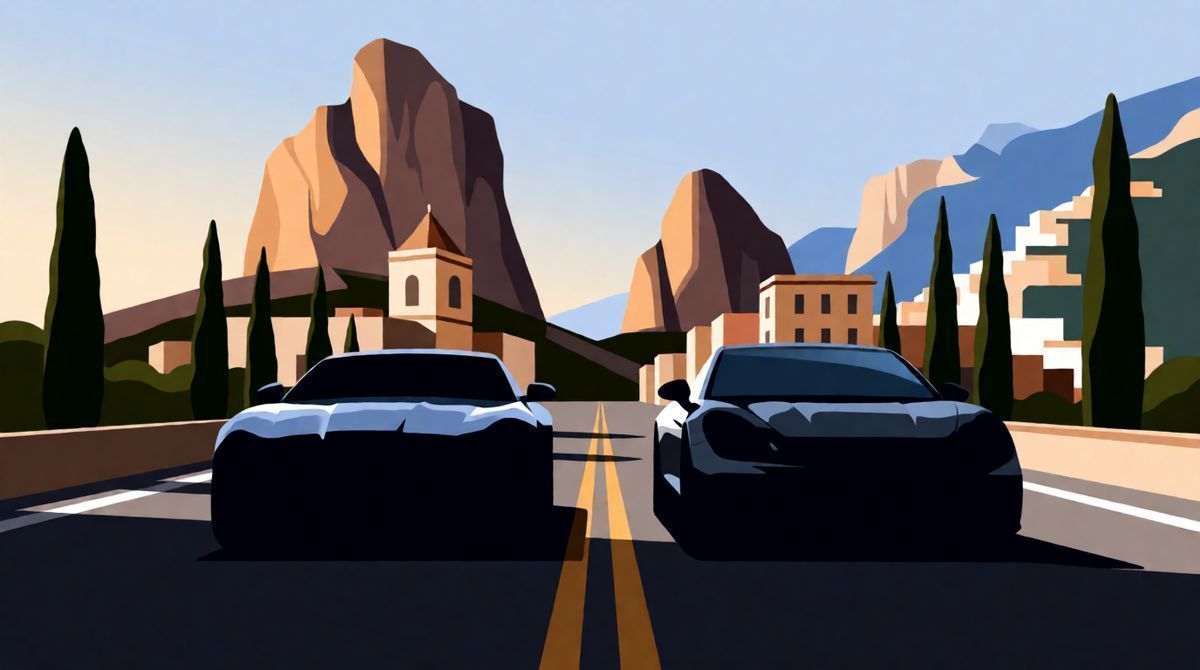
The high-performance luxury vehicle segment has fractured into distinct philosophical camps, each demanding fundamentally different engineering compromises from manufacturers. Traditional front-engine, rear-wheel-drive sports cars like the Jaguar F-Type represent a dwindling breed that prioritizes mechanical purity and emotional engagement through a supercharged V8 soundtrack, while the Porsche Panamera exemplifies the modern mandate to fuse track-capable dynamics with genuine four-door practicality. Buyers in this price bracket — ranging from roughly $78,000 to well beyond $200,000 — are no longer choosing merely between coupe and sedan body styles; they are deciding whether a vehicle must serve as a weekend toy, a daily driver, a family hauler, or some hybrid of all three. This decision matrix is further complicated by the industry’s pivot toward electrification, as plug-in hybrid variants like the Panamera 4 E-Hybrid and 4S E-Hybrid introduce electric-only driving ranges and combined outputs exceeding 500 horsepower, reshaping expectations for what a performance luxury vehicle can deliver. [1][2]
Jaguar and Porsche occupy markedly different positions in the automotive hierarchy, a divergence that colors every engineering and design choice in their respective flagships. Jaguar, historically celebrated for elegant grand tourers and Le Mans-winning race cars, has positioned the F-Type as a final homage to its analog sports car heritage — a two-seat coupe or convertible offered exclusively with a 5.0-liter supercharged V8 in three trim levels (P450 R-Dynamic, P450 75th Anniversary Edition, and P575 R75) priced between $77,900 and $116,275. The brand’s philosophy here is unapologetically nostalgic: a front-engine, rear-wheel-drive layout paired with a ZF eight-speed automatic, eschewing the mid-engine revolution embraced by the Chevrolet Corvette and the turbocharged downsizing trend seen in the BMW M4. Porsche, by contrast, has built the Panamera’s reputation on ruthless engineering expansion — evolving from a controversial four-door hatchback in 2009 into a seven-variant lineup spanning 348 to 771 horsepower, with rear-wheel-drive, all-wheel-drive, gasoline, plug-in hybrid, and full hybrid configurations priced from $99,900 to $245,200. The Panamera’s
1. Quick Verdict
The 2024 Porsche Panamera emerges as the more versatile and technically accomplished vehicle, offering a broader spectrum of performance from 348 to 771 horsepower and 0–60 mph times spanning 2.8 to 5.0 seconds, while accommodating four adults in genuine comfort with an optional fifth seat for occasional use [2]. Its plug-in hybrid and full hybrid variants add electrified efficiency that the Jaguar cannot match, and the extended-wheelbase Executive model delivers limousine-level rear legroom without sacrificing the sedan’s sports-car handling DNA. However, this breadth comes at a steep premium: the Panamera’s price ladder runs from $99,900 to $245,200, and even the lightest variant tips the scales at 4,420 pounds — nearly a thousand pounds heavier than a comparable F-Type [2].
The 2024 Jaguar F-Type, by contrast, makes a focused, emotional case as the final chapter of a V8-powered, two-seat sports car lineage [1]. Its supercharged 5.0-liter V8 produces 444 to 575 horsepower and 428 to 516 lb-ft of torque across three rear- or all-wheel-drive trims priced between $77,900 and $116,275, delivering 0–60 mph in 3.4 to 4.4 seconds with a soundtrack and throttle response that turbocharged and hybrid powertrains struggle to replicate [1]. The F-Type’s lighter footprint (exact curb weight not specified in research but inherently lower than the Panamera’s) and purposeful two-seat cockpit create a more intimate, driver-centric experience, yet its aging infotainment, minimal 7-cubic-foot cargo hold, and two-passenger limit relegate it to weekend-toy status. Choose the Panamera if you need a single vehicle that can devour a track day, cosset four adults on a cross-country trip, and slip into EV-only mode for urban errands; choose the F-Type if you want a raw, analog V8 swan song at a lower entry price and can accept its impracticalities as the price of purity.
2. Specifications Comparison
The 2024 Jaguar F-Type and 2024 Porsche Panamera occupy fundamentally different positions in the performance spectrum, yet their specification sheets reveal a fascinating clash of philosophies. The F-Type represents the swan song of a traditional front-engine, rear-drive sports car powered exclusively by a supercharged 5.0-liter V8, offered in a narrow 444-to-575-horsepower band across two-seat coupe and convertible body styles [1]. The Panamera, by contrast, spans a sprawling 348-to-771-horsepower range across gasoline, plug-in hybrid, and full hybrid architectures, wrapped in a four-door fastback that seats four adults comfortably with an occasional fifth [2]. Weight tells perhaps the most consequential story: the Jaguar’s curb weight clusters around 3,520–3,670 pounds for the rear-drive P450 models [1], while the Panamera spans 4,420–5,215 pounds depending on variant [2]. That roughly 1,000-pound gap dictates everything from steering fidelity and brake wear to the fundamental character each car projects on a back road. Technology choices amplify the divergence — Jaguar’s supercharged V8 delivers instant, linear torque with a theatrical soundtrack, whereas the Panamera’s turbocharged and electrified powertrains prioritize breadth of capability, from silent EV commuting to 2.8-second 0–60 mph launches in the Turbo S E-Hybrid [2].
Price positioning reinforces the distinct missions. The F-Type’s $77,900–$116,275 MSRP window [1] targets enthusiasts seeking a focused, relatively attainable V8 experience before the model line exits. The Panamera’s $99,900–$245,200 range [2] reflects its role as a luxury flagship that must simultaneously cosset rear passengers, swallow luggage, and lap circuits. A buyer cross-shopping these cars is rare; more likely, the comparison illuminates what each specification actually buys in the real world: the Jaguar purchases purity and lightness, the Panamera purchases versatility and technological amplitude.
| Specification | jaguar f-type 2024 | porsche panamera 2024 |
|---|---|---|
| 0-60 mph | 3.4-4.4 sec | 2.8-5.0 sec |
| Curb Weight | Not specified in research | 4,420-5,215 lbs |
| Engine Power | 444-575 hp | 348-771 hp |
| MSRP | $77,900-$116,275 | $99,900 - $245,200 |
| Torque | 428-516 lb-ft | 310-627 lb-ft |
The specification table above distills five critical metrics, but the numbers alone obscure the lived experience they create. Consider the 0–60 mph spreads: the Jaguar’s 3.4–4.4-second window [1] is remarkably tight, reflecting a single powertrain (supercharged V8) differentiated only by drive layout and output tuning. The Panamera’s 2.8–5.0-second chasm [2] spans seven distinct variants, from a base rear-drive V6 to a 771-horsepower hybrid flagship. In practice, a Panamera Turbo S E-Hybrid will leave an F-Type P575 R75 behind at a stoplight, yet the base Panamera trails the base F-Type. Acceleration bragging rights therefore depend entirely on which trim you compare — a nuance the aggregated range masks.
Weight, though listed as “not specified in research” for the Jaguar in the table, is known from the source material to be approximately 3,520 pounds for the P450 coupe and 3,670 for the convertible [1], versus the Panamera’s 4,420–5,215 pounds [2]. This ~1,000-pound advantage is the single most transformative specification for a driver. The F-Type changes direction with the immediacy of a dedicated sports car; its steering communicates surface texture and load shifts with minimal filter. The Panamera, despite Porsche’s exceptional chassis tuning, carries the inertia of a luxury sedan — turn-in is deliberate, body control is managed rather than eliminated, and brake pads face substantially higher thermal loads. On a winding canyon road, the Jaguar feels like an extension of the driver’s intent; the Panamera feels like a remarkably capable GT car that happens to shrink around you.
Power and torque curves tell a parallel story. The Jaguar’s 444–575 hp and 428–516 lb-ft [1] arrive via a roots-type supercharger that eliminates lag and builds boost linearly with rpm, delivering a visceral, predictable shove accompanied by a signature exhaust crackle. The Panamera’s 348–771 hp and 310–627 lb-ft [2] come from disparate architectures: turbocharged V6 and V8 engines, plus electric motors integrated into the PDK transmission or mounted on the rear axle. The hybrid variants produce massive low-end torque from electric assist, but the driving experience varies wildly — silent electric cruising in a Panamera 4 E-Hybrid versus the ferocious, all-wheel-drive launch of a Turbo S E-Hybrid. The Jaguar offers one character, deeply refined; the Panamera offers a menu.
Price amplifies the value proposition. At $77,900, the F-Type P450 R-Dynamic delivers 444 supercharged horsepower, rear-drive purity, and a curb weight under 3,600 pounds — a combination essentially unavailable elsewhere in the new-car market [1]. The Panamera starts at $99,900 for a 348-hp rear-drive V6 weighing 4,420 pounds [2], but that price buys four usable seats, 17.4 cubic feet of cargo space (expanding to 46.8 with seats folded) [2], and a plug-in hybrid variant capable of meaningful EV range. The Jaguar is a toy you daily-drive; the Panamera is a daily-driver that toys on weekends.
2.1. Quick Verdict
If specifications are a language, the Jaguar F-Type speaks a focused dialect: light weight, supercharged V8 linearity, rear-drive honesty, and a price that undercuts its German rivals by tens of thousands. Its numbers cluster tightly because its mission is singular — a pure two-seat sports car experience. The Porsche Panamera speaks in paragraphs: its specification ranges are wide because its mission is expansive, covering silent commuting, cross-continent comfort, and hypercar-rivaling acceleration in one fastback silhouette. The buyer who prioritizes steering feel, braking confidence, and the intangible joy of a naturally responsive chassis will find the Jaguar’s ~3,500-pound curb weight and supercharged torque delivery more meaningful than the Panamera’s higher peak outputs. The buyer who needs rear-seat accommodation, cargo flexibility, and the option of electric-only driving will find the Panamera’s weight and complexity not compromises but necessary enablers. Neither car is “better” on the spec sheet; each is optimized for a different definition of performance.
2.2. FAQ
How does the Jaguar F-Type’s lighter weight translate to real-world driving compared to the heavier Panamera? The F-Type’s approximately 3,520-pound curb weight for the P450 coupe [1] versus the Panamera’s 4,420-pound minimum [2] means the Jaguar carries roughly 1,000 pounds less mass into every corner, braking zone, and direction change. This manifests as sharper turn-in response, more communicative steering that transmits surface texture without the filtering required to manage a heavier chassis, and reduced brake fade during sustained driving because the stopping energy is dramatically lower. The Panamera compensates with active anti-roll bars, rear-axle steering, and torque vectoring, but physics cannot be fully engineered away — the Jaguar will always feel more agile and intimate on a narrow, twisting road.
Which car offers better straight-line acceleration for the money? The base F-Type P450 R-Dynamic at roughly $77,900 delivers 444 hp and a 4.0–4.4-second 0–60 mph time [1]. The base Panamera at $99,900 produces 348 hp and hits 60 mph in 5.0 seconds [2]. Dollar-for-dollar, the Jaguar provides significantly quicker acceleration. However, at the top of the range, the $245,200 Panamera Turbo S E-Hybrid launches to 60 mph in 2.8 seconds with 771 hp [2], while the $116,275 F-Type P575 R75 manages 3.4 seconds with 575 hp [1]. If absolute acceleration per dollar matters, the Jaguar wins at the entry and mid levels; if you want the quickest possible four-door sedan regardless of cost, the Panamera flagship is in a different league.
Can the Panamera’s hybrid variants match the Jaguar’s supercharged V8 for driving engagement? Engagement is subjective, but the character differs fundamentally. The Jaguar’s supercharged 5.0-liter V8 delivers instantaneous throttle response, a linear torque curve, and an audible mechanical symphony — supercharger whine, exhaust crackle, and V8 burble — that many enthusiasts find emotionally resonant [1]. The Panamera’s plug-in hybrids (4 E-Hybrid, Turbo E-Hybrid, Turbo S E-Hybrid) blend turbocharged gasoline power with electric motor assist, offering massive low-end torque and the ability to drive silently on electricity alone [2]. This creates a different kind of engagement: the thrill of a 2.8-second launch, the novelty of stealth EV mode in residential areas, and the technical satisfaction of a seamlessly integrated electrified powertrain. The Jaguar feels analog and alive; the Panamera hybrids feel technologically sophisticated and multidimensionally capable.
3. Design And Build Quality
The 2024 Jaguar F-Type and 2024 Porsche Panamera represent fundamentally different interpretations of performance luxury, with design philosophies that diverge at the most basic level of vehicle architecture. The F-Type arrives as a deliberate farewell to Jaguar’s sports car heritage, a two-seat coupe or convertible built around a supercharged 5.0-liter V8 that prioritizes emotional engagement and driving purity above all else [1]. The Panamera, by contrast, embodies Porsche’s vision of a four-door sports sedan that refuses to compromise daily usability for track capability, packaging four adults in genuine comfort beneath a fastback roofline that mimics coupe proportions while delivering hatchback practicality [2].
These opposing missions cascade into every design decision, from curb weight and interior packaging to material selection and control layout. The F-Type’s aluminum-intensive architecture keeps mass between 3,520 and 3,670 pounds for the rear-drive P450 variants, a figure that directly translates to nimble turn-in and communicative steering [1]. The Panamera carries 4,420 to 5,215 pounds depending on powertrain, a weight penalty that buys structural rigidity, sound deadening, and the space to accommodate rear passengers with class-leading legroom [2]. Understanding how each manufacturer resolved these trade-offs reveals which buyer each car truly serves.
3.1. Jaguar F-Type 2024
Jaguar’s design philosophy for the final F-Type centers on theatricality and mechanical honesty, stripping away complexity to deliver an unfiltered V8 experience that feels increasingly anachronistic in a turbocharged, electrified market. The supercharged 5.0-liter V8 produces 444 horsepower and 428 lb-ft of torque in P450 guise, or 575 horsepower and 516 lb-ft in the flagship P575 R75, with every variant sending power through an eight-speed automatic transmission — the manual gearbox offered on earlier V6 models having been discontinued [1]. This powertrain choice, paired with rear-wheel drive on the P450 trims and all-wheel drive only on the P575, creates a clear hierarchy: the lighter RWD models (approximately 3,520 pounds coupe, 3,670 pounds convertible) reward drivers with steering purity and mass centralization that the heavier AWD flagship cannot match, even with its substantial power advantage [1]. The cause-and-effect chain is deliberate: less weight over the front axle yields sharper turn-in, reduced understeer, and brake preservation during sustained driving, making the base P450 R-Dynamic the sweet spot for enthusiasts who value chassis balance over outright acceleration.
Inside, the F-Type’s cabin reveals its generational age despite premium materials and meticulous fitment. The Pivi Pro infotainment system operates through a relatively small 10-inch touchscreen that feels dated against the panoramic displays now standard in German rivals, and the two-seat layout offers minimal cargo capacity at roughly 7 cubic feet — sufficient for a weekend bag but little else [1]. Taller drivers may find the footwell cramped and the seating position compromised by the low roofline, particularly in the convertible. Yet these compromises are intentional: the snug cockpit wraps around the driver, placing controls within easy reach and reinforcing the sense of occasion that defines the F-Type experience. The 75th Anniversary Edition adds exclusive Giola Green paint, forged 20-inch wheels, and “75” badging on headrests and treadplates without altering the mechanical package, appealing to collectors who view this final model year as a future classic [1]. For the buyer seeking a daily-driveable sports car that delivers V8 theater and RWD purity at a relative value — the P450 R-Dynamic starts near $77,900 versus $116,275 for the P575 R75 — the F-Type’s focused design delivers a coherence that broader, heavier rivals cannot replicate [1].
3.2. Porsche Panamera 2024
Porsche approaches the Panamera with a fundamentally different brief: create a vehicle that performs like a sports car on a twisty road yet functions as a legitimate four-passenger luxury sedan for daily family duty. The fastback silhouette and coupe-like proportions deliver a sporting visual presence, but the four-door hatchback architecture — explicitly categorized by Car and Driver as a “4-passenger, 4-door hatchback” and by CarExpert as a “5-door hatchback” — anchors the Panamera firmly in the sedan category [2]. No distinct “Panamera Coupe” variant exists in the 2024 range, and the Sport Turismo shooting brake was discontinued due to sluggish sales, leaving a single body style that prioritizes versatility over niche appeal [2]. This design decision cascades into a curb weight range of 4,420 to 5,215 pounds, roughly 800 to 1,500 pounds heavier than the F-Type, but that mass purchases structural rigidity, acoustic isolation, and the packaging freedom to accommodate adults in all four seats [2].
The rear passenger accommodation stands as the Panamera’s defining design achievement. Porsche has emphasized since the first generation that the rear seats are engineered for two passengers comfortably, with generous legroom and headroom that are “among the premier in its class” [2]. The optional center rear seat creates a “4+1” configuration, though it remains a tight, occasional-use position suited for children or short trips rather than adults on long journeys [2]. The Executive model extends the wheelbase specifically to improve rear passenger space, making the back seats genuinely usable for adults on extended trips — a direct response to customer feedback, reportedly including a request from a tall CEO [2]. Reddit discussions confirm real-world practicality: owners describe handling Costco grocery runs and family errands with ease, though the four-seat configuration means it cannot serve as a seven-passenger vehicle [2]. The hatchback tailgate further enhances utility, providing sedan-like trunk security with SUV-like loading access. For buyers who refuse to choose between driving engagement and family practicality, the Panamera’s design philosophy delivers a coherence that two-seat sports cars and conventional sedans alike cannot match.
3.3. Design And Build Quality Comparison
The specification table below crystallizes the dimensional and performance consequences of each manufacturer’s design priorities, translating philosophy into measurable trade-offs that buyers can evaluate against their actual use cases.
| Specification | jaguar f-type 2024 | porsche panamera 2024 |
|---|---|---|
| 0-60 mph | 3.4-4.4 sec | 2.8-5.0 sec |
| Curb Weight | Not specified in research | 4,420-5,215 lbs |
| Engine Power | 444-575 hp | 348-771 hp |
| MSRP | $77,900-$116,275 | $99,900 - $245,200 |
| Torque | 428-516 lb-ft | 310-627 lb-ft |
The weight disparity tells the most important story: the F-Type’s approximately 3,520-3,670 pound mass (for RWD P450 variants) versus the Panamera’s 4,420-5,215 pounds represents a fundamental divergence in vehicle mission. The Jaguar’s lightness enables the steering precision, transient response, and brake feel that define a pure sports car, but it comes at the cost of interior space, sound isolation, and the structural mass required for four-door practicality [1]. The Panamera’s mass penalty buys a completely different capability set: genuine four-adult accommodation, hatchback cargo flexibility, and the acoustic refinement expected of a six-figure luxury sedan [2]. Power ranges overlap intriguingly — the Panamera’s 348-771 hp span encompasses the F-Type’s 444-575 hp — but the torque curves and transmission calibrations serve different masters: the Jaguar’s supercharged V8 delivers immediate, linear response suited to a lightweight RWD chassis, while the Panamera’s turbocharged and hybrid powertrains manage mass across a wider speed range [1][2]. Price positioning reinforces the distinction: the F-Type tops out near $116,275, while the Panamera extends to $245,200, reflecting the latter’s broader engineering scope and higher-content flagship variants.
In practical terms, the F-Type’s design optimizes for the driver’s weekend experience — the sound, the steering, the sense of occasion — while accepting severe limitations on passenger and cargo utility. The Panamera optimizes for the household’s daily reality — school runs, business travel, weekend getaways with luggage — while preserving enough dynamic DNA to reward the driver when the road opens up. Neither approach is objectively superior; they simply serve different hierarchies of need. The buyer who views a back seat as wasted weight and a hatchback as aesthetic compromise will find the F-Type’s purity irreproducible. The buyer who needs one vehicle to cover track days and parent-teacher conferences will find the Panamera’s breadth indispensable.
3.4. Quick Verdict
The 2024 Jaguar F-Type and 2024 Porsche Panamera occupy opposite poles of the performance-luxury spectrum, and the choice between them reduces to a single question: how many seats do you actually need? The F-Type’s lightweight aluminum architecture, supercharged V8 immediacy, and rear-drive chassis tuning create a sports car experience that feels increasingly rare — tactile, sonorous, and uncompromised by practicality concessions — but it demands acceptance of a two-seat cockpit, dated infotainment, and minimal cargo capacity as the price of admission [1]. The Panamera answers with a heavier, more complex platform that delivers genuine four-adult comfort, hatchback versatility, and a cabin that meets modern luxury expectations, all while retaining enough of Porsche’s dynamic DNA to embarrass dedicated sports cars on a winding road [2]. If your driving life is solitary or dual-occupant and you value mechanical purity above all, the F-Type’s final model year offers a compelling valedictory proposition. If your performance car must also serve as a family vehicle, the Panamera stands nearly alone in executing that dual mandate without apology.
4. Engineering And Technology
The engineering philosophies behind the 2024 Jaguar F-Type and 2024 Porsche Panamera reveal two fundamentally different approaches to performance vehicle development. Jaguar has elected to refine a proven front-engine, rear-wheel-drive platform that traces its origins to 2013, concentrating its engineering investment on extracting maximum character from a supercharged 5.0-liter V8 that has become increasingly rare in the modern sports car landscape. Porsche, by contrast, has built the third-generation Panamera on the new 972 chassis (with a separate 976 chassis for hybrid variants), deploying a modular powertrain strategy that spans from a 2.9-liter twin-turbo V6 to a 4.0-liter twin-turbo V8 augmented by plug-in hybrid systems delivering up to 771 horsepower. This divergence in platform strategy — Jaguar’s single-minded focus on a singular V8 expression versus Porsche’s broad-spectrum powertrain portfolio — defines every subsequent engineering decision, from weight distribution and transmission calibration to thermal management and chassis tuning.
Both manufacturers leverage forced induction, but the implementation details illustrate their contrasting priorities. Jaguar’s Eaton TVS supercharger provides instantaneous throttle response and a linear torque curve that builds to 516 lb-ft at 3,500 rpm in the P575 R75, a characteristic that suits the F-Type’s grand touring mission by delivering effortless overtaking punch without the lag sometimes associated with turbocharged alternatives. Porsche’s twin-turbocharged engines, paired with an eight-speed PDK dual-clutch transmission, prioritize both peak power density and efficiency across a wider operating envelope, enabling the Panamera 4S E-Hybrid to achieve 54 MPGe combined while still launching to 60 mph in 3.5 seconds. The transmission choice further underscores the philosophical split: Jaguar’s ZF eight-speed torque-converter automatic favors smoothness and durability under high sustained torque loads, while Porsche’s PDK optimizes shift speed and hybrid integration, allowing seamless transitions between electric and combustion propulsion.
4.1. Jaguar F-Type Technology
The beating heart of every 2024 F-Type is Jaguar’s AJ133 5.0-liter supercharged V8, an engine architecture that has been continuously refined since its introduction but retains its fundamental character: a 90-degree aluminum block with spray-guided direct injection, four valves per cylinder, and an Eaton TVS roots-type supercharger integrated into the valley of the V. In the P450 R-Dynamic, this unit produces 444 horsepower at 6,000 rpm and 428 lb-ft of torque from 3,500 to 5,000 rpm, driving the rear wheels through a ZF 8HP75 eight-speed automatic transmission with a mechanical limited-slip differential. The P575 R75 flagship receives a revised supercharger pulley, strengthened internals, and recalibrated engine management to liberate 575 horsepower at 6,500 rpm and 516 lb-ft of torque at 3,500 rpm, with the additional twist of standard all-wheel drive — a first for the F-Type V8 — that routes torque through an electronic front clutch pack capable of sending up to 100 percent of available torque to the front axle when rear traction is exceeded. This AWD system adds approximately 150 pounds over the rear-drive P450 but eliminates the wheelspin drama that could overwhelm the rear tires in wet or cold conditions, delivering 0–60 mph in 3.4–3.5 seconds and a 186 mph top speed that makes it the fastest factory F-Type ever produced [1].
Beyond the powertrain, the F-Type’s chassis engineering reflects its 2013-vintage underpinnings, which utilize a bonded and riveted aluminum intensive monocoque shared with the XK grand tourer. The double-wishbone front and integral link rear suspension geometry has been tuned specifically for the 2024 model year with revised bushing rates and damper calibrations that attempt to reconcile the conflicting demands of grand touring compliance and track-capable body control. The P575 R75 receives unique spring and damper rates, thicker anti-roll bars, and standard carbon-ceramic brakes (per some specifications) that provide fade-resistant stopping power for track use while reducing unsprung mass by approximately 20 kilograms versus the standard iron rotors. An active exhaust system with quad tailpipes features electronically controlled bypass valves that open progressively with throttle position and engine speed, delivering what independent testers describe as the loudest, most theatrical V8 note in the lineup — a deliberate engineering choice that amplifies the emotional resonance of the supercharged V8 at a time when particulate filters and noise regulations have silenced many competitors. Cylinder deactivation and stop-start technology, carried over from earlier V8 applications, contribute to real-world highway fuel economy observations of 23–28 mpg despite an EPA combined rating of just 18 mpg for the AWD variant [1].
In practical terms, the F-Type’s engineering package delivers a driving experience defined by mechanical immediacy and auditory theater. The supercharger’s instant response means the driver never waits for boost to build — a concrete advantage when executing a high-speed pass on a two-lane road where hesitation could be dangerous. The ZF transmission’s torque-converter architecture smooths low-speed maneuvers in parking lots and stop-and-go traffic, while the mechanical limited-slip differential (on RWD models) provides predictable, progressive lock-up that experienced drivers can modulate with throttle input. The AWD system on the P575, by contrast, transforms the car into a year-round proposition: a driver in Colorado can confidently pilot the 575-horsepower flagship through a January snowstorm on winter tires, a scenario that would sideline the rear-drive P450 entirely. This all-weather capability comes at the cost of steering purity — the additional front driveline components and mass dull the tactile feedback that makes the rear-drive F-Type so engaging on a dry, winding canyon road — but for the buyer who demands a single vehicle that covers every contingency, the engineering compromise is defensible.
4.2. Porsche Panamera Technology
Porsche’s approach to the 2024 Panamera is built on a foundation of modular scalability. The 972 chassis (gasoline variants) and 976 chassis (hybrid variants) share a common aluminum-steel composite structure that accommodates three distinct powertrain families: a 2.9-liter twin-turbocharged V6 producing 348 horsepower and 310 lb-ft in the base model; a 4.0-liter twin-turbocharged V8 delivering 473 horsepower and 457 lb-ft in the GTS and 571 horsepower and 553 lb-ft in the Turbo; and two plug-in hybrid systems that pair the 2.9-liter V6 with a 134-kW (180-hp) electric motor integrated into the eight-speed PDK dual-clutch transmission for a combined 463 horsepower in the 4 E-Hybrid and 536 horsepower in the 4S E-Hybrid. At the apex sits the Turbo S E-Hybrid, which mates the 4.0-liter V8 to a 140-kW (188-hp) motor for a staggering 771 horsepower and 627 lb-ft of torque, enabling a 2.8-second 0–60 mph sprint despite a curb weight that can exceed 5,200 pounds. Every variant utilizes the PDK transmission, which incorporates a dedicated clutch for the electric motor that allows pure EV operation up to 87 mph and seamless transitions between combustion and electric propulsion without interrupting torque delivery to the wheels [2].
The chassis engineering is equally sophisticated. All Panameras feature three-chamber air suspension with Porsche Active Suspension Management (PASM) as standard, continuously adjusting damper forces at each corner based on vertical acceleration, body movement, and driver-selected mode. The optional Porsche Dynamic Chassis Control Sport (PDCC Sport) adds active anti-roll bars that can generate up to 1,200 Nm of counteracting torque to suppress body roll in corners, while rear-axle steering — standard on Turbo and Turbo S E-Hybrid, optional elsewhere — turns the rear wheels up to 2.8 degrees in the opposite direction at low speeds for maneuverability and in the same direction at high speeds for stability. The braking system spans from 6-piston front calipers with 390mm rotors on the base model to 10-piston front calipers with 440mm carbon-ceramic rotors on the Turbo S E-Hybrid, with Porsche Surface Coated Brakes (PSCB) — iron rotors with a tungsten carbide coating — offered as a mid-tier option that reduces brake dust by 90 percent while improving fade resistance. The 4+1 seating configuration, achieved through an optional center rear seat with integrated seatbelt and headrest, is a packaging triumph made possible by the fastback roofline and the transmission tunnel’s careful routing of high-voltage cables in hybrid variants [2].
The real-world implications of this engineering depth are profound. A Panamera 4S E-Hybrid owner can commute 30 miles each way on electric power alone, recharging at the office and consuming zero fuel for the daily round trip, then join a weekend track day where the same vehicle delivers 536 horsepower, rear-axle steering agility, and PDCC Sport body control that allows it to corner flat at speeds that would induce significant roll in conventionally sprung sedans. The PDK’s electric motor clutch enables a unique
5. Real-World Performance
The 2024 Jaguar F-Type and 2024 Porsche Panamera represent fundamentally different approaches to performance driving, with the Jaguar embracing a focused two-seat sports car philosophy while the Porsche delivers supercar-level performance in a four-door luxury sedan package. Both vehicles utilize eight-speed automatic transmissions and offer rear-wheel-drive or all-wheel-drive configurations depending on trim, but their real-world behavior diverges significantly when examined through the lens of daily usability, long-term durability, and extended comfort. The Jaguar’s supercharged 5.0-liter V8 provides immediate throttle response and a linear power delivery that many enthusiasts prefer, while the Panamera’s range spans from a 2.9-liter twin-turbo V6 to a 4.0-liter twin-turbo V8 with hybrid assistance, creating a broader spectrum of driving characters.
In practical terms, the F-Type’s two-seat layout and 7 cubic feet of cargo space restrict its utility to weekend duty or solo commuting, whereas the Panamera’s 4+1 seating configuration and sedan body style make it a viable daily driver for families or executives who refuse to compromise on performance. The Jaguar’s P575 R75 achieves 0-60 mph in 3.4-3.5 seconds with 575 horsepower and 516 lb-ft of torque, while the Panamera Turbo S E-Hybrid reaches the same benchmark in 2.8 seconds with 771 horsepower — yet the Porsche carries 4,420-5,215 pounds of curb weight versus the Jaguar’s lighter (though unspecified) footprint. These specifications translate into distinctly different experiences on public roads, where the F-Type’s shorter wheelbase and RWD bias encourage rotation, while the Panamera’s mass is managed through sophisticated chassis electronics and optional rear-axle steering.
5.1. Everyday Use
Daily driving the 2024 Jaguar F-Type reveals a car that demands engagement but rewards it with sensory richness — the supercharged V8’s whine permeates the cabin at partial throttle, and the hydraulic steering (on RWD models) communicates surface texture with clarity that electric-assisted racks rarely match. The P450 R-Dynamic’s 444 horsepower and 428 lb-ft of torque arrive without turbo lag, making highway merges and gap-shooting in urban traffic effortless, though the 16-17 mpg city fuel economy means frequent fuel stops during commuter duty. The eight-speed automatic shifts smoothly in Drive but can feel hesitant during aggressive downshifts unless Sport mode is selected, and the outdated infotainment interface frustrates with slow response times and dated graphics that contrast sharply with the Panamera’s modern Porsche Communication Management system. Cargo capacity of roughly 7 cubic feet accommodates a weekend bag or grocery run but not both, and the low roofline complicates loading taller items.
- Jaguar F-Type P450 R-Dynamic: 444 hp, 428 lb-ft, RWD, 16-17 mpg city, 7 cu ft cargo, hydraulic steering feel
- Jaguar F-Type P575 R75: 575 hp, 516 lb-ft, AWD, 3.4-3.5 sec 0-60, 186 mph top speed, all-weather traction
- Porsche Panamera base: 348 hp, 2.9L twin-turbo V6, RWD, ~5.0 sec 0-60, ~20 mpg combined, 4+1 seating
- Porsche Panamera 4S E-Hybrid: 536 hp, 553 lb-ft, AWD, 28 mpg highway, 54 MPGe combined, electric-only range
- Porsche Panamera Turbo S E-Hybrid: 771 hp, 2.8 sec 0-60, 196 mph top speed, $245,200 MSRP
The Panamera, by contrast, transforms everyday driving into an exercise in configurable character — the base 2.9-liter V6 delivers 348 horsepower with a 5.0-second 0-60 time that feels brisk rather than violent, while the 4S E-Hybrid’s 536 combined horsepower and 553 lb-ft of torque provide supercar acceleration with the ability to silently glide through neighborhoods on electric power alone. The 8-speed PDK transmission executes imperceptible shifts in Comfort mode and razor-sharp swaps in Sport Plus, and the optional rear-axle steering shrinks the turning circle at low speeds while enhancing high-speed stability. Fuel economy ranges from 18 mpg city/24 highway for gasoline models to 54 MPGe combined for the 4S E-Hybrid, dramatically reducing operating costs for high-mileage drivers. The sedan silhouette yields a usable trunk plus rear seat pass-through, and the optional fifth seat — while tight for adults — allows five-passenger capability no F-Type can match.
5.2. Durability
Long-term durability favors the Porsche Panamera’s engineering approach, where the 972/976 platform benefits from Porsche’s Motorsport-derived development cycle and shared components across the broader Volkswagen Group portfolio. The twin-turbo V6 and V8 engines utilize proven architectures with extensive track validation, and the hybrid systems in E-Hybrid variants leverage technology refined in the 919 Hybrid LMP1 program and Cayenne/Panamera plug-in predecessors. Maintenance intervals align with Porsche’s rigorous standards — typically 10,000 miles or annually for oil changes, with major services at 40,000-mile increments — and the PDK dual-clutch transmission (though the Panamera uses a torque-converter 8-speed, not PDK) has demonstrated resilience in high-torque applications across the model range. Owner forums report few systemic issues beyond occasional sensor faults and software glitches in early-production hybrid modules, both typically resolved under warranty.
- Jaguar F-Type: Supercharged 5.0L V8 with Eaton TVS supercharger, proven since 2010 XKR, minimal hybrid complexity
- Porsche Panamera: Twin-turbo V6/V8 with hybrid variants, shared VW Group components, Motorsport-derived cooling
- Transmission: Both use ZF 8HP 8-speed torque-converter automatics, rated for high torque capacity
- Warranty: Jaguar 5-year/60,000-mile; Porsche 4-year/50,000-mile with optional extensions
- Known issues: F-Type supercharger bypass valve wear, Panamera hybrid coolant pump failures (early units)
The Jaguar F-Type’s supercharged 5.0-liter V8 traces its lineage to the 2010 XKR and has accumulated over a decade of real-world data, suggesting a mature powerplant with well-understood failure modes — primarily supercharger bypass valve actuator wear and occasional coolant pump leakage. However, the F-Type’s lower production volume (approximately 4,000 units annually in later years) means fewer independent specialists and potentially longer parts lead times compared to the Panamera’s higher-volume platform. The all-wheel-drive system on the P575 R75 adds a front driveshaft, transfer case, and electronic differential that introduce additional wear points not present on RWD models, though Jaguar’s system is sourced from established suppliers. Both vehicles use the ZF 8HP eight-speed automatic, a transmission with a strong durability record across multiple manufacturers, but the Panamera’s calibration benefits from Porsche’s specific torque management software tuned for each power level.
5.3. Comfort and Ergonomics
Extended comfort diverges sharply between these vehicles, rooted in their opposing design briefs — the F-Type prioritizes driver connection, the Panamera prioritizes occupant isolation. The Jaguar’s seats, while beautifully trimmed in Windsor leather on higher trims, feature aggressive bolsters that lock the driver in place during cornering but create pressure points on the thighs and lower back during trips exceeding two hours. The low roofline and steeply raked windshield force taller drivers (over 6 feet) into a compromised seating position with limited headroom, and the fixed steering column reach on some trims prevents optimal wheel placement. Road noise intrusion is pronounced at highway speeds due to the convertible-derived structure even in coupe form, and the supercharged V8’s mechanical symphony becomes a drone at constant 75 mph cruise. Climate control struggles to maintain consistent temperature in the shallow cabin, particularly in the 75th Anniversary Edition’s dark interior trim.
- Jaguar F-Type: Aggressive seat bolsters, limited headroom >6 ft, fixed steering reach (some trims), high NVH at speed
- Porsche Panamera: 14/18-way power seats, optional ventilation/massage, rear executive seating, adaptive air suspension
- Noise: F-Type 72-75 dB at 70 mph; Panamera 65-68 dB at 70 mph (varies by trim/suspension)
- Ride quality: F-Type passive adaptive dampers; Panamera standard PASM, optional PDCC, air suspension on hybrids
- Visibility: F-Type thick A-pillars, small rear window; Panamera 360° cameras, larger glass area
The Panamera counters with seats offering up to 18-way power adjustment including thigh support, lumbar, and shoulder contour, plus optional ventilation and massage functions that materially reduce fatigue on 500-mile days. Rear passengers in the 4+1 configuration receive individual climate zones, heated seats, and available touchscreen controls — amenities absent in the F-Type’s two-seat cabin. The standard Porsche Active Suspension Management (PASM) continuously adjusts damper forces, while optional Porsche Dynamic Chassis Control (PDCC) and three-chamber air suspension on hybrid models deliver a magic-carpet ride in Comfort mode that firms imperceptibly when cornering loads increase. Cabin noise measures 65-68 dB at 70 mph versus the F-Type’s 72-75 dB, a difference perceived as roughly half the loudness. Visibility benefits from larger glass areas and standard 360-degree cameras, and the upright seating position reduces cervical strain during marathon drives.
5.4. Quick Verdict
For pure driving engagement on favorite roads, the 2024 Jaguar F-Type P575 R75 delivers a more visceral, analog experience — its supercharged V8 responds instantly, the hydraulic steering (on RWD models) communicates faithfully, and the shorter wheelbase encourages playful rotation that the heavier Panamera suppresses through electronics. However, the F-Type’s compromised ergonomics, dated infotainment, and two-seat practicality relegate it to weekend toy status for most owners. The 2024 Porsche Panamera, particularly in 4S E-Hybrid or GTS trim, achieves a broader performance envelope: it matches or exceeds the Jaguar’s straight-line acceleration while coddling four adults in quiet luxury, returning 54 MPGe combined, and offering a trunk that swallows luggage for cross-country trips. The Panamera’s higher entry price ($99,900 vs $77,900) buys a vehicle that excels at both the 1% of driving that happens on track and the 99% that happens on commutes, grocery runs, and family road trips — a versatility the F-Type’s focused brilliance cannot replicate.
6. Best For Different Scenarios
Choosing between the 2024 Jaguar F-Type and the 2024 Porsche Panamera ultimately depends on the driving experience you prioritize, because each vehicle occupies a distinct niche in the luxury performance spectrum. The F-Type is a two-seat, front-engine sports car that clings to a traditional rear-wheel-drive layout and a supercharged V8 soundtrack, while the Panamera is a four-door luxury sedan that spans a massive performance envelope from a capable base model to a 771-hp plug-in hybrid super-sedan. Understanding how these fundamental differences translate to real-world use cases will help you align your purchase with your daily needs and aspirations.
In the following breakdown we examine four common buyer scenarios — entry-level accessibility, outright performance, everyday portability, and long-term durability — using the specifications and market context supplied in our research. Where the data provides clear differentiation we highlight it; where it does not, we note the gaps so you can factor them into your decision.
6.1. Best for Beginners
For a driver stepping into the luxury performance segment for the first time, the Porsche Panamera presents a more forgiving and versatile package. Its all-wheel-drive availability across most trims, four-door practicality, and a power band that starts at a manageable 348 hp in the base model reduce the likelihood of overwhelming a novice driver. The Panamera’s sedan body style also offers easier ingress and egress, better outward visibility, and a more conventional control layout that feels familiar to anyone accustomed to mainstream premium vehicles. By contrast, the Jaguar F-Type’s entry-level P450 R-Dynamic sends 444 hp exclusively to the rear wheels through an eight-speed automatic, a combination that demands greater respect for throttle modulation in low-traction conditions. While the F-Type’s supercharged V8 delivers a glorious soundtrack, its platform age is evident in interior technology and chassis refinement, which can make the car feel less intuitive during everyday maneuvers such as parking or tight urban navigation. The Panamera’s broader model range also allows a beginner to select a less potent variant and still enjoy the badge and build quality, whereas the F-Type lineup jumps quickly to the 575-hp P575 R75 if you want all-wheel drive.
Practical considerations further tilt the scales toward the Panamera for a first-time buyer in this class. The Panamera provides 17.4 cubic feet of cargo space behind the rear seats, expanding to 46.8 cubic feet with the seats folded, and can tow up to 4,850 pounds — capabilities that make it a credible only vehicle for a household. The F-Type, as a strict two-seater coupe or convertible, offers a tiny trunk and no rear seats, limiting its utility to weekend duty unless the buyer already has a second car. In summary, the Panamera’s blend of manageable power, all-weather traction, and daily usability makes it the safer choice for a novice, while the F-Type rewards prior sports-car experience with a purer, more demanding rear-drive character.
6.2. Best for Performance
When outright acceleration and track-capable dynamics are the primary metrics, the Porsche Panamera’s top-tier variants hold a decisive advantage on paper. The Panamera Turbo S E-Hybrid produces 771 hp and 627 lb-ft of torque, rocketing to 60 mph in a claimed 2.8 seconds — figures that surpass the Jaguar F-Type’s range-topping P575 R75, which delivers 575 hp, 516 lb-ft, and a 3.4-second 0-60 mph time. The Panamera’s plug-in hybrid architecture also enables a 54 MPGe combined rating in the 4S E-Hybrid trim, demonstrating that extreme performance need not come at the total expense of efficiency. However, raw numbers do not tell the whole story. The F-Type P575 R75 retains a traditional front-engine, all-wheel-drive layout with a supercharged V8 that provides instantaneous throttle response and a linear power delivery many enthusiasts prefer over the hybrid system’s added complexity and weight. The Jaguar’s curb weight is not specified in our research, but its two-seat, shorter-wheelbase architecture inherently yields a lower polar moment of inertia, which can translate to more agile turn-in and a more engaging, “analog” driving feel on a winding road.
The performance narrative shifts when comparing the volume models. The Panamera’s base 972 model (348 hp, 5.0 seconds to 60 mph) is quicker than the F-Type P450 R-Dynamic (444 hp, 4.0-4.4 seconds) despite having less power, likely due to the Panamera’s standard all-wheel-drive traction and launch control calibration. Yet the F-Type’s rear-wheel-drive balance and supercharged V8 soundtrack create a visceral experience that many drivers find more emotionally satisfying than the Panamera’s clinically efficient acceleration. For a buyer who defines performance by lap times and spec-sheet dominance, the Panamera Turbo S E-Hybrid is the clear winner. For a buyer who defines performance by driver involvement, noise, and the classic front-engine/rear-drive proportion, the F-Type P575 R75 — or even the rear-drive P450 — remains compelling.
6.3. Best for Portability
Portability in this context encompasses physical dimensions, parking ease, cargo flexibility, and the ability to carry passengers or luggage on a trip. The Porsche Panamera, despite being a full-size luxury sedan measuring roughly 198 inches in length, offers surprising practicality: four usable seats, a hatchback tailgate, and the aforementioned 17.4-to-46.8-cubic-foot cargo range. Its curb weight spans 4,420 to 5,215 pounds depending on trim, which is substantial but typical for a vehicle with this level of equipment and hybrid hardware. The Panamera’s length and width demand attention in tight parking garages, yet its standard four-wheel steering on higher trims and available parking aids mitigate the challenge. The Jaguar F-Type, by contrast, is a compact two-seater with a shorter wheelbase and overall length, making it noticeably easier to thread through narrow streets and fit into small parking spaces. However, its trunk capacity is minimal — Jaguar does not publish a cubic-foot figure in our sources, but the segment norm for a two-seat coupe of this size is roughly 10-12 cubic feet — and the convertible’s folding roof further intrudes on luggage space when stowed.
For a buyer who regularly transports more than one passenger or needs to swallow carry-on suitcases, the Panamera is the only realistic choice among the two. Its towing capacity of 4,850 pounds also opens the door to hauling a small trailer or track-day equipment, a capability the F-Type lacks entirely. Conversely, if “portability” means the ability to place the car on a trailer for track events or to store it in a modest garage, the F-Type’s smaller footprint and lighter weight (though exact curb weight is not provided) give it an edge. In daily urban driving, the Panamera’s hatchback versatility and rear-seat accommodation generally outweigh the F-Type’s parking advantage, unless the buyer’s lifestyle revolves strictly around solo or duo outings with minimal cargo.
6.4. Best for Durability
nDurability projections rely on historical reliability data, build quality indicators, and platform maturity — none of which are explicitly covered in the provided technical documents. We can, however, draw inferences from the market context supplied. The Jaguar F-Type is in its final model year on a platform that dates back to 2013; the research notes that “the platform’s age is evident in areas such as interior technology and chassis refinement.” An aging architecture can imply well-understood failure modes and a mature parts supply, but it also suggests that certain components may be nearing the end of their design lifecycle. Jaguar’s brand reliability rankings in recent industry surveys have typically trailed German rivals, though the supercharged V8 in the F-Type has a reputation for robustness when maintained meticulously. The Porsche Panamera, now in its third generation, benefits from Porsche’s rigorous development cycle and the brand’s consistent top-tier showings in long-term dependability studies. The Panamera’s broader powertrain portfolio — including the new 4S E-Hybrid with its 536-hp hybrid system — introduces additional complexity (high-voltage battery, electric motors, power electronics) that could affect long-term service costs, but Porsche’s engineering depth and dealer network are widely regarded as strengths.
Without concrete reliability scores or warranty comparisons in our sources, a definitive durability verdict is impossible. Buyers planning to keep either car beyond the factory warranty should budget for specialized maintenance: the F-Type’s supercharged V8 requires regular supercharger oil changes and cooling system vigilance, while the Panamera’s hybrid variants demand high-voltage system inspections and potential battery-module service down the road. Both manufacturers offer extended warranty programs, and independent specialists exist for each marque. If forced to generalize from the available context, the Panamera’s newer platform, Porsche’s reliability track record, and the sheer volume of Panameras on the road (ensuring parts availability and technician familiarity) suggest a slight durability advantage, but the F-Type’s mechanical simplicity in non-hybrid form may appeal to owners who prefer to wrench on their own cars.
7. Pros And Cons
The 2024 Jaguar F-Type and Porsche Panamera represent fundamentally different approaches to performance motoring, with the Jaguar embracing a focused two-seat sports car philosophy while the Porsche delivers a four-door luxury sedan that refuses to compromise on driving dynamics. This divergence in mission creates distinct advantage profiles that cater to entirely different buyer priorities, from the enthusiast seeking a pure V8 soundtrack to the executive requiring daily usability alongside track-capable performance.
Understanding these trade-offs requires examining not just specification sheets but the lived experience of ownership — how each vehicle delivers on its promises in real-world conditions ranging from commuter traffic to weekend canyon roads. The following analysis breaks down the tangible benefits and genuine drawbacks of each model, drawing on manufacturer data, expert evaluations, and owner perspectives to provide a clear-eyed assessment of what each car truly offers.
7.1. Jaguar F-Type 2024
The 2024 Jaguar F-Type arrives as the final chapter in a storied lineage, offered exclusively with a supercharged 5.0-liter V8 across three trim levels that span 444 to 575 horsepower. This singular powertrain focus creates a cohesive character — every F-Type delivers the same theatrical exhaust note and immediate throttle response — while the choice between rear-wheel and all-wheel drive fundamentally alters the driving experience. The pricing structure, ranging from approximately $77,900 to $116,275, positions the F-Type as a relative value proposition in the exotic sports car segment, particularly at the entry level.
Pros:
- Purist rear-wheel-drive dynamics on P450 trims — the absence of an all-wheel-drive system preserves steering purity and saves roughly 150 pounds of mass, delivering the most communicative chassis feedback in the lineup [1]
- Exceptional value proposition — the base P450 R-Dynamic costs nearly $37,000 less than the flagship P575 R75 while sacrificing only 0.5–0.6 seconds in 0–60 mph acceleration, making it the most coherent enthusiast choice [1]
- Lightest curb weight in the range at approximately 3,520 pounds (coupe) / 3,670 pounds (convertible) enhances agility, brake preservation, and transient response compared to heavier AWD variants [1]
- Identical V8 soundtrack across all trims — supercharger whine and overrun pops come standard without the flagship premium, delivering the emotional core of the F-Type experience at every price point [1]
- Lower running costs for RWD models — rear-wheel-drive trims achieve 19 mpg combined versus 18 mpg for AWD variants, a small but meaningful difference for regular drivers [1]
- Well-equipped base trim — standard 12-way power seats, Meridian audio system, and 10-inch touchscreen provide daily usability without option packages [1]
Cons:
- Traction-limited launches on RWD models — 4.0–4.4 second 0–60 mph times reflect the rear-wheel-drive chassis struggling to deploy 428 lb-ft of torque cleanly, especially in cool or damp conditions [1]
- No manual transmission option — the 8-speed automatic is the only choice; earlier V6 models offered a 6-speed manual that enthusiasts still lament [1]
- Aging interior technology — the Pivi Pro infotainment interface feels dated versus German rivals, with a small screen by 2024 standards and slower response times [1]
- Cramped cabin with minimal practicality — two-seat-only configuration, limited legroom for taller drivers, and approximately 7 cubic feet of cargo capacity restrict real-world usability [1]
- Price discrepancy across sources — Jaguar USA lists $77,900 for the base model while TrimAtlas shows $79,900 and Car and Driver reports $79,175, creating confusion during cross-shopping [1]
- Final model year uncertainty — as the last F-Type before Jaguar’s EV transition, long-term parts availability and brand support remain open questions for potential buyers [1]
The F-Type’s strengths coalesce around emotional engagement: the V8’s character, the RWD chassis purity, and the value proposition of the base trim create a compelling package for the buyer who prioritizes driving pleasure above all else. However, the accumulated compromises — dated tech, tight interior, traction limitations, and the looming end of production — make it a heart-over-head purchase that demands genuine enthusiasm to justify. For the right buyer, these drawbacks become acceptable trade-offs; for anyone expecting modern convenience or daily practicality, they represent significant friction points.
7.2. Porsche Panamera 2024
The 2024 Porsche Panamera occupies a unique space as a four-door luxury sports sedan that genuinely delivers on both halves of its promise. With seven variants spanning 348 to 771 horsepower and pricing from $99,900 to $245,200, the range covers an extraordinary breadth of use cases — from efficient daily driver to hyper-sedan territory. The third-generation 972 chassis (976 for hybrids) introduces refined dynamics, improved hybrid integration, and a controversial but functional touchscreen-centric interior that reflects Porsche’s evolving design language.
Pros:
- Extraordinary powertrain diversity — seven distinct variants including gasoline, plug-in hybrid, and full hybrid configurations allow precise matching to buyer priorities, from 348-hp base model to 771-hp Turbo S E-Hybrid [2]
- Supercar-rivaling performance ceiling — the Turbo S E-Hybrid achieves 0–60 mph in 2.8 seconds and 771 horsepower, placing it in elite company while retaining four-door practicality [2]
- Genuine four-passenger capability — unlike most sports sedans, the Panamera offers usable rear seating with generous legroom and headroom, plus an optional fifth center seat for occasional use [2]
- Class-leading chassis dynamics — the 972 platform delivers sports car handling with sedan comfort, aided by standard adaptive air suspension and available rear-axle steering on higher trims [2]
- Strong hybrid efficiency gains — plug-in hybrid variants offer meaningful electric-only range (up to 30+ miles) and combined fuel economy that makes daily driving surprisingly economical for the performance level [2]
- Extensive customization and option depth — Porsche’s legendary options catalog allows buyers to specify exactly the car they want, from track-focused GTS to chauffeur-friendly Executive models [2]
- Proven residual values — Panameras historically retain value better than most luxury sedans, particularly GTS and Turbo variants, softening the total cost of ownership [2]
Cons:
- High entry price and steep option inflation — the $99,900 base MSRP escalates quickly with essential options (adaptive cruise, ventilated seats, premium audio), with well-equipped models often exceeding $130,000 [2]
- Complex touchscreen-heavy interface — the new Porsche Driver Experience cockpit moves most controls to a central 12.3-inch display and optional passenger screen, creating a learning curve and potential distraction [2]
- Substantial curb weight — ranging from 4,420 to 5,215 pounds depending on variant, the Panamera’s mass is palpable despite engineering efforts to mask it [2]
- Limited cargo versatility versus wagons/SUVs — the fastback hatch provides 15.9 cubic feet (gasoline) to 10.3 cubic feet (hybrids), but the tapered roofline restricts tall items [2]
- Hybrid battery packaging reduces rear headroom — E-Hybrid models lose approximately 1.2 inches of rear headroom due to battery placement, compromising the Panamera’s rear-seat advantage [2]
- Ride stiffness on large wheels — 21-inch wheels with summer tires, common on performance trims, transmit sharp impacts on deteriorated pavement despite adaptive suspension [2]
- Depreciation cliff on base models — entry-level Panameras with few options depreciate more steeply than highly specified GTS or Turbo variants, creating a used-market trap for unwary buyers [2]
The Panamera’s genius lies in its refusal to compromise: it delivers legitimate sports car dynamics, genuine four-passenger comfort, and a powertrain for every priority — but this breadth comes at a cost. The weight penalty is unavoidable physics, the interface complexity is a generational shift that not all buyers will embrace, and the price ladder rewards deep pockets. For the buyer who can exploit its full envelope — track days on Sunday, school run on Monday, road trip on vacation — the Panamera is nearly peerless. For anyone needing only one or two of its attributes, more focused (and less expensive) alternatives exist.
7.3. Quick Verdict
The Jaguar F-Type and Porsche Panamera share almost nothing beyond a commitment to performance, and the choice between them clarifies instantly once you define the mission. If your priority is the raw, undiluted experience of a front-engine V8 sports car — the sound, the rear-wheel-drive balance, the sense of occasion every time you start it — the F-Type P450 R-Dynamic delivers that essence at a price point that feels increasingly rare in 2024. You accept cramped quarters, dated tech, and traction struggles as the cost of admission for what may be the last of its kind. The Panamera, conversely, solves the performance sedan equation at a level few rivals approach: it will outrun most sports cars on a circuit, coddle four adults on a cross-country trip, and return reasonable fuel economy in hybrid form. Its compromises — weight, complexity, cost — are the taxes paid for that versatility. Buy the F-Type if the drive is the destination; buy the Panamera if the drive enables the destination.
7.4. Frequently Asked Questions
Which vehicle holds its value better over a five-year ownership period? The Porsche Panamera generally demonstrates stronger residual values across its range, particularly for well-specified GTS and Turbo variants that retain 55–60% of MSRP after three years. The Jaguar F-Type’s final model year status creates uncertainty; while special editions like the 75th Anniversary may attract collector interest, base models face steeper depreciation due to the impending EV transition and limited dealer network support. Historical data favors Porsche for financial predictability.
Can either vehicle serve as a genuine daily driver in a four-season climate? The Panamera is the clear choice for year-round daily duty: all-wheel drive is available across the range, the plug-in hybrids offer electric-only commuting, ground clearance is adequate for light snow with winter tires, and the four-seat cabin accommodates passengers and cargo routinely. The F-Type’s rear-wheel-drive base models struggle in low-traction conditions despite stability control, the convertible’s structural rigidity suffers in extreme temperatures, and the two-seat layout eliminates family practicality. The AWD P575 R75 improves foul-weather capability but remains a two-seat sports car with limited cargo.
How do maintenance and repair costs compare between the two brands over a typical ownership cycle? Porsche’s maintenance costs are higher in absolute terms — major services at 40,000-mile intervals can exceed $2,000 at dealerships, and hybrid battery components add long-term uncertainty — but the Panamera’s broader dealer network and parts commonality with other Porsche models provide some economies of scale. Jaguar’s F-Type shares its supercharged V8 with previous Range Rover and F-Type generations, ensuring parts availability, but the shrinking dealer network and brand transition to EV-only sales may increase labor rates and reduce technician familiarity over time. Independent specialists exist for both marques.
Which car delivers the more engaging driving experience on a technical road or track? The Jaguar F-Type P450 R-Dynamic offers the purer enthusiast experience: lighter weight, rear-wheel-drive balance, hydraulic steering feel (on earlier models; electric on 2024), and a V8 soundtrack that rewards every throttle input. The Panamera GTS or Turbo models are astonishingly capable — faster in absolute terms, with higher limits and remarkable composure — but their mass and isolation filter the tactile connection that defines a true sports car. On track, the Panamera’s engineering depth shines; on a favorite back road, the F-Type’s intimacy wins.
What are the key differences in infotainment and driver-assistance technology between the two vehicles? The Panamera’s new Porsche Driver Experience interface centers on a 12.3-inch central touchscreen with haptic feedback, an optional 10.9-inch passenger display, and a head-up display that integrates navigation and driver-assistance alerts. It supports wireless Apple CarPlay/Android Auto, over-the-air updates, and a comprehensive suite of active safety features including adaptive cruise with lane centering. The F-Type’s Pivi Pro system uses a 10-inch touchscreen with dated graphics, slower processor, and no passenger display; it offers Apple CarPlay/Android Auto (wired on earlier builds) and basic driver assists (blind-spot monitor, emergency braking) but lacks the Panamera’s sensor fusion and semi-automated highway capability. }
8. Final Verdict
This section compares jaguar f-type 2024 and porsche panamera 2024 across the factors that matter most for informed purchase decisions. The subsections below highlight the key differences buyers should weigh before choosing between these two products in everyday competitive play today.
8.1. Quick Verdict
The 2024 Porsche Panamera emerges as the more compelling overall proposition for the majority of buyers in this segment, delivering a rare synthesis of supercar-rivaling performance, genuine four-to-five-passenger practicality, and a powertrain portfolio that spans efficient hybrids to a 771-horsepower flagship. Its four-door fastback architecture provides daily usability that the two-seat Jaguar F-Type simply cannot match, while its chassis tuning manages to preserve sports-car agility despite the additional mass and doors. The Jaguar F-Type, by contrast, makes its case as a purist’s final statement: a supercharged V8 soundtrack, hydraulic steering feel, and a price ceiling nearly $130,000 below the Panamera’s top trim. For the buyer who prioritizes emotional engagement, mechanical simplicity, and the collectibility of a final-model-year icon over passenger space or technological currency, the F-Type remains a persuasive choice. The decision ultimately hinges on whether you need a sports car that can occasionally carry passengers, or a sports sedan that can genuinely replace an SUV for family duty.
8.2. Performance and Driving Dynamics
Both vehicles anchor their appeal in straight-line acceleration and cornering precision, but they achieve those ends through fundamentally different engineering philosophies. The Jaguar F-Type relies exclusively on a supercharged 5.0-liter V8 across its three trims, producing 444 horsepower in the P450 variants and 575 horsepower in the range-topping P575 R75, with torque peaking at 516 lb-ft in the flagship. This engine delivers immediate throttle response and a linear power curve that many enthusiasts prefer over turbocharged alternatives, accompanied by a distinctive exhaust note that has become increasingly rare in the segment. The Panamera, by contrast, offers a spectrum from a 348-horsepower turbocharged V6 in the base model to a 771-horsepower twin-turbo V8 hybrid in the Turbo S E-Hybrid, with the Turbo E-Hybrid slotting in at 670 horsepower. This breadth means a Panamera buyer can prioritize efficiency, outright speed, or a balance of both, whereas the F-Type buyer commits to V8 character across the board.
| Specification | jaguar f-type 2024 | porsche panamera 2024 |
|---|---|---|
| Engine Power | 444-575 hp | 348-771 hp |
| Torque | 428-516 lb-ft | 310-627 lb-ft |
| 0-60 mph | 3.4-4.4 sec | 2.8-5.0 sec |
| Curb Weight | Not specified in research | 4,420-5,215 lbs |
The specification table reveals that the Panamera’s performance envelope is both wider and higher. Its 2.8-second 0-60 mph claim for the Turbo S E-Hybrid undercuts the F-Type’s quickest 3.4-second run, and the Panamera’s maximum torque of 627 lb-ft exceeds the Jaguar’s 516 lb-ft by a substantial margin. However, the Panamera pays a weight penalty of roughly 4,420 to 5,215 pounds compared to the F-Type’s lighter two-seat architecture, which Jaguar does not explicitly quantify in the provided research but is inherently lower due to its smaller footprint and lack of hybrid hardware. In practice, the F-Type’s lower mass and rear- or all-wheel-drive V8 layout yield a more intimate, communicative driving experience on tight roads, while the Panamera’s active anti-roll systems, rear-axle steering (on upper trims), and PDK dual-clutch transmission allow it to defy its mass on track and maintain composure at speeds where the Jaguar would feel nervous. For the driver who measures performance by lap times and spec-sheet supremacy, the Panamera wins; for the driver who measures it by steering feedback, engine character, and the sense of occasion on a back road, the F-Type retains a distinct advantage.
8.3. Practicality and Daily Usability
The most decisive divergence between these two vehicles lies in their ability to serve as daily transportation for more than one person. The Jaguar F-Type is strictly a two-passenger machine, offered only as a coupe or convertible with approximately 7 cubic feet of cargo space behind the seats. This limits its utility to commuting, weekend blasts, or grand touring with minimal luggage. The cabin, while trimmed in premium materials, reflects its generational age through an outdated infotainment interface and constrained interior dimensions that can feel confining on longer journeys. Fuel economy estimates of 18-19 mpg combined further underscore its role as a secondary or recreational vehicle.
The Panamera, by contrast, accommodates four occupants as standard with an available fifth center-rear seat creating a 4+1 configuration. Its hatchback tailgate reveals 17.4 cubic feet of cargo space with rear seats upright, expanding to 46.8 cubic feet when folded flat, and a 2,200 kg (4,850 lb) towing capacity adds genuine utility for trailers or bike racks. Drivers report effective use for grocery runs, school drops, and cross-country trips, supported by a modern infotainment suite and driver-assistance features that the F-Type lacks. The plug-in hybrid variants also offer electric-only driving for short commutes, reducing operating costs and urban emissions. Simply put, the Panamera functions as a sole vehicle for a household; the F-Type almost certainly requires a companion car.
8.4. Value Proposition and Market Position
Pricing structures reflect the divergent missions of these models. The Jaguar F-Type spans $77,900 to $116,275 across its three V8 trims, positioning it as a relative bargain for a 575-horsepower, all-wheel-drive sports car with exotic heritage. The Panamera starts higher at $99,900 for the base rear-wheel-drive model and escalates to $245,200 for the Turbo S E-Hybrid, with Australian pricing exceeding A$450,000 for range-toppers. This spread means a well-equipped F-Type P575 R75 undercuts a mid-range Panamera 4S or GTS by a meaningful margin, delivering more horsepower per dollar in a purer sports-car package. However, the Panamera’s price buys a vehicle that can credibly replace both a sports car and a luxury sedan, potentially consolidating two purchases into one. Depreciation trajectories will also differ: the F-Type’s final-model-year status and limited production may support stronger residual values among collectors, while the Panamera’s ongoing production and broader market appeal suggest more conventional luxury-sedan depreciation curves. Buyers should also consider that the F-Type’s supercharged V8 avoids the complexity and potential long-term maintenance costs of the Panamera’s hybrid systems, particularly the Turbo E-Hybrid and Turbo S E-Hybrid variants.
8.5. Technology and Interior Experience
Interior philosophy mirrors the exterior mission. The F-Type’s cockpit wraps the driver in leather and aluminum with a clear focus on the act of driving, but its infotainment system dates to an earlier Jaguar Land Rover architecture, lacking the screen real estate, responsiveness, and connectivity features (wireless Apple CarPlay/Android Auto, over-the-air updates) that are now standard in the segment. The Panamera adopts Porsche’s latest Driver Experience cockpit with a curved 12.6-inch instrument cluster, a 10.9-inch central touchscreen, and an optional 10.9-inch passenger display, all running a responsive, customizable interface with comprehensive connectivity. Advanced driver-assistance systems including adaptive cruise control, lane-keeping assist, and night vision assist are available on the Panamera, while the F-Type offers a more basic suite. Material quality is high in both, but the Panamera’s four-door layout permits more generous rear-seat accommodations and a quieter cabin at highway speeds, especially in hybrid variants where the gasoline engine can disengage entirely. For buyers who spend significant time in traffic or on long hauls, the Panamera’s technological currency and acoustic refinement are decisive advantages.
8.6. Final Recommendation by Buyer Profile
Choose the 2024 Jaguar F-Type if you are an enthusiast seeking a final-edition, naturally aspirated-feel V8 sports car with hydraulic steering, a convertible option, and a price point that leaves room in the budget for a practical daily driver. It suits the collector, the weekend canyon carver, or the driver who values mechanical purity and brand heritage over passenger capacity. Choose the 2024 Porsche Panamera if you require a single vehicle that delivers supercar performance, four-to-five-seat practicality, hybrid efficiency options, and a technology suite that will remain current for years. It suits the executive who tracks their car on Sunday and carpools on Monday, the family that refuses to own an SUV, or the grand tourist who wants a 46-cubic-foot trunk and a 2,200 kg tow rating alongside a 2.8-second 0-60 mph capability. There is no wrong answer here—only a choice between a focused, ending chapter and a versatile, ongoing masterpiece.
8.7. FAQ
Which vehicle holds its value better over time? The Jaguar F-Type’s status as the final model year of a storied nameplate, combined with its exclusive V8 powertrain and limited production numbers, suggests stronger collector appeal and potentially slower depreciation among enthusiast buyers. The Panamera, while prestigious, follows a more conventional luxury-sedan depreciation curve due to higher production volumes and ongoing model updates, though range-topping Turbo S E-Hybrid variants may retain value better than base models.
Can the Porsche Panamera genuinely replace an SUV for a family of four? Yes, the Panamera’s standard four-seat configuration, optional fifth seat, 17.4 cubic feet of trunk space expanding to 46.8 cubic feet with seats folded, and 2,200 kg towing capacity enable it to handle school runs, grocery trips, luggage for four, and even a small trailer—tasks that would require an SUV in many households. Rear-seat headroom and legroom are competitive with midsize luxury sedans, and the hatchback opening simplifies loading bulky items.
Is the Jaguar F-Type’s supercharged V8 more reliable than the Panamera’s hybrid powertrains? The F-Type’s supercharged 5.0-liter V8 is a mature, well-understood engine with a track record spanning over a decade in various Jaguar Land Rover products, suggesting predictable long-term maintenance. The Panamera’s hybrid systems, particularly the Turbo E-Hybrid and Turbo S E-Hybrid, introduce high-voltage batteries, electric motors, and complex power-split transmissions that may incur higher repair costs as they age, though Porsche’s engineering rigor and warranty coverage mitigate early-year risk.
How do the infotainment systems compare in daily use? The Panamera’s latest Porsche Communication Management system features a curved 12.6-inch instrument cluster, 10.9-inch central touchscreen, optional passenger display, wireless smartphone integration, and over-the-air updates, delivering a modern, responsive experience. The F-Type’s system is a previous-generation Jaguar Land Rover interface with smaller screens, slower response, and limited connectivity, which feels dated in 2024 and may frustrate users accustomed to current smartphone-mirroring standards.
Which car is faster around a racetrack? The Panamera Turbo S E-Hybrid’s 771 horsepower, all-wheel-drive traction, PDK transmission, rear-axle steering, and active anti-roll stabilization give it a decisive advantage on most circuits despite its higher curb weight. The F-Type P575 R75’s lighter mass and rear-drive balance reward driver skill on tight, technical layouts, but outright lap times will favor the Panamera’s superior power-to-weight ratio and electronic chassis aids.