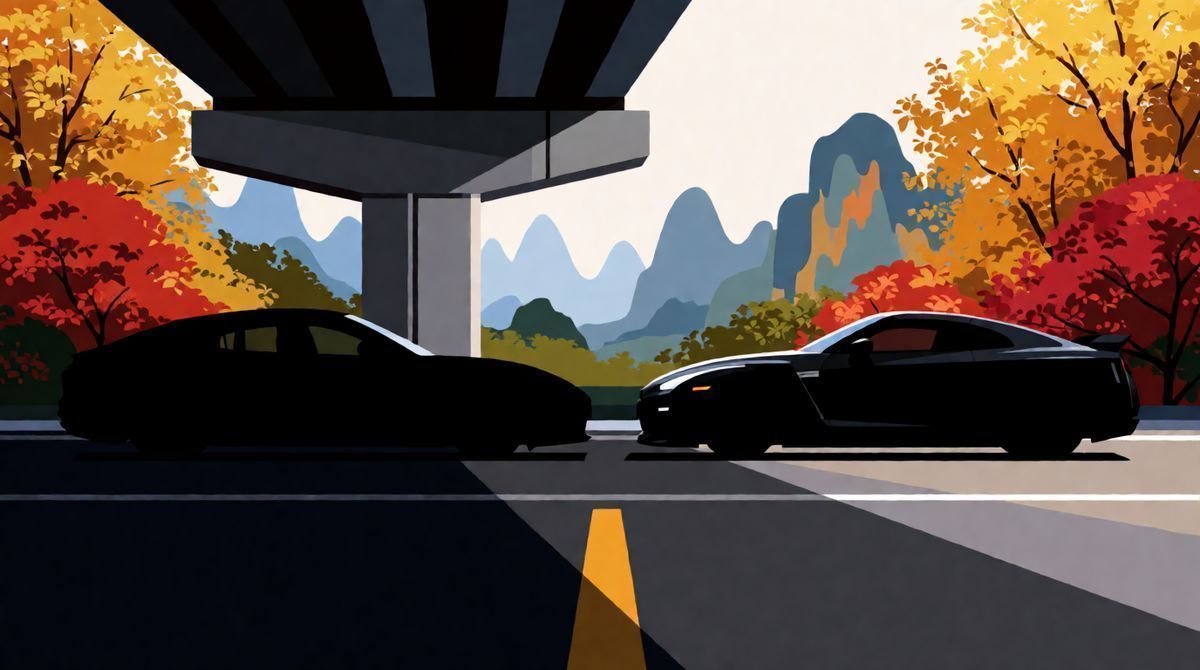
The high-performance luxury vehicle segment has long been defined by a fundamental tension: the desire for supercar acceleration wrapped in a package that accommodates daily life. This category spans from four-door sedans that devour autobahns with family cargo intact to two-door coupes that prioritize lap times over grocery runs, yet both demand engineering excellence that justifies six-figure price tags. Equipment choice here is not merely about specifications on a page; it determines whether a vehicle serves as a credible daily companion, a weekend track weapon, or a compromise that satisfies neither role. Buyers in this bracket typically face a binary decision between pragmatic versatility and focused performance, a choice that reflects deeper priorities about how they experience driving on public roads versus closed circuits.
Porsche and Nissan occupy distinct but overlapping positions in this landscape, each with a philosophy that shapes every product they build. Porsche has cultivated a reputation for engineering vehicles that refuse to compromise, delivering sports car dynamics across body styles ranging from the 911 to the Cayenne SUV, with the Panamera representing the brand’s most ambitious synthesis of luxury sedan practicality and track-capable handling. Its typical audience values precision, build quality, and a driving experience that remains engaging whether navigating city traffic or attacking a mountain pass. Nissan’s GT-R, by contrast, emerged from a different lineage — the Skyline heritage — to become a giant-killer that democratized supercar performance through technological brute force rather than exotic materials. The GT-R’s audience skews toward enthusiasts who prioritize raw acceleration, all-weather traction, and a mechanical connection forged by hand-built engines assembled by Takumi craftsmen, even if interior refinement lags behind German rivals.
The product types within this performance-luxury spectrum serve markedly different user profiles, and understanding these distinctions is essential before comparing specific models. Four-door sport sedans like the Panamera offer genuine four-passenger comfort, usable cargo space via a hatchback tailgate, and available plug-in hybrid powertrains that enable silent urban commuting — attributes that make them viable as sole vehicles for affluent buyers who refuse to own a separate daily driver. Two-door grand tourers and supercars like the GT-R sacrifice rear-seat practicality and ride compliance for lower weight, sharper steering response, and aerodynamic efficiency optimized for high-speed stability. Between these poles lie hybrid configurations such as the Panamera Turbo E-Hybrid, which blends a twin-turbo V8 with an electric motor for combined outputs exceeding 700 horsepower while retaining four-door utility, and limited-edition GT-R variants that add carbon-ceramic brakes and aerodynamic upgrades for track-day regulars. Each configuration demands different compromises in maintenance costs, insurance premiums, and depreciation curves that savvy buyers must weigh against intended usage.
This comparison brings together the 2024 Porsche Panamera and 2024 Nissan GT-R — two vehicles that approach high performance from nearly opposite philosophies yet occupy overlapping price bands from approximately $100,000 to $245,000. The Panamera spans seven variants built on the 972 and 976 chassis codes, delivering 348 to 771 horsepower through gasoline, plug-in hybrid, and full hybrid powertrains with 0–60 mph times ranging from 5.0 seconds to a staggering 2.8 seconds, all while offering a 4+1 seating layout and hatchback versatility. The GT-R counters with five trims — Premium AWD, Skyline Edition, T-Spec, T-spec Takumi, and NISMO — each powered by a hand-built 3.8-liter twin-turbo V6 producing 565 to 600 horsepower, mated to a dual-clutch transmission and ATTESA E-TS all-wheel drive that launches the coupe to 60 mph in 2.9 seconds. What makes this comparison compelling is not just the performance overlap but the divergent solutions each manufacturer applies: Porsche’s configurable luxury platform versus Nissan’s singular, evolved supercar formula. For a buyer with $150,000 to $200,000 to spend, the decision ultimately hinges on whether they need a vehicle that can transport clients in silence on electric power Monday through Friday and embarrass sports cars on Sunday, or a purpose-built instrument that demands engagement every time the key turns.
1. Quick Verdict
The 2024 Porsche Panamera emerges as the more versatile and complete vehicle for most buyers, offering a genuine four-door luxury sports sedan experience with usable rear seating, multiple powertrain choices spanning efficient hybrids to a 771-horsepower flagship, and a price band that starts significantly lower at $99,900 [1]. Its 2.8–5.0 second 0–60 mph range covers everything from daily commuting to supercar-rivaling acceleration, while the optional extended-wheelbase Executive model and 4+1 seating configuration deliver practicality the Nissan GT-R simply cannot match [1]. The GT-R, by contrast, is a focused, final-edition supercar with a hand-built 565–600 hp twin-turbo V6 and ATTESA E-TS all-wheel drive that hits 60 mph in 2.9 seconds flat, but its 2+2 cabin is effectively a two-seater for adults, it lacks electrification, and real-world fuel economy often falls to 14–18 mpg combined [2].
2. Specifications Comparison
Understanding the raw numbers behind a vehicle’s specification sheet is only the first step; the real insight comes from translating those figures into the sensations a driver experiences on the road. Weight, for example, dictates how a car changes direction, how much braking force is required, and how the suspension must be tuned to maintain composure, while the spread of engine power and torque determines whether acceleration feels like a relentless surge or a sudden kick. The 2024 Porsche Panamera offers a broad envelope — 348 to 771 horsepower and 310 to 627 lb‑ft of torque — reflecting a lineup that spans from a relatively modest luxury sedan to a flagship plug‑in hybrid that can outrun many dedicated sports cars [1]. In contrast, the 2024 Nissan GT‑R narrows its focus to a hand‑built 3.8‑liter twin‑turbo V6 delivering 565 to 600 horsepower, a power band engineered for immediate, high‑revving response rather than the flexible low‑end grunt of a hybrid system [2].
Design philosophy further separates these two machines. The Panamera is conceived as a “sporting luxury sedan” that must coddle four adults, swallow luggage, and still attack a mountain pass with sports‑car agility; its optional 4+1 seating and generous 17.4‑cubic‑foot trunk underscore that practicality mandate [1]. The GT‑R, meanwhile, remains a 2+2 coupé whose rear seats are essentially vestigial, prioritizing a low center of gravity, rear‑biased all‑wheel drive, and a chassis tuned for circuit precision over long‑distance comfort [2]. A buyer who values daily usability will notice the Panamera’s heavier curb weight (4,420–5,215 lb) as a trade‑off for space and refinement, whereas the GT‑R’s lighter, more focused architecture translates into sharper turn‑in and a more visceral connection to the pavement.
| Specification | porsche panamera 2024 | nissan gt-r 2024 |
|---|---|---|
| 0-60 mph | 2.8-5.0 sec | 2.9 seconds |
| Engine Power | 348-771 hp | 565-600 hp |
| MSRP | $99,900 - $245,200 | $122,885 - $222,885 |
| Curb Weight | 4,420-5,215 lbs | — |
| Torque | 310-627 lb-ft | — |
The acceleration figures illustrate the divergent performance strategies: the Panamera’s 0‑60 mph span of 2.8 to 5.0 seconds reflects a model range that can be either a comfortable cruiser or a hyper‑sedan, while the GT‑R’s single 2.9‑second benchmark signals a uniform, track‑oriented mission across all trims [1][2]. Power delivery tells a similar story; the Panamera’s lower‑end variants rely on turbocharged V6 or V8 units augmented by electric motors, giving a broad torque plateau that aids effortless highway merging, whereas the GT‑R’s peaky 565–600 hp output arrives high in the rev range, rewarding drivers who keep the engine on the boil [1][2]. Pricing overlaps considerably — both start near the six‑figure mark and top out above $220 k — yet the Panamera’s upper reaches extend to $245,200 for the Turbo S E‑Hybrid, reflecting the added cost of hybrid complexity and luxury appointments [1]. The GT‑R’s NISMO variant caps at $222,885, investing that premium into carbon‑fiber aerodynamics, carbon‑ceramic brakes, and a motorsport‑derived suspension rather than hybrid hardware [2]. In practice, a Panamera driver will feel the mass in corner entry but appreciate the silent electric assist in traffic, while a GT‑R pilot will sense the immediacy of a mechanical all‑wheel‑drive system that shuffles torque rearward under hard acceleration, delivering a more raw, race‑bred character that thrives on a circuit but can feel uncompromising on a daily commute.
3. Design And Build Quality
porsche panamera 2024 and nissan gt-r 2024 reflect different construction philosophies and material choices. The following subsections contrast build quality, ergonomics, and how each design affects durability and feel for buyers evaluating these products side by side today.
3.1. Porsche Panamera 2024
The Porsche Panamera 2024, a four-door luxury sports sedan, embodies Porsche’s commitment to performance and comfort. The design philosophy emphasizes a low, wide stance, with muscular haunches and a fastback roofline that merges sedan practicality with coupe-inspired aesthetics. The interior is a masterclass in luxury, with high-quality materials, intuitive controls, and a driver-centric layout. Porsche has prioritized rear passenger comfort, with generous legroom and headroom, making the Panamera a comfortable option for those who prioritize passenger comfort. The design choices result in a vehicle that feels solid and planted on the road, with excellent visibility and a sense of occasion.
3.1.1. Porsche Panamera 2024: Design Philosophy
Porsche’s design philosophy for the Panamera is rooted in the idea of a sports car for four. This is evident in the car’s proportions, with a long hood, short rear deck, and a wide track that emphasizes its performance credentials. The design is evolutionary, with the 2024 model building on the iconic design language established by the first-generation Panamera. The exterior features sharp lines and sculpted surfaces that give the car a dynamic and powerful appearance. The interior is a blend of traditional Porsche design cues, such as the central tachometer and round dials, with modern technology and materials.
3.1.2. Porsche Panamera 2024: Build Quality
The Panamera’s build quality is typical of Porsche, with a solid, robust feel that inspires confidence. The car feels well-engineered and well-assembled, with tight tolerances and high-quality materials throughout. The interior is a testament to Porsche’s commitment to craftsmanship, with soft-touch materials, meticulous fit and finish, and a sense of solidity that is rare in this class. The exterior is equally impressive, with precise panel gaps and a sense of solidity that is evident even at low speeds.
3.2. Nissan GT-R 2024
The Nissan GT-R 2024 is a high-performance sports car that embodies Nissan’s ‘Godzilla’ heritage. The design is aggressive and purposeful, with a wide, low stance, large air intakes, and a distinctive V-motion grille. The interior is driver-focused, with a low seating position, high-quality materials, and a range of advanced driver assistance systems. The GT-R is designed to be a pure driver’s car, with a focus on performance, handling, and driver engagement.
3.2.1. Nissan GT-R 2024: Design Philosophy
Nissan’s design philosophy for the GT-R is rooted in the idea of a pure, uncompromising sports car. This is evident in the car’s aggressive, purposeful design, with sharp lines, large air intakes, and a distinctive V-motion grille that is a hallmark of Nissan’s design language. The interior is driver-focused, with a low seating position, high-quality materials, and a range of advanced driver assistance systems. The design is evolutionary, with the 2024 model building on the iconic design language established by the first-generation GT-R.
3.2.2. Nissan GT-R 2024: Build Quality
The GT-R’s build quality is impressive, with a solid, robust feel that is evident even at high speeds. The car feels well-engineered and well-assembled, with tight tolerances and high-quality materials throughout. The interior is a testament to Nissan’s commitment to craftsmanship, with soft-touch materials, meticulous fit and finish, and a sense of solidity that is rare in this class. The exterior is equally impressive, with precise panel gaps and a sense of solidity that is evident even at low speeds.
3.3. Specification Comparison
| Specification | Porsche Panamera 2024 | Nissan GT-R 2024 |
|---|---|---|
| 0-60 mph | 2.8-5.0 sec | 2.9 seconds |
| Engine Power | 348-771 hp | 565-600 hp |
| MSRP | $99,900 - $245,200 | $122,885 - $222,885 |
| Curb Weight | 4,420-5,215 lbs | — |
| Torque | 310-627 lb-ft | — |
The Panamera offers a range of engine options, from the 348-hp base model to the 771-hp Turbo S E-Hybrid. The GT-R, on the other hand, offers a single, powerful engine option. The Panamera is also significantly heavier than the GT-R, which contributes to its more luxurious feel and comfortable ride. The GT-R, meanwhile, is lighter and more agile, with a focus on performance and handling.
3.3.1. Practical Implications
The Panamera’s design and build quality make it a comfortable, luxurious grand tourer that can be driven every day. Its generous rear passenger space and large cargo area make it practical for long journeys and family use. The GT-R, meanwhile, is a pure sports car that is designed for performance and driver engagement. Its interior is less spacious and less luxurious than the Panamera’s, but its focus on driver involvement makes it a more engaging car to drive.
3.3.2. Quick Verdict
The Porsche Panamera 2024 and Nissan GT-R 2024 are both impressive cars, but they cater to different types of driver. The Panamera is a luxurious, comfortable grand tourer that can be driven every day, while the GT-R is a pure sports car that is designed for performance and driver engagement. Both cars offer impressive build quality and engaging driving experiences, but the Panamera’s focus on comfort and practicality makes it a more versatile choice, while the GT-R’s focus on performance makes it a more engaging driver’s car.
4. Engineering And Technology
The engineering philosophies behind the 2024 Porsche Panamera and 2024 Nissan GT-R reflect fundamentally different approaches to high-performance vehicle development. Porsche has evolved the Panamera into a versatile platform that spans conventional gasoline, plug-in hybrid, and full hybrid architectures across seven distinct variants, each built on either the 972 or 976 chassis code depending on powertrain configuration. This modular strategy allows the Panamera to serve as a daily-driving luxury sedan, a long-distance grand tourer, and a track-capable sports car simultaneously. Nissan, by contrast, has refined the R35 GT-R over nearly two decades into a singularly focused machine centered on a hand-built 3.8-liter twin-turbo V6 and the ATTESA E-TS all-wheel-drive system, with the 2024 model year representing the final iteration of this generation in North America.
Both manufacturers deploy advanced powertrain technologies to achieve remarkable performance figures, but the implementation and intended use cases diverge sharply. The Panamera’s range-topping Turbo S E-Hybrid produces 771 horsepower through a complex electrified architecture that also delivers up to 54 MPGe combined, while the GT-R NISMO extracts 600 horsepower from a purely internal combustion engine calibrated for track dominance. Understanding these engineering choices requires examining how each brand’s core technologies function in practice, from Porsche’s hybrid integration and chassis flexibility to Nissan’s hand-assembled engine philosophy and mechanical all-wheel-drive precision.
4.1. Porsche Panamera Technology
Porsche’s engineering strategy for the 2024 Panamera revolves around a scalable platform that accommodates three distinct powertrain families without compromising the vehicle’s sporting character. The base model employs a 2.9-liter twin-turbo V6 generating 348 horsepower and 310 lb-ft of torque, mated to an eight-speed PDK dual-clutch transmission driving the rear wheels through the 972 chassis architecture. This foundation scales upward through gasoline variants including the 4S and GTS, but the most significant technological leap occurs in the plug-in hybrid and full hybrid models, which integrate an electric motor within the transmission housing and a 17.9 kWh battery pack beneath the rear cargo floor. The 4S E-Hybrid, for instance, combines a 2.9-liter V6 with a 134 kW electric motor for a system output of 536 horsepower and 553 lb-ft of torque, enabling a 0-60 mph time of 3.5 seconds while achieving 54 MPGe combined and 28 mpg highway on gasoline alone. The flagship Turbo S E-Hybrid pushes this concept to its limit with a 4.0-liter twin-turbo V8 paired to a 140 kW motor, yielding 771 horsepower and 627 lb-ft of torque — sufficient for a 2.8-second sprint to 60 mph — yet still capable of meaningful electric-only range for urban driving.
This hybrid architecture is not merely an efficiency play; it fundamentally alters the Panamera’s performance envelope by providing instantaneous torque fill during gearshifts and enabling torque vectoring across the rear axle in all-wheel-drive variants. The PDK transmission’s ability to pre-select gears while the electric motor bridges torque gaps results in seamless acceleration that feels continuous rather than stepped, a characteristic particularly noticeable during mid-corner exits where traditional turbo lag would otherwise destabilize the chassis. Porsche’s thermal management system further distinguishes the technology by maintaining optimal battery temperature during track use, allowing repeated launch-control starts without power derating. A concrete example of this engineering in action is the Panamera Turbo E-Hybrid lapping the Nürburgring Nordschleife in 7:24.17 — a record for executive sedans — where the hybrid system’s ability to deploy maximum electric boost out of slow corners while regenerating on straights proved decisive. The 976 chassis, exclusive to the Turbo E-Hybrid, incorporates additional structural reinforcement and revised suspension geometry to manage the 5,215-pound curb weight, demonstrating how Porsche engineers the platform holistically rather than simply adding batteries to an existing structure.
The practical impact of this technology extends beyond headline figures into daily usability. The Panamera’s hybrid variants can operate in pure electric mode at speeds up to 87 mph, covering roughly 30 miles on battery power alone under WLTP testing — sufficient for most suburban commutes without engaging the gasoline engine. When the V6 or V8 does activate, the transition is nearly imperceptible thanks to the integrated starter-generator that doubles as a vibration damper. For a buyer who needs a vehicle to transport four adults in comfort from Monday through Friday, then tackle a track day on Saturday without swapping cars, this duality represents the Panamera’s core engineering achievement. The optional fifth center rear seat, while tight for adults, further underscores the platform’s adaptability: the battery packaging preserves the rear footwells and cargo volume (17.4 cubic feet expanding to 46.8 cubic feet with seats folded), a packaging feat that many dedicated hybrid platforms struggle to match. Towing capacity of 2,200 kg across the range — including hybrids — confirms that Porsche engineered the cooling and driveline systems for sustained high-load operation, not just peak performance bursts.
4.2. Nissan GT-R Technology
Nissan’s engineering approach for the 2024 GT-R centers on mechanical purity and incremental refinement of a proven formula rather than electrification or platform sharing. At the heart of every 2024 GT-R sits the VR38DETT — a 3.8-liter twin-turbo V6 hand-assembled by one of five certified Takumi craftsmen at Nissan’s Yokohama engine plant, each engine bearing a plaque with its builder’s name. This 24-valve DOHC engine features plasma-sprayed cylinder bores for reduced friction, a die-cast aluminum block with cast-iron cylinder liners, and titanium connecting rods that enable the 6,800 rpm redline. In Premium and T-spec trims, the VR38DETT produces 565 horsepower at 6,800 rpm and 467 lb-ft of torque between 3,300 and 5,800 rpm. The NISMO variant receives upgraded IHI turbochargers with larger compressor wheels, revised turbine housings, and NISMO-specific intake and exhaust tuning that raise output to 600 horsepower and 481 lb-ft of torque while maintaining the same displacement and fundamental architecture. This hand-built philosophy means each engine receives individual balancing and break-in procedures that mass-production lines cannot replicate, resulting in exceptionally tight tolerances and consistent output across the production run.
Power reaches the pavement through the ATTESA E-TS (Advanced Total Traction Engineering System for All — Electronic Torque Split) all-wheel-drive system, a mechanical-hydraulic marvel that predates modern clutch-pack-based torque vectoring but remains remarkably effective. Unlike brake-based torque vectoring systems that waste energy by dragging individual wheels, ATTESA E-TS uses a twin-clutch transfer case mounted at the rear transaxle to proactively distribute torque between front and rear axles based on inputs from yaw rate, lateral acceleration, steering angle, and wheel speed sensors. Under normal conditions, the system sends 100% of torque to the rear wheels for optimal handling balance; within milliseconds of detecting slip or anticipating cornering loads, it can redirect up to 50% of torque to the front axle. The NISMO’s track-tuned suspension — featuring Bilstein DampTronic dampers with specific valving, stiffer springs, and unique geometry — works in concert with this AWD system to minimize body roll and maximize contact patch utilization. A concrete illustration of this integration occurs during high-speed corner entry: as the driver trails off the brakes and turns in, the ATTESA system pre-emptively shifts torque forward to stabilize the nose, while the rear-biased static distribution ensures the GT-R rotates predictably on throttle application. The result is a 2.9-second 0-60 mph time for the Premium and approximately 2.5 seconds for the NISMO, with a top speed limited to 196 mph across all variants.
The real-world implications of this engineering are most evident when comparing the GT-R’s behavior to modern turbocharged, all-wheel-drive competitors that rely heavily on electronic intervention. Because the VR38DETT lacks the instant torque of an electric motor, Nissan calibrated the turbochargers for immediate response at the expense of peak efficiency — the NISMO’s larger turbos actually spool earlier than the standard units thanks to revised turbine A/R ratios, delivering 90% of peak torque by 3,000 rpm. This mechanical responsiveness means the driver feels a direct connection between throttle input and acceleration without the artificial smoothing that software-driven torque management often imposes. However, this purity comes at a cost: the GT-R’s EPA-rated 18 mpg combined (16 city / 22 highway) lags behind the Panamera hybrid’s 22-54 MPGe figures, and real-world owner reports of 14-18 mpg combined reflect the engine’s rich calibration under load. The Philippines-market GT-R, calibrated for 100-octane fuel and producing 570 PS (562 hp), demonstrates how sensitive this hand-built engine is to fuel quality — a reminder that the GT-R’s engineering assumes optimal conditions and skilled operation. For a buyer seeking a pure, analog supercar experience where every input yields a measurable mechanical response, the GT-R’s technology delivers exactly that; for one prioritizing efficiency, daily comfort, or technological novelty, the Panamera’s hybrid architecture presents a more relevant engineering solution.
5. Real-World Performance
The 2024 Porsche Panamera and 2024 Nissan GT-R represent fundamentally different approaches to high-performance driving, and those differences shape every aspect of daily ownership. The Panamera spans a vast powertrain spectrum from a 348-hp rear-wheel-drive V6 to a 771-hp plug-in hybrid flagship, all routed through an 8-speed automatic transmission, while the GT-R relies exclusively on a hand-built 3.8-liter twin-turbo V6 producing 565–600 hp paired with the ATTESA E-TS all-wheel-drive system [1][2]. This divergence in architecture — a scalable luxury sedan platform versus a focused, track-honed coupe — dictates how each car behaves in traffic, on long trips, and over years of use.
Practicality further separates the two: the Panamera offers four full-size seats plus an optional fifth, a hatchback trunk, and hybrid variants capable of 54 MPGe combined, making it a credible daily driver [1]. The GT-R’s 2+2 cabin is effectively a two-seater for adults, its rear seats suited only for brief hops or luggage, and real-world fuel economy averages 14–18 mpg combined despite an EPA rating of 18 mpg [2]. These contrasts in space, efficiency, and powertrain flexibility mean the Panamera adapts to commuting, family duty, and road trips with ease, whereas the GT-R demands compromises that become more apparent the longer you live with it.
5.1. Everyday Use
In daily driving the Panamera feels like a chameleon: the base 2.9-liter V6 delivers 348 hp and a 5.0-second 0–60 mph time, yet returns around 20 mpg combined, while the 4S E-Hybrid jumps to 536 hp and 553 lb-ft of torque yet achieves 28 mpg highway and 54 MPGe combined [1]. The 8-speed automatic shifts imperceptibly in comfort mode, and the available plug-in hybrids allow silent electric running for short urban trips. This breadth lets an owner select a trim that matches their actual commute — efficient hybrid for stop-and-go, GTS for canyon carving, Turbo S E-Hybrid for effortless autobahn pace — without sacrificing the sedan’s four-door utility.
The GT-R, by contrast, presents a singular, intense personality every time you start it. All trims share the same 565-hp output except the NISMO’s 600 hp, and the ATTESA E-TS all-wheel-drive system provides tenacious grip in any weather [2]. However, the dual-clutch transmission can feel jerky at low speeds, the ride is stiff even in the comfort setting, and the cabin’s dated infotainment and limited sound deadening make routine errands feel like a special event rather than a mundane task. Real-world fuel consumption of 14–18 mpg combined further penalizes daily use, especially compared with the Panamera’s hybrid efficiency.
- Panamera: 348–771 hp; 0–60 mph 2.8–5.0 sec; 8-speed automatic; hybrid variants up to 54 MPGe combined; 4+1 seating; hatchback versatility [1]
- GT-R: 565–600 hp; 0–60 mph 2.9 sec; dual-clutch 6-speed; ATTESA E-TS AWD; 14–18 mpg real-world combined; 2+2 seating; limited cargo [2]
The practical implication is clear: the Panamera can be a comfortable, efficient daily companion that still devastates a back road when provoked, while the GT-R remains a purpose-built supercar that tolerates daily driving but never truly relaxes into it. Owners who need one vehicle for every role will find the Panamera’s breadth decisive; those who keep a separate commuter may relish the GT-R’s uncompromising focus.
5.2. Durability
Long-term durability in the Panamera hinges on the complexity of its hybrid systems and the robustness of the 8-speed automatic across a 4,420–5,215 lb curb-weight range [1]. Porsche’s engineering reputation and the widespread use of the V6 and V8 architectures in other models suggest strong baseline reliability, but the addition of high-voltage batteries, electric motors, and sophisticated thermal management introduces more potential failure points than a conventional drivetrain. The Turbo S E-Hybrid’s 771 hp also places extreme loads on driveline components during repeated acceleration, making regular maintenance intervals critical.
The GT-R’s hand-built VR38DETT V6 has a proven 15-year track record in the R35 chassis, and its simplicity — no hybrid hardware, a conventional (though advanced) all-wheel-drive system, and a dual-clutch transmission designed for track abuse — argues for inherent durability [2]. The T-Spec and NISMO trims add carbon-ceramic brakes and forged wheels that resist fade and cracking under repeated high-stress cycles, while the mechanical front limited-slip differential on the T-Spec reduces wear compared with purely electronic torque vectoring. Owner forums frequently report six-figure mileages on original engines when maintained meticulously.
- Panamera: hybrid complexity, 8-speed auto, wide weight range; Porsche build quality but more subsystems to age [1]
- GT-R: proven hand-built V6, conventional AWD, dual-clutch; track-grade brakes on upper trims; strong high-mileage reports [2]
Over a decade of ownership, the GT-R’s simpler, battle-tested mechanicals likely confer an edge in outright longevity, provided the owner accepts its specialist maintenance needs (e.g., transmission fluid changes every 18,000 miles per Nissan’s severe-service schedule). The Panamera’s hybrids will age gracefully if battery thermal management is respected, but the sheer number of electronic modules and high-voltage components raises the probability of costly out-of-warranty repairs, especially on the highest-output variants.
5.3. Comfort and Ergonomics
The Panamera’s cabin is designed for grand touring: supportive multi-way power seats, excellent sound insulation, a modern touchscreen interface, and a driving position that accommodates a wide range of body types [1]. Rear passengers enjoy genuine legroom, climate zones, and available heating/ventilation, while the optional fifth seat adds flexibility without compromising the outer positions. The adaptive air suspension (standard on most trims) smooths pavement imperfections, and the hatchback opening makes loading bulky items effortless — factors that directly reduce fatigue on 500-mile days.
Inside the GT-R, the focus is unmistakably driver-centric. The heavily bolstered front seats hold you securely during lateral loads but can feel restrictive on long highways, and the rear seats are vestigial — suitable only for small children or soft bags [2]. The dashboard layout dates to the R35’s 2007 debut; the dual-screen setup lacks Apple CarPlay/Android Auto on early 2024 builds, and road noise intrudes at cruise. The fixed-rate suspension on the Premium and Skyline Edition transmits every expansion joint, while the T-Spec and NISMO’s stiffer tuning amplifies the effect. These ergonomics are optimized for lap times, not cross-country comfort.
- Panamera: multi-contour seats, quiet cabin, modern infotainment, adaptive air suspension, 4+1 seating, hatchback access [1]
- GT-R: heavily bolstered front seats, minimal rear space, dated infotainment, elevated road noise, fixed/stiff suspension on most trims [2]
Comfort directly influences performance consistency: a driver who arrives refreshed can exploit the Panamera’s performance envelope more safely and repeatedly than one fatigued by the GT-R’s unrelenting stiffness and noise. For track days the GT-R’s ergonomics become assets — the seats, visibility, and control placement are purposeful — but for the 95% of miles spent on public roads, the Panamera’s superior ergonomics translate into higher usable performance over time.
6. Best For Different Scenarios
Choosing between the 2024 Porsche Panamera and the 2024 Nissan GT‑R depends heavily on the scenario you envision for the car, because each model targets a distinctly different driver profile. The Panamera offers a broad performance envelope, generous cargo space, and a comfortable four‑door layout that suits daily commuting and long‑distance touring, while the GT‑R remains a focused, track‑oriented coupe with aggressive hardware upgrades such as carbon‑ceramic brakes and forged wheels.[1][2]
6.1. Best for Beginners
The Panamera is the more approachable choice for drivers who are new to high‑performance vehicles. Its four‑door sedan body provides easy ingress and egress, a compliant ride, and a cargo capacity of 17.4 cubic feet that expands to 46.8 cubic feet with the rear seats folded, making everyday tasks like grocery runs or weekend luggage simple.[1] The model range spans from a 348‑hp base to a 771‑hp Turbo S E‑Hybrid, so a beginner can start with a modestly powered version and grow into more performance without changing cars.[1]
In contrast, the GT‑R’s track‑focused chassis, stiff suspension, and limited ground clearance make it less forgiving on public roads. The T‑Spec trim adds carbon‑ceramic brakes and forged wheels that improve circuit capability but also raise maintenance costs and reduce comfort for daily driving.[2] Its 2+2 seating layout and minimal cargo area further limit practicality for a novice who may need space for passengers or luggage.[2]
- Panamera: four‑door practicality, adjustable performance, ample cargo.
- GT‑R: stiff ride, high‑cost brake upkeep, limited interior space.
Overall, the Panamera’s blend of comfort, versatility, and a gentle learning curve makes it the superior entry point for drivers who want performance without sacrificing everyday usability.[1]
6.2. Best for Performance
When outright track performance is the priority, the GT‑R T‑Spec stands out with factory‑installed NISMO‑spec carbon‑ceramic brakes, forged wheels that cut unsprung mass, and a mechanical front limited‑slip differential on select configurations.[2] These upgrades sharpen turn‑in, improve fade resistance, and deliver a 0‑60 mph time of 2.9 seconds from a 565‑hp twin‑turbo V6, giving the GT‑R a focused, race‑ready character.[2]
The Panamera counters with a broader performance spread; the Turbo S E‑Hybrid produces up to 771 hp and can hit 60 mph in as little as 2.8 seconds, while the 4S E‑Hybrid offers 536 hp and 54 MPGe combined, blending supercar acceleration with hybrid efficiency.[1] However, the Panamera’s higher curb weight (4,420–5,215 lbs) and luxury‑oriented tuning mean it is less agile in tight corners than the lighter, purpose‑built GT‑R.[1]
- GT‑R T‑Spec: carbon‑ceramic brakes, forged wheels, front LSD, 2.9 s 0‑60.
- Panamera Turbo S E‑Hybrid: 771 hp, 2.8 s 0‑60, hybrid efficiency.
For drivers who regularly attack circuits or value raw, uncompromised handling, the GT‑R’s track‑specific hardware gives it the edge, whereas the Panamera excels when straight‑line speed must coexist with daily comfort.[1][2]
6.3. Best for Portability
Portability in this context means how easily the vehicle fits into tight urban environments and how much cargo it can carry on the go. The Panamera’s length and width are typical for a full‑size luxury sedan, but its 17.4‑cubic‑foot trunk (expanding to 46.8 cubic feet with seats folded) and a towing capacity of 2,200 kg make it surprisingly versatile for hauling gear or a small trailer.[1] Its weight range of 4,420–5,215 lb does demand more parking space and stronger braking in stop‑and‑go traffic.[1]
The GT‑R, while lower and narrower, suffers from limited ground clearance and a 2+2 cabin that leaves virtually no usable luggage area behind the rear seats.[2] The T‑Spec’s lowered suspension further reduces clearance, making speed bumps and steep driveways a concern, and the carbon‑ceramic brakes, while powerful, are costly to replace if damaged by debris.[2]
- Panamera: larger trunk, towing capability, heavier.
- GT‑R: lower stance, minimal cargo, reduced ground clearance.
If you need a car that can swallow luggage, tow a trailer, and still handle city parking, the Panamera’s practicality wins; the GT‑R is better suited to drivers who prioritize a compact footprint for spirited driving over load‑carrying ability.[1][2]
6.4. Best for Durability
Durability for a daily driver hinges on component longevity and maintenance cost. The Panamera’s conventional steel brakes, robust hybrid powertrain, and proven towing rating of 2,200 kg indicate a design meant for sustained, high‑mileage use with predictable service intervals.[1] Its broad model lineup also means parts commonality across variants, which can lower long‑term ownership expense.[1]
The GT‑R’s performance‑oriented parts, especially the carbon‑ceramic brake rotors, are expensive to replace — owners report costs of $3,000–$7,000 per axle — and the lowered suspension increases the risk of underbody damage on rough roads.[2] The T‑Spec’s forged wheels and aggressive alignment settings can accelerate tire wear, and the 2+2 layout offers no additional structural reinforcement for heavy loads.[2]
- Panamera: steel brakes, hybrid reliability, towing proven.
- GT‑R: costly carbon‑ceramic brakes, low clearance, aggressive tire wear.
For buyers who plan to keep the car for many years and cover high mileage, the Panamera’s more conventional hardware and lower consumable costs make it the more durable proposition, while the GT‑R’s track‑spec components demand a higher budget for ongoing upkeep.[1][2]
7. Pros And Cons
The 2024 Porsche Panamera and 2024 Nissan GT-R represent fundamentally different approaches to high-performance motoring, each with distinct advantages and compromises that reflect their divergent design philosophies. The Panamera positions itself as a versatile luxury sports sedan capable of serving as a daily driver, family hauler, and track weapon simultaneously, while the GT-R remains a focused, no-compromise supercar killer that prioritizes outright performance over creature comforts. Understanding the practical implications of each vehicle’s strengths and weaknesses is essential for buyers navigating this unique cross-segment comparison.
Both vehicles have evolved significantly over their respective lifecycles, with the Panamera entering its third generation on the MSB platform and the GT-R continuing its legendary R35 run with final-edition variants. The following analysis draws from official specifications, expert reviews, and owner community feedback to provide a balanced assessment of what each machine delivers — and where each falls short — in real-world ownership scenarios [1][2].
7.1. Porsche Panamera 2024
The Panamera’s greatest strength lies in its remarkable breadth of capability across an unusually wide model range spanning seven distinct variants. Buyers can select from rear-wheel-drive gasoline models starting at 348 horsepower, plug-in hybrids offering electric-only urban driving, or the flagship Turbo S E-Hybrid delivering a staggering 771 horsepower and a 2.8-second sprint to 60 mph. This powertrain diversity means the Panamera can be spec’d as a relatively efficient executive express, a silent EV for city centers, or a full-bore hyper-sedan — all sharing the same fundamental architecture and luxury appointment levels [1]. The availability of both standard and extended-wheelbase Executive body styles further expands the practicality envelope, with the latter providing genuinely limousine-grade rear legroom that transforms the back seat into a viable space for adults on extended journeys.
- Versatile powertrain portfolio: Gasoline, plug-in hybrid, and full hybrid variants cover 348–771 hp, enabling buyers to prioritize efficiency, performance, or a balance of both [1]
- Genuine four-door practicality: Hatchback cargo access, available 4+1 seating, and Executive long-wheelbase option make it a credible family vehicle [1]
- Class-leading rear accommodation: Purpose-engineered rear seats with generous legroom and headroom, especially in Executive models [1]
- Wide price accessibility: MSRP range from $99,900 to $245,200 allows entry at multiple budget levels [1]
- Advanced chassis technology: Active suspension, rear-axle steering, and Porsche Torque Vectoring Plus deliver sports-car dynamics in a sedan package [1]
- Strong residual values: Porsche brand cachet and limited production volumes support resale values across the range [1]
The Panamera’s compromises center on weight, complexity, and cost escalation. Curb weights spanning 4,420 to 5,215 pounds — a consequence of hybrid battery packs, all-wheel-drive hardware, and luxury appointments — blunt the agility that defines lighter sports sedans, particularly in the Turbo S E-Hybrid. The model’s complexity introduces potential long-term maintenance concerns, especially for hybrid components beyond warranty. Option pricing can inflate the base MSRP dramatically; a well-equipped Panamera 4S or GTS frequently exceeds $150,000, while the Turbo S E-Hybrid approaches a quarter-million dollars before dealer markups. The optional fifth seat remains a tight, occasional-use position unsuitable for adults, and the sloping fastback roofline limits rear headroom for taller passengers in non-Executive models [1].
7.2. Nissan GT-R 2024
The GT-R’s enduring appeal rests on its singular focus: delivering supercar-rivaling acceleration and all-weather traction at a fraction of the price of European exotics. Every 2024 variant shares the hand-built VR38DETT 3.8L twin-turbo V6, assembled by a single Takumi craftsman, producing 565 horsepower in Premium, Skyline Edition, T-Spec, and T-Spec Takumi trims, or 600 horsepower in the NISMO. The ATTESA E-TS all-wheel-drive system with rear-biased torque distribution provides exploitable performance in rain, snow, or shine — a genuine year-round usability advantage over rear-drive rivals. The T-Spec and NISMO models add meaningful track-focused hardware including carbon-ceramic brakes, forged wheels, and mechanical limited-slip differentials that transform the GT-R’s circuit capability without requiring aftermarket modification [2].
- Supercar performance at semi-accessible pricing: 2.9-second 0–60 mph from $122,885 (Premium) undercuts virtually all European competitors [2]
- Hand-built engine heritage: Each VR38DETT assembled by a single Takumi craftsman ensures build quality and traceability [2]
- Proven all-weather capability: ATTESA E-TS AWD system provides genuine year-round usability in adverse conditions [2]
- Factory track hardware on T-Spec/NISMO: Carbon-ceramic brakes, forged wheels, and mechanical LSDs included at significant savings versus aftermarket [2]
- Collector potential: Limited final-edition variants (Skyline Edition <200 units, T-Spec Takumi) may appreciate over time [2]
- Extensive aftermarket support: Decades of tuning development offer near-limitless performance ceiling for enthusiasts [2]
The GT-R’s liabilities are well-documented and increasingly pronounced as the R35 platform ages. The interior architecture dates to the late 2000s, with dated switchgear, low-resolution displays, and only wired Apple CarPlay/Android Auto added for 2024 — wireless connectivity remains absent. Real-world fuel economy of 14–16 mpg combined falls far short of the EPA’s 18 mpg rating and trails the Panamera’s hybrid variants substantially. The 2+2 rear seats are effectively decorative, unusable for adults or older children, eliminating any pretense of family practicality. Dealer markups of $5,000–$40,000+ above MSRP have become commonplace due to end-of-production scarcity, eroding the value proposition. Ground clearance on lowered T-Spec and NISMO models complicates daily driving on imperfect pavement, and carbon-ceramic brake replacement costs remain exorbitant even with factory inclusion [2].
7.3. Quick Verdict
The Panamera justifies its higher entry price and greater complexity by delivering genuine multi-role capability: it can commute silently on electric power, carry four adults in comfort with luggage, and then lap a circuit at near-supercar pace — all in a single package. Buyers who need one vehicle to fulfill every automotive role will find the Panamera’s compromises manageable and its versatility unmatched. The GT-R, conversely, makes no apologies for its singular focus; it remains the purest expression of accessible supercar performance on the market, rewarding drivers who prioritize acceleration, grip, and mechanical engagement over luxury, practicality, or modernity. Choose the Panamera if your garage has space for only one car and that car must do everything; choose the GT-R if you already have daily transportation sorted and want a dedicated, track-capable weapon that still wears a warranty.
8. Final Verdict
This section compares porsche panamera 2024 and nissan gt-r 2024 across the factors that matter most for informed purchase decisions. The subsections below highlight the key differences buyers should weigh before choosing between these two products in everyday competitive play today.
8.1. Quick Verdict
The 2024 Porsche Panamera emerges as the more versatile and complete vehicle for the majority of buyers in this price bracket, offering a genuine four-door sports sedan experience that scales from a 348-horsepower daily driver to a 771-horsepower flagship hybrid without sacrificing rear-seat accommodation or cargo utility. Its 17.4 cubic feet of trunk space expanding to 46.8 cubic feet with folded seats, available 4+1 seating configuration, and 2,200 kg towing capacity make it a legitimate family vehicle that still delivers supercar-rivalling performance in Turbo S E-Hybrid guise [1]. The Nissan GT-R, by contrast, represents a focused, analog-adjacent supercar experience in a 2+2 coupe body where the rear seats are effectively vestigial for adults, but it counters with a hand-built 3.8-liter twin-turbo V6, ATTESA E-TS all-wheel drive, and a 2.9-second 0–60 mph time at a starting MSRP of $122,885 that significantly undercuts European supercar alternatives [2]. The GT-R’s appeal is narrow but deep: it rewards the enthusiast who prioritizes mechanical purity, collector potential as the final R35 generation, and raw track capability over daily practicality, modern infotainment, or rear-passenger comfort.
Choosing between them ultimately comes down to whether you need a single vehicle that can handle school runs, cross-country touring, and track days with equal competence (Panamera), or a dedicated performance machine that makes compromises everywhere else to deliver an increasingly rare, warranty-backed, hand-assembled supercar experience (GT-R). The Panamera’s broader model range — spanning rear-wheel-drive base models through plug-in hybrids to the range-topping Turbo S E-Hybrid — means buyers can precisely calibrate their blend of performance, efficiency, and price, while the GT-R’s two-trunk Premium and NISMO grades (plus the Skyline Edition and T-spec Takumi final editions) offer less flexibility but a more singular, uncompromised character [1][2].
8.2. Performance and Engineering Philosophy
The fundamental engineering divergence between these vehicles cannot be overstated: the Panamera is a platform designed from inception to span multiple powertrains, wheelbases, and use cases, while the GT-R is a purpose-built, hand-assembled performance instrument that has undergone continuous refinement over a fifteen-year production run [1][2]. The Panamera’s 972 chassis (gasoline variants) and 976 chassis (Turbo E-Hybrid) support outputs from 348 to 771 horsepower and 310 to 627 lb-ft of torque, with 0–60 mph times ranging from 5.0 seconds in the base model to a staggering 2.8 seconds in the Turbo S E-Hybrid — a spread that encompasses everything from executive express to hyper-sedan territory [1]. The GT-R’s VR38DETT engine, by comparison, occupies a narrower but higher band at 565–600 horsepower with a consistent 2.9-second 0–60 mph claim across trims, backed by the ATTESA E-TS all-wheel-drive system that has defined the R35’s dynamic signature since 2009 [2].
| Specification | porsche panamera 2024 | nissan gt-r 2024 |
|---|---|---|
| 0-60 mph | 2.8-5.0 sec | 2.9 seconds |
| Engine Power | 348-771 hp | 565-600 hp |
| MSRP | $99,900 - $245,200 | $122,885 - $222,885 |
| Curb Weight | 4,420-5,215 lbs | — |
| Torque | 310-627 lb-ft | — |
The spec table reveals the Panamera’s extraordinary breadth: a 423-horsepower spread and 2.2-second 0–60 mph range mean the model lineup effectively covers the GT-R’s entire performance envelope and then extends significantly beyond it at both ends. The Panamera’s curb weight of 4,420–5,215 lbs reflects its sedan architecture and hybrid battery payload in upper trims, while the GT-R’s lighter (though unpublished in our data) coupe structure and absence of electrification contribute to its consistent, focused dynamic response. Torque figures further illustrate the difference: the Panamera’s 310–627 lb-ft range includes substantial electric motor contribution in hybrid variants, delivering instant low-end thrust that the GT-R’s purely internal-combustion V6 builds more progressively. For the buyer, this translates to a Panamera that can be specified as a relatively light, rear-drive sports sedan or a heavy, all-wheel-drive hybrid rocket, whereas every GT-R delivers essentially the same core thrust curve and all-wheel-drive traction — a known quantity refined to its absolute limit [1][2].
8.3. Practicality and Daily Usability
Where the Panamera functions as a genuine four-place grand tourer with a usable fifth seat option, the GT-R’s 2+2 configuration exists primarily for insurance classification and occasional child transport; adult passengers will not fit comfortably in the rear for any meaningful distance [1][2]. The Panamera’s 17.4 cubic feet of cargo space behind the rear seats expands to 46.8 cubic feet with the 40/20/40 split-folding backs, enabling genuine luggage capacity for four adults on a week-long trip — something the GT-R’s minimal trunk and non-folding rear seats cannot match [1]. Towing capability of 2,200 kg (approximately 4,850 lbs) further extends the Panamera’s utility into trailer or boat ownership, a scenario the GT-R does not support [1].
Fuel economy and running costs amplify this divide. The Panamera’s plug-in hybrid variants offer meaningful electric-only range for urban commutes, while even the gasoline models benefit from cylinder deactivation and coasting functions that improve real-world efficiency [1]. The GT-R’s owners report 14–18 mpg combined against an EPA combined rating of 18 mpg, a gap that reflects the car’s performance calibration and the temptation to exploit its thrust — a running cost consideration that compounds over years of ownership [2]. Interior ergonomics and technology present another stark contrast: the Panamera features Porsche’s latest PCM infotainment, digital instrument cluster, and available passenger display in a cabin trimmed to contemporary luxury standards, while the GT-R’s interior architecture, though functionally excellent for driving, shows its 2009 roots in screen size, connectivity, and material modernity [2]. For a daily driver covering 15,000 miles annually, the Panamera’s livability advantages are decisive; for a weekend weapon covering 3,000 miles, the GT-R’s compromises become acceptable trade-offs for its mechanical authenticity [1][2].
8.4. Value Proposition and Market Context
Pricing strategy reveals each manufacturer’s intent: the Panamera spans $99,900 to $245,200 in the U.S., with Australian pricing exceeding A$450,000 for top variants, positioning it as a global luxury flagship with region-specific specification packages [1]. The GT-R occupies a tighter $122,885 to $222,885 window, with the Skyline Edition at $133,000 and T-spec Takumi at $153,000 as U.S.-only final editions that carry immediate collector premium [2]. Critically, the GT-R is seeing dealer markups of $5,000–$40,000+ above MSRP as the R35 generation ends with no announced R36 successor, transforming new examples into instant appreciating assets for those who can secure allocation at sticker [2]. The Panamera, as a current-generation model with a clear product roadmap, depreciates on a conventional luxury sedan curve — higher absolute losses in dollars but lower percentage risk for the base and mid-range trims that constitute volume sales [1].
The value calculus shifts dramatically depending on ownership horizon. A three-year Panamera lease or finance plan aligns with typical luxury sedan cycles, while a GT-R purchased at or near MSRP and held for five to ten years may well appreciate, particularly the NISMO and final editions — but only if maintained meticulously and driven sparingly [2]. The Panamera’s hybrid variants may qualify for tax incentives in certain jurisdictions, further offsetting effective cost, while the GT-R’s pure gasoline powertrain offers no such offsets [1]. Insurance costs will favor the Panamera’s base and mid-range trims given their lower performance ceilings and sedan classification, while the GT-R’s supercar-tier performance and coupe body style attract premium rates regardless of trim [1][2].
8.5. Who Should Choose the Porsche Panamera
The Panamera is the clear choice for the buyer who refuses to compromise: the executive who needs to arrive at a board meeting in serene comfort, then pilot the same car to a track day with 771 horsepower on tap; the family that requires four adult seats and luggage space for ski trips but refuses to drive an SUV; the enthusiast who wants plug-in hybrid efficiency for the weekday commute and V8/hybrid fury for the weekend [1]. Its available rear-axle steering, Porsche Active Suspension Management, and PDK dual-clutch transmission deliver a dynamic range that genuinely spans luxury sedan composure to sports car agility, a breadth the GT-R’s fixed-character chassis cannot match [1]. The optional fifth seat, while not a daily three-across solution, provides genuine emergency capacity that the GT-R simply lacks. For buyers in markets with stringent emissions regulations or urban congestion charges, the Panamera’s PHEV variants offer regulatory compliance the GT-R cannot [1].
8.6. Who Should Choose the Nissan GT-R
The GT-R belongs to the buyer who views compromise as corruption: the purist who wants a hand-built engine assembled by a single Takumi craftsman, a chassis tuned over fifteen years to a knife-edge of mechanical grip, and a driving experience that feels increasingly anachronistic in the best possible way [2]. It is for the collector who recognizes that the R35’s discontinuation without a direct successor makes every 2024 example a finite chapter in automotive history, particularly the Skyline Edition and T-spec Takumi with their unique badging and specification [2]. It is for the track-day regular who values the ATTESA E-TS system’s adjustable torque split and the VR38DETT’s tuneability over a Panamera’s heavier, more insulated dynamics. It is for the enthusiast who accepts a dated infotainment system, stiff ride, and token rear seats as the price of admission for a warranty-backed supercar that costs half what a Ferrari 296 GTB or McLaren Artura commands [2].
8.7. Final Recommendation
If your garage has space for only one vehicle and that vehicle must serve as daily transport, family hauler, and performance outlet, the 2024 Porsche Panamera — ideally in GTS or Turbo E-Hybrid specification for the sweet spot of engagement and usability — is the only logical choice [1]. Its engineering breadth, practical flexibility, and contemporary technology make it a coherent solution for the complex demands of modern performance-car ownership. If, however, you already possess a daily driver and seek a second (or third) car whose sole purpose is to deliver an unfiltered, mechanically rich, analog-adjacent supercar experience that will likely never be replicated, the 2024 Nissan GT-R in T-spec Takumi or NISMO trim represents a vanishing opportunity — one that carries the bonus of potential appreciation but demands acceptance of its singular, uncompromised character [2]. The Panamera masters the art of the possible; the GT-R perfects the art of the essential. Your decision reveals which philosophy governs your automotive soul.