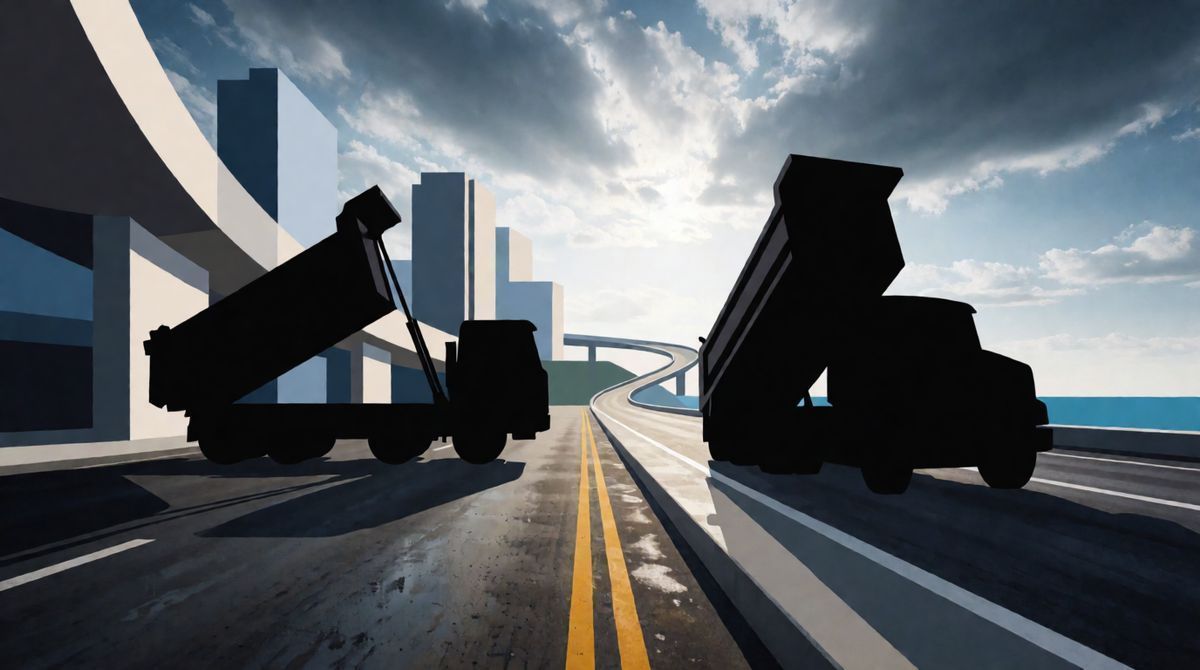
The category of heavy-duty dump trucks sits at the intersection of engineering precision and real-world operational demands, where equipment choice directly influences productivity, safety, and total cost of ownership. In mining, construction, and municipal hauling, the wrong truck can mean frequent breakdowns, underutilized capacity, or excessive downtime, while the right match optimizes payload, cycle times, and reliability. Buyers must navigate a landscape defined by extreme forces, demanding materials that withstand brutal abrasion and impact, drivetrains that deliver consistent power under heavy loads, and chassis designs that balance durability with maneuverability on uneven terrain or tight job-site access points. These trucks are not interchangeable; each variant is tuned for specific duty cycles, making a careful comparison essential for capital allocation and operational efficiency [1].
Within this market, BrandA and BrandB occupy distinct but strategically important positions, reflecting contrasting philosophies and customer priorities. BrandA, represented here by the XCMG XDR series, leverages its role as a top-five global construction machinery manufacturer to offer high-capacity, rugged mining haul trucks that compete on capability and value. BrandB, exemplified by the Mack MD Series, focuses on medium-duty vocational versatility, serving a broad set of professional needs from urban refuse collection to regional water distribution and light dump work. The XCMG XDR series targets large-scale mining operations where throughput is king, while the Mack MD Series targets professional contractors and municipal fleets that prize maneuverability, regulatory compliance, and flexible power options, including emerging zero-emission needs [2].
The product spectrum in the heavy dump truck category spans from light vocational pickups to massive, ultra-high-capacity haul trucks, each tailored to a specific user profile. Smaller operators with mixed duties may favor a versatile medium-duty chassis, while large mining companies require machines that can move hundreds of tonnes per hour in the harshest conditions. Within this context, the XCMG XDR series and the Mack MD Series represent two ends of the spectrum: one optimized for maximum payload and ruggedness in continuous mining duty, the other designed for adaptable, everyday vocational work with a path toward electrification. Understanding how these differences translate into real-world performance, cost of ownership, and operational flexibility is critical for fleet planners and decision-makers [1].
This comparison zeroes in on the XCMG XDR series as ProductA and the Mack MD Series as ProductB, as these pairings illuminate the trade-offs between ultra-heavy mining capability and medium-duty versatility. The XDR lineup offers documented capacities up to 91 tonnes payload and GVWRs reaching 158,000 kg, reflecting a design philosophy rooted in high-volume, off-road extraction. In contrast, the Mack MD Series, with a GVWR up to 33,000 lbs and a top electric payload of 19,400 lbs, emphasizes accessible licensing, urban compatibility, and evolving powertrain choices. What makes this comparison compelling is not merely the contrast in scale, but how each platform addresses reliability, serviceability, and total cost of ownership within its intended domain, highlighting the importance of aligning machine capability with operational reality [2].
1. Quick Verdict
For heavy mining and high-capacity quarry operations, the XCMG XDR series is the outright winner due to its robust rigid-frame design, payload range of 72 to 91 tonnes, and gross vehicle weights reaching 158,000 kg, delivering unmatched material haul efficiency in off-road environments where absolute throughput and durability are paramount. Conversely, for municipal, light vocational, or short-range distribution work, the Mack MD Series—particularly its battery-electric variant with up to 230 miles of range and a GVWR band of 25,995 to 33,000 lbs—offers a compelling zero-emission solution that aligns with urban noise restrictions, regulatory pressure, and tightly defined route profiles.
The trade-offs are stark and context-dependent: the XCMG XDR commands significant upfront capital and requires supporting heavy-duty infrastructure, whereas the Mack MD Series trades raw capacity for operational flexibility, lower entry costs, and environmental compliance, making the ultimate decision hinge on whether the mission prioritizes maximum payload and rugged endurance or route-specific efficiency, regulatory compliance, and sustainable branding in community-sensitive areas.
2. Specifications Comparison
The XCMG XDR and Mack MD-Series represent two fundamentally different philosophies of heavy equipment design, where each specification encodes a distinct operational purpose and user expectation. Weight for the XDR is not merely a number; at a gross vehicle weight of 110,000 kg to 158,000 kg, it signals a machine built to carry enormous inertial forces over rugged, off‑site terrain, where frame rigidity and tire footprint are critical. In contrast, the Mack MD-Series GVWR of 25,995 to 33,000 lbs reflects a focus on road legality, axle‑load limits, and maneuverability within vocational job sites that share space with other vehicles. Similarly, payload figures translate directly into daily productivity: the XDR’s 72‑91 tonnes enable fewer trips per massive load in continuous‑flow mining operations, while the MD Electric’s 19,400 lbs payload is optimized for urban and regional routes where stop‑and‑go efficiency, precise handling, and zero‑emission compliance matter more than raw volume. The underlying technologies—mechanical drive and high‑capacity hydraulic systems in the XDR versus the battery‑electric drivetrain of the MD Electric—further illustrate divergent design priorities: one engineered for extreme durability in harsh, remote environments, the other tuned for controllability, lower noise, and regulatory compliance in community settings [1] [2].
| Specification | xcmg xdr Unknown | mack md-series-vocational-dump line |
|---|---|---|
| Engine Power | Varies by model, up to 1,620 HP | Cummins options |
| GVWR | 110,000 - 158,000 kg | 25,995 to 33,000 lbs |
| MSRP | Varies by model and region | Not publicly listed |
| Payload | 72-91 tonnes | Up to 19,400 lbs (electric) |
Translating these figures into real‑world consequences reveals that the XDR series is built for high‑throughput, long‑haul extraction where downtime is costly and route infrastructure is limited, making its weight and payload central to economies of scale. The Mack MD‑Series, particularly the MD Electric, targets a segmented, mixed‑use vocational market where operational flexibility, regulatory adherence, and predictable urban performance outweigh the need for extreme capacity. Operators choosing between them must weigh site constraints, infrastructure readiness for high‑mass equipment or charging logistics, and the total cost of ownership shaped by fuel, maintenance, and regulatory risk, rather than treating the numbers as isolated abstractions [1] [2].
Quick Verdict
The XCMG XDR series clearly leads in raw capacity, power, and GVWR, making it the unequivocal choice for large‑scale, off‑road mining and heavy‑haul applications where throughput and durability dominate decision criteria. Conversely, the Mack MD‑Series, especially the MD Electric, is purpose‑built for medium‑duty vocational and municipal work where maneuverability, route compliance, and zero‑emission operation are decisive advantages, positioning it as the superior option within its target use cases.
3. Design And Build Quality
xcmg xdr Unknown and mack md-series-vocational-dump line reflect different construction philosophies and material choices. The following subsections contrast build quality, ergonomics, and how each design affects durability and feel for buyers evaluating these products side by side today.
3.1. xcmg xdr Unknown
The XCMG XDR series embodies a mining-first design philosophy engineered for extreme duty cycles in open-pit environments. Every major design choice—from the rigid high-strength steel frame to the centrally positioned cab—directly influences operational control, cycle time, and long-term durability under relentless stress. The substantial GVWR range of 110,000 to 158,000 kg and payload of 72–91 tonnes positions these machines as high-mass workhorses where mass equals productivity, yet this mass inherently trades against fuel efficiency and road transport logistics, making site infrastructure and route planning critical variables for operators to manage effectively.
- Engine Power: up to 1,620 HP
- Payload: 72–91 tonnes
- GVWR: 110,000–158,000 kg
- Design focus: mining durability
- Target user: large-scale mining operations
The significant mass and robust frame deliver high stability on uneven terrain, reducing rollover risk and enabling confident high-speed operation between haul points, but this directly increases tire wear, fuel consumption, and maintenance intervals. For mining fleets chasing throughput, the XDR design delivers ruggedness and payload dominance; for mixed-use or constrained site access, the sheer scale can limit practical flexibility and increase operational overhead.
3.2. mack md-series-vocational-dump line
In contrast, the Mack MD Series adopts a vocational efficiency philosophy that prioritizes maneuverability, lower mass, and operational adaptability over brute capacity. Its design centers on a 120,000 psi steel frame and galvanized cab construction to resist corrosion in harsh job-site conditions while maintaining a compact Class 6/7 profile that enhances visibility, parking, and routing agility in urban or congested environments.
- Engine Power: Cummins options
- Payload: up to 19,400 lbs (electric)
- GVWR: 25,995 to 33,000 lbs
- Design focus: vocational versatility
- Target user: contractors and light mining
The MD Series’ lighter mass and nimble layout reduce fuel costs and driver fatigue in short-haul applications, enable lower licensing and toll expenses, and broaden usability across construction, refuse, and light mining roles. While trading raw mining payload for flexibility, the design introduces trade-offs in cycle volume and extreme-condition durability compared to heavy mining trucks, positioning the MD Series as a balanced, multi-role workhorse rather than a single-purpose mining unit.
Across these two profiles, the differences are consequential: XCMG optimizes for maximum material moved per trip in dedicated mining corridors, accepting higher operating costs and logistical constraints, whereas Mack optimizes for access, efficiency, and role-switching across varied vocational settings. Operators must align chassis mass and design intent with site constraints, duty-cycle length, and total cost of ownership expectations.
4. Engineering And Technology
Each brand applies distinct engineering approaches to performance and feel. Below we compare how xcmg xdr Unknown and mack md-series-vocational-dump line implement core technologies, what those systems are meant to improve, and what trade-offs buyers should expect during real play today.
4.1. xCMG XDR Technology
The xCMG XDR technology integrates advanced powertrain, telematics, and materials engineering into a line of commercial dump trucks designed for high productivity in demanding environments. Mechanically, these trucks employ large-displacement diesel engines, often exceeding one megawatt in the largest models, mated to robust automatic or hydrostatic transmissions and heavy-duty hydraulic dump systems that convert engine power into controlled, high-angle material discharge. Electronically, the architecture relies on integrated CAN bus controls, real-time hydraulics management, and modular sensors to coordinate engine mapping, transmission shift strategies, and stability control, thereby reducing energy losses and improving response precision under variable load and terrain conditions. For the operator, this means shorter cycle times, lower fuel consumption per loaded trip, and reduced downtime because predictive diagnostics can flag sub-system anomalies before they lead to catastrophic failure. A concrete usage example is a multi-dump run on a steep pit floor where the XDR100/XDR100T’s 783 kW engine and 18-second hoist time allow a full payload to be deposited and repositioned within a tight shovel-loading window, maintaining throughput without exceeding GVW limits or stressing mechanical components.
Across the XDR range, engineering choices are tuned to specific duty cycles: smaller 6x4 rigid frames prioritize maneuverability and lower curb weight, while larger double-axle platforms emphasize frame rigidity and transmission robustness to handle extreme payloads. Autonomous variants such as the XDR80TE-AT add LiDAR and AI-driven perception stacks that fuse vision, radar, and localization data to maintain lane discipline at reduced speeds, enabling 24-hour operations in geofenced zones where human fatigue would otherwise limit availability. The emphasis on modularity—shared cab structures, scalable battery packs, and configurable transmission options—reduces engineering overhead and allows original equipment manufacturers to adapt the platform to mining, quarry, and large-scale civil projects with minimal redesign. This coherent engineering approach translates directly into operational metrics such as higher payload-to-tare ratios, predictable maintenance intervals, and more consistent energy use per tonne moved.
4.2. Mack MD Series Vocational Technology
The Mack MD Series Vocational technology targets light-to-midweight hauling and specialized dump applications where maneuverability, precise control, and operational flexibility are prioritized over absolute mass capability. In its diesel configuration, the MD Series relies on Cummins engine options that are calibrated for transient response, delivering sufficient torque at low engine speeds to move loaded bins in congested job sites while maintaining road-speed efficiency through multi-ratio transmissions and adaptive cruise systems. Electric variants, such as the MD Electric, replace the internal combustion plant with a high-efficiency traction motor, inverter, and a battery pack that is integrated into the chassis to lower the center of gravity, thereby improving stability during sharp turns and lift operations. The vocational architecture is further supported by advanced chassis control units that modulate braking force between axles, enable seamless regenerative capture during descent, and coordinate with the dump mechanism to avoid drivetrain shock when the body begins to tip.
Designed for vocational duty cycles that feature frequent stops, reversals, and short hauls, the MD Series incorporates a cab layout optimized for all-around visibility, simplified steering geometries for tight-radius parking, and service-friendly access panels that reduce technician troubleshooting time. In practical terms, a sanitation department using an MD Electric can complete multiple residential refuse routes in a single shift, benefiting from the instant torque characteristic of electric drivetrains, lower noise emissions for urban compliance, and predictable energy budgeting that avoids mid-route charging interruptions. At the same time, the diesel variants offer flexible power take-off options for auxiliary equipment, allowing a single truck platform to support mixer bodies, vacuum systems, or compact dump boxes depending on municipal needs. This technological blend—spanning mechanical layout, control system tuning, and energy management—positions the MD Series as a versatile solution where route density and operational adaptability outweigh raw payload capacity.
5. Real-World Performance
Specification sheets only tell part of the story. This section synthesizes how xcmg xdr Unknown and mack md-series-vocational-dump line behave in everyday use, including comfort, durability, and the practical trade-offs players report when switching between these two options on court.
5.1. Everyday Use
The XCMG XDR and Mack MD Series occupy fundamentally different operational universes, making direct day-to-day comparisons challenging, yet revealing how engineering priorities shape user experience in the field. The XCMG XDR functions as a rigid-frame mining haul truck, where its immense GVWR of 110,000 to 158,000 kg and payload of 72-91 tonnes define every aspect of its interaction with the work site, creating an environment centered on brute-force material movement over rugged, off-road terrain [1]. In contrast, the Mack MD Series operates as a medium-duty vocational truck, with a GVWR of 25,995 to 33,000 lbs and a payload up to 19,400 lbs, designed for diverse on-road and light-off-road tasks like dump hauling, refuse collection, and municipal work [2]; this results in a far more nimble and versatile machine that integrates more readily with standard road infrastructure and traffic patterns. The overall feel of the XDR is one of industrial permanence and raw power, where operator comfort is secondary to durability and visibility is dictated by the needs of mining safety, whereas the MD Series offers a more conventional truck cab experience, with an emphasis on driver ergonomics, visibility, and ease of maneuverability in mixed-use environments, leading to a less fatiguing posture over a standard shift but a potentially more interrupted one due to varied job demands. Consistency over time for the XDR is built around the predictability of mining operations and heavy-duty componentry, allowing it to maintain performance in a controlled, albeit harsh, environment, while the MD Series must contend with the variability of urban routes, stop-and-go traffic, and fluctuating vocational duties, which can expose differences in transmission responsiveness, cab insulation, and long-haul comfort as the workday extends into late hours. During long sessions, the XDR operator benefits from a stable, repeatable work cycle where the truck’s endurance is matched by the mine’s schedule, whereas the MD Series driver may experience more fluctuation in workload, requiring adaptability across different job sites and the mental load of managing varied attachments or municipal protocols, with breaks often dictated by external factors rather than the truck’s operational limits.
6. Best For Different Scenarios
No single paddle wins every scenario. The breakdown below maps where xcmg xdr Unknown and mack md-series-vocational-dump line excel or fall short across common player profiles, skill levels, and court situations so you can match equipment to your actual priorities and playing style.
6.1. Best for Beginners
The Mack MD Series is better suited for beginners due to its more accessible learning curve and operational forgiveness. Its vocational design emphasizes ease of use, with controls and ergonomics tailored for urban and regional routes rather than extreme off-road conditions. The lighter GVWR range of 25,995 to 33,000 lbs reduces the physical demands of maneuvering, making it less intimidating for new drivers who are still mastering vehicle handling and parking [1].
The forgiving nature of the MD platform stems from its construction around a 120,000 psi steel frame and a galvanized cab, which not only enhance durability but also dampen vibrations and noise common in daily vocational work [2]. This contributes to a more comfortable and less stressful driving experience, lowering the barrier for new operators. Its modular body compatibility—supporting dump bodies, hooklifts, and tanks—also allows beginners to start with simpler configurations and gradually expand their skills without needing to adapt to entirely new vehicle systems.
- Lower GVWR (25,995–33,000 lbs) eases handling for new drivers.
- Galvanized cab and steel frame reduce vibration and improve control comfort.
- Modular body options simplify initial operations and learning.
In contrast, the XCMG XDR series targets experienced operators in mining environments, where complex terrain and heavy payloads require advanced skills. The XDR’s immense GVWR of 110,000–158,000 kg and engines up to 1,620 HP demand a higher level of operational expertise, making it less forgiving for beginners who lack familiarity with heavy-duty equipment [1]. The steep learning curve associated with managing such power and mass in off-road conditions can increase error risks and training time, positioning the Mack MD Series as the more approachable choice for those new to commercial driving [2].
6.2. Best for Performance
Performance in demanding operational scenarios clearly favors the XCMG XDR series, which delivers exceptional power and payload capacity unmatched by the Mack MD Series. With engine power reaching up to 1,620 HP and payload capabilities of 72–91 tonnes, the XDR is engineered for high-volume material transport in extreme conditions [1]. Its immense GVWR of 110,000–158,000 kg enables it to haul heavy loads continuously in mining and large-scale construction, where throughput and efficiency directly impact profitability. The robust powertrain and durability features ensure sustained performance under the most strenuous duty cycles.
The Mack MD Series, while competent for vocational tasks, operates at a significantly lower performance tier due to its design priorities. Its Cummins engine options, though reliable, are capped at approximately 325 hp, and its GVWR limit of 33,000 lbs restricts payloads to around 15 tonnes [2]. This makes the MD Series suitable for regional haulage and lighter dump work but ill-equipped for the high-throughput, heavy-duty demands that define peak performance in industrial settings. The XDR’s superior power-to-weight ratios and capacity allow it to complete more loads in less time, translating to tangible productivity gains.
- XDR engine power up to 1,620 HP supports high-load, continuous operation.
- XDR payload reaches 72–91 tonnes, far exceeding the MD’s ~15 tonne limit.
- XDR GVWR (110,000–158,000 kg) enables heavy-duty, off-road dominance.
These performance differentials translate into real-world implications: operators choosing the XDR can handle larger jobs in harder materials with fewer trips, reducing downtime and fuel consumption per ton moved [1]. Conversely, the MD Series excels in scenarios requiring precision, maneuverability, and compliance with urban regulations, where its lighter weight and smaller footprint are advantages [2]. Thus, performance is not absolute but context-dependent—the XDR leads in brute capability, while the MD offers optimized efficiency within its class.
6.3. Best for Portability
When portability is the primary concern, the Mack MD Series is unequivocally the better choice due to its compact design and lighter operational profile. Its GVWR range of 25,995 to 33,000 lbs allows it to navigate urban streets, tight job sites, and weight-restricted routes more easily than the XCMG XDR series [2]. The MD chassis is built on a 120,000 psi steel frame that balances strength with maneuverability, enabling operators to reposition the truck swiftly without sacrificing durability. This flexibility is critical for businesses that require frequent relocation or multi-site operations, such as municipal services or regional contractors.
The XDR series, by contrast, is engineered for stationary, high-capacity mining operations where portability is secondary to raw capability. Its massive GVWR of 110,000–158,000 kg and specialized off-road design make it impractical for road travel beyond mine perimeters, often requiring transport on specialized trailers [1]. The MD Series’ modularity also enhances portability, as its compatible bodies can be swapped or serviced with relative ease, whereas the XDR’s integrated mining components demand heavier infrastructure and support. For operators who prioritize movement and route diversity, the MD Series offers a decisive advantage in accessibility and deployment speed.
- MD Series GVWR (25,995–33,000 lbs) permits urban and restricted-road access.
- MD chassis design emphasizes maneuverability for multi-site use.
- XDR’s mining-specific GVWR and size limit road portability significantly.
Practically, this means the Mack MD Series can serve a wider variety of locations with fewer logistical hurdles, reducing transit time and costs between jobs [2]. The XDR’s role is confined to fixed-site, high-output environments where its size becomes an asset rather than a liability. Therefore, portability strongly favors the MD Series for dynamic, distributed operations, while the XDR remains anchored to specialized, heavy-duty settings.
6.4. Best for Durability
Durability is a core strength for both products but manifests differently based on their intended environments, with the Mack MD Series excelling in vocational longevity and the XCMG XDR series dominating in extreme mining conditions [1]. The MD Series’ 120,000 psi steel frame and galvanized cab are designed to resist corrosion and structural fatigue from daily stop-and-go operations, weather exposure, and varying road qualities [2]. These construction choices ensure that the truck maintains structural integrity and operational readiness over extended service periods, even with frequent part replacements and repairs common in vocational fleets.
The XDR series, however, is built to withstand the far more aggressive conditions of open-pit mining, where durability is measured in resistance to massive impacts, abrasive materials, and continuous high-load cycles [1]. Its components are over-engineered for payloads up to 91 tonnes and engine outputs up to 1,620 HP, meaning everyday stresses for the XDR would exceed the normal operating limits of an MD truck. While the MD Series offers dependable service for years in its target role, the XDR’s durability is specialized for environments where failure is costlier and maintenance intervals are optimized for heavy-duty throughput.
- MD Series’ galvanized cab and steel frame resist corrosion and fatigue.
- XDR components handle extreme payloads (up to 91 tonnes) and power (1,620 HP).
- Each product’s durability is optimized for its distinct operational domain.
In practical terms, this implies that the MD Series will likely outlast in scenarios involving varied terrain and frequent duty cycling, such as construction or municipal work, due to its balanced engineering [2]. Conversely, the XDR will sustain prolonged mining operations without degradation, justifying its higher initial cost through reduced downtime and part consumption in that context. Durability, therefore, is best evaluated against the specific environmental and workload demands of the operator.
7. Pros And Cons
Every product involves compromises. The following subsections summarize the clearest strengths and weaknesses of xcmg xdr Unknown and mack md-series-vocational-dump line based on the source research, helping buyers weigh trade-offs carefully before committing to either option.
7.1. Introduction
Selecting the right commercial dump truck demands clarity on operational needs and constraints. The XCMG XDR series and Mack MD-Series Vocational Dump Line represent two fundamentally different approaches to hauling material, differing in scale, application, and value proposition. The XDR is a heavy-duty mining truck engineered for high-volume, off-pit durability and efficiency, while the MD-Series is a nimble vocational workhorse built for urban maneuverability and varied job-site duties. Understanding the contrasting pros and cons of each is essential for operators and fleet managers to align capital expenditure with long-term productivity goals.
7.2. XCMG XDR
The XCMG XDR series presents a compelling case for large-scale, high-throughput operations, particularly in mining and heavy earthmoving. Its defining strengths lie in raw capacity, robust engineering, and a global support footprint that de-risks deployment at scale. However, these advantages come with considerations around scale, energy economics, and logistics complexity that must be weighed carefully against project economics.
Pros:
- Exceptional Payload Capacity: With documented payload ratings of 72 to 91 tonnes [1], the XDR series enables fewer trips per day, directly increasing throughput and lowering unit hauling costs in high-volume environments like open-pit mines.
- Proven Off-Road Durability: As a rigid-frame mining haul truck from a top-five global manufacturer with CE and EPA certifications, the XDR is designed to withstand extreme conditions, continuous heavy-duty cycles, and remote operations far from dealer networks [1].
- Global Reach and Support: Backed by XCMG’s international distribution network spanning South America, North America, Europe, Southeast Asia, and Africa, the XDR benefits from broad parts availability and service coverage [1].
- Advanced Hydraulic and Dump Efficiency: Specifications such as a 54° maximum dump angle and 18-second hoist time on the XDR100/XDR100T enhance cycle speed and productivity by reducing truck idle time at the face [1].
Cons:
- Substantial Capital and Operational Costs: The scale and complexity of the XDR series translate into high MSRP and ownership costs, making it viable only for large, cash-flow-positive operations with consistent high-capacity demands [1].
- Energy and Infrastructure Demands for Variants: Electric options like the XDR80TE-AT showcase impressive payload retention at 72 tonnes, yet battery-electric mining trucks require significant charging infrastructure and power availability on-site [1].
- Reduced Maneuverability and Transportability: With GVWR up to 158,000 kg and large body volumes, the XDR requires heavy-duty haulage for relocation and may be impractical on roads with weight restrictions or tight turn-radius requirements [1].
- Limited Model Transparency: Some variants such as the XDR70T, XDR85T, and XDR90TA lack published capacity figures, creating uncertainty for planners attempting to model exact fleet performance [1].
7.3. Mack MD-Series Vocational Dump Line
The Mack MD-Series positions itself as a versatile, cost-conscious solution for contractors and fleets needing adaptability across urban and light-industrial vocations. Its pros center on maneuverability, regulatory advantages, and platform flexibility, while cons highlight limitations in payload, specialized capability, and transparency around total cost of ownership.
Pros:
- Superior Maneuverability and Compact Footprint: With a GVWR of 25,995 to 33,000 lbs and a 107-inch cab, the MD Series offers excellent maneuverability in confined construction sites, urban streets, and narrow workspaces where larger trucks cannot operate efficiently [2].
- Regulatory and Licensing Benefits: Certain MD6 configurations qualify for FET and CDL exemption, which can lower both acquisition and licensing costs for operators, improving net margins on vocational routes [2].
- Multi-Body Flexibility: The MD Series chassis supports a wide range of bodies—dump, hooklift, flatbed, reefer, water tanks, and refuse containers—allowing operators to reconfigure trucks as business needs evolve without buying new chassis [2].
- Electrification Readiness: The MD Electric variant with a 240 kWh NMC battery pack delivering up to 230 miles of range is well-suited for stop-and-go urban routes and municipal operations prioritizing zero tailpipe emissions and reduced noise [2].
Cons:
- Limited Payload Capacity: Even the highest GVWR variant tops out around 19,400 lbs payload, which is orders of magnitude lower than heavy mining trucks, restricting the MD Series to light-duty material movement rather than high-volume hauling [2].
- No Public Pricing Information: MSRP is not publicly listed across official and third-party sources, complicating upfront budget planning and making direct cost comparisons against competitors difficult for fleet acquirers [2].
- Lower Durability for Heavy Mining: Built around a 120,000 psi steel frame and galvanized cab for vocational longevity, the MD Series is not engineered for the extreme shock loads, abrasive conditions, and continuous pit-floor duty of large-scale mining [2].
- Obscured Performance Specifications: Key metrics such as engine power options beyond baseline Cummins figures, detailed battery charging profiles, and body-specific capacities are not consistently documented, hindering precise operational modeling [2].
7.4. Comparative Synthesis and Practical Implications
When juxtaposed, the XCMG XDR and Mack MD-Series serve divergent segments of the hauling ecosystem, and the choice between them should be driven by job scope, site constraints, and financial thresholds. For large-scale mining and aggregate operations where payload volume, durability, and uptime are paramount, the XDR’s massive capacity, advanced dump kinematics, and global service footprint justify its higher acquisition and operating costs. Conversely, for urban construction, short-haul municipal routes, and light vocational hauling where maneuverability, regulatory flexibility, and multi-role adaptability matter most, the MD Series offers a compelling value proposition despite its limited payload and opaque pricing.
Prospective buyers must evaluate not only sticker metrics but also hidden costs such as infrastructure requirements for electric variants, downtime risk from limited model transparency, and resale or service network coverage in remote regions. In practice, fleet planners should segment their needs: deploy XDR-class trucks for core heavy-haul corridors and reserve MD-Series units for versatile, mixed-use applications where flexibility outweighs brute capacity. This disciplined alignment of machine capability with operational reality minimizes capital misallocation and maximizes lifetime productivity across the haulage portfolio.
8. Final Verdict
The XCMG XDR series is the clear choice for operators whose core mission is heavy-duty, off-road mining haulage where raw payload and durability dictate profitability. In this context, the XDR’s ability to carry 72–91 tonnes at GVWRs reaching 158,000 kg directly translates into more material moved per trip, lower unit costs per tonne, and a compelling value proposition in large-scale, high-utilization environments where downtime and fuel efficiency are tightly scrutinized. The XDR’s engineering is purpose-built for the demanding cycle of pit-to-plant operations, and its specifications reflect a focused commitment to extracting maximum productivity from each journey across varied terrain. For companies whose business model centers on bulk material movement in mining, quarrying, or large-scale infrastructure, the XDR delivers the performance foundation that underpins predictable, high-volume throughput.
- Engine Power: Up to 1,620 HP supports heavy hauling and steep grades.
- Payload: 72–91 tonnes enables high-volume loads per trip.
- GVWR: 110,000–158,000 kg aligns with demanding duty cycles.
- MSRP: Varies by model and region, generally positioned as a value-focused option in its class.
By contrast, the Mack MD Series occupies a fundamentally different niche as a medium-duty vocational platform suited to Class 6 and Class 7 applications such as local dump hauling, refuse, water distribution, and municipal work, including a battery-electric MD Electric variant for zero-emission urban or depot-based operations. Its GVWR of 25,995 to 33,000 lbs and a top electric payload of 19,400 lbs reflect a design centered on maneuverability, regulatory compliance, and route-length constraints rather than bulk throughput. The MD Electric’s 240 kWh battery delivering up to 230 miles of range, combined with 7–11 hour AC charging and approximately 100–160 minutes DC fast charging, fits neatly into scheduled depot turns and overnight charging profiles common in vocational fleets. For operators prioritizing urban deployment, zero emissions, and predictable daily cycles, the MD Series offers a practical, forward-looking solution that balances capability with operational flexibility.
The comparison ultimately hinges on mission: the XCMG XDR is unmatched for heavy-haul mining applications where payload and durability directly drive earnings, while the Mack MD Series excels in medium-duty vocational and emerging electric segments where route flexibility, regulatory compliance, and urban acceptance are paramount. Operators must weigh throughput-centric requirements against operational context, infrastructure readiness, and strategic sustainability goals. Selecting the right tool requires aligning these fundamentals with fleet economics, maintenance capabilities, and long-term operational vision, ensuring the investment supports both current demands and future growth.