1. Introduction
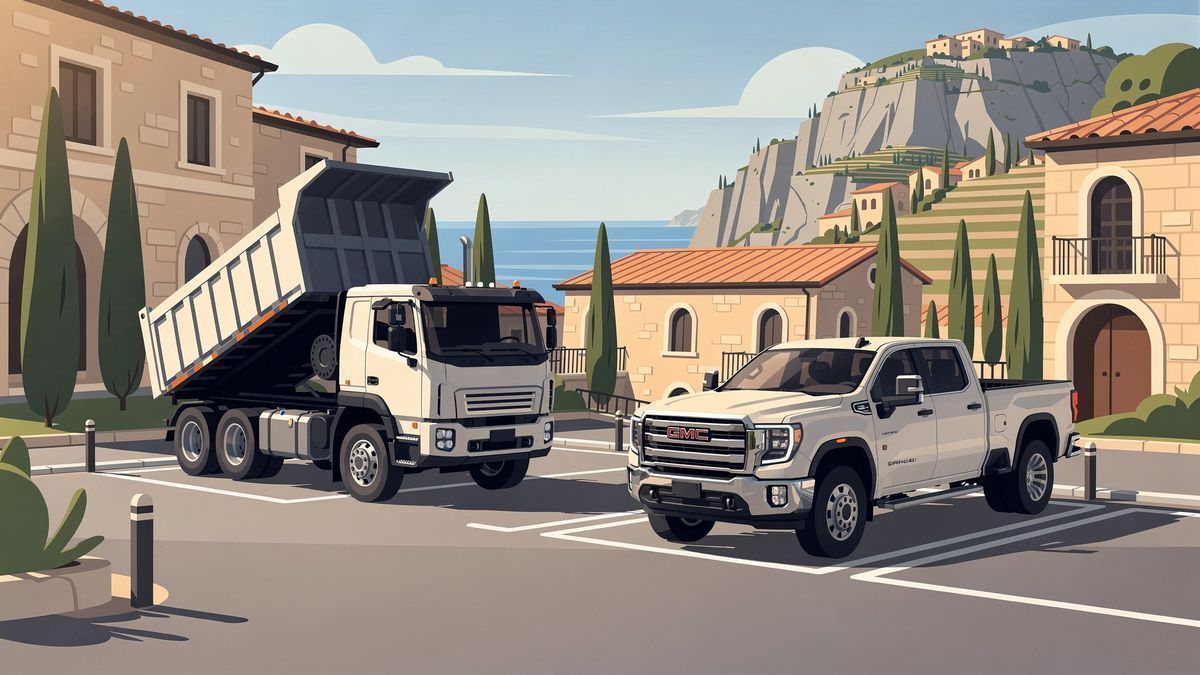
In heavy equipment operations, the interplay between primary production machines and support vehicles defines site efficiency more than any single specification sheet reveals. A mining haul truck like the XCMG XDR series moves hundreds of tonnes of material per shift across punishing off-road grades, but its productivity collapses without coordinated water trucks, graders, fuelers, and personnel carriers that keep the haul road viable and the crew mobile. The GMC Sierra 2500 HD occupies that support tier — a heavy-duty pickup configured for towing, payload, and durability — yet its role shifts dramatically depending on whether it’s shuttling supervisors between pit and plant, towing a light tower to a night-shift loading zone, or hauling a portable compressor for tire maintenance on 4.0-meter rubber. Treating these assets as independent line items ignores the operational choreography that determines cycle times, uptime, and cost per tonne.
Gear chemistry in this context means matching the support vehicle’s duty cycle to the primary machine’s tempo. The XDR100T, with a 91,000 kg payload and 1,050 hp driving a 158,000 kg GVW, demands a haul road that stays graded, drained, and dust-suppressed around the clock; a Sierra 2500 HD Duramax diesel towing a 10,000-liter water bowser must sustain low-speed, high-torque operation for twelve-hour shifts without overheating its 975 lb-ft torque curve or exceeding its 22,390 lbs gooseneck rating. Conversely, the XDR80TE-AT autonomous electric variant introduces 500 kWh battery-swapping cycles every six minutes, creating a new support requirement: a service truck with high-voltage PPE, thermal imaging, and enough bed length to carry spare contactors and coolant modules. If the support truck’s payload, bed configuration, or cooling capacity doesn’t align with that emergent task, the autonomous truck sits idle while the mine burns money.
The most common fleet mistake is spec’ing the support truck for comfort or brand loyalty rather than the physics of the primary asset’s operation. A Denali-trim Sierra with 3,407 lbs payload and plush seats looks attractive on the lot, but its reduced payload margin evaporates once you load a 1,200 lbs toolbox, two technicians, and a 3,000 lbs generator for night lighting — leaving zero margin for the dynamic loads of rough haul roads. Meanwhile, a Pro-trim regular-cab long-bed 2WD gas model delivers 4,064 lbs payload and a 18,500 lbs conventional tow rating at half the acquisition cost, precisely matching the mass-and-tow envelope of typical mine-site support trailers. The error compounds when maintenance intervals diverge: the XDR’s 250-hour hydraulic filter changes and 1,000-hour transmission oil drains demand a support vehicle that can reach the truck on the bench, not one stranded in the shop with a blown transmission from chronic over-GCW towing.
This analysis pairs the XCMG XDR series — spanning 72 to 91 tonne payloads, 480 to 1,620 hp, and GVWs from 110,000 to 158,000 kg — with the 2025 GMC Sierra 2500 HD in its gas and Duramax diesel guises, 4,064 lbs max payload, and 22,500 lbs conventional towing. The contrast is deliberate: one machine defines the heavy end of off-road haulage, the other defines the light end of on-site logistics. By mapping the XDR’s hydraulic architecture, dump-cycle timing, and autonomous-electric trajectory against the Sierra’s axle ratios, cooling packages, and upfit-friendly bed lengths, we can identify where the pairing creates operational harmony — and where spec mismatches turn a support truck into a bottleneck. The question isn’t whether each truck is good at its job; it’s whether the Sierra you order today can still serve the XDR you’ll be running three years from now.
2. Understanding the Individual Components
Before assessing synergy, readers need a clear picture of how xcmg xdr and gmc sierra-2500-hd differ in role, physical profile, and club context. The subsections below summarize each product’s specifications and technical identity using only the cited source research, establishing the baseline for the gear chemistry analysis that follows [1][2].
2.1. XCMG XDR (dumptrucks)
The XCMG XDR series represents a purpose-built line of rigid-frame mining haul trucks engineered for off-road open-pit operations where payload capacity and structural durability dictate profitability. Produced by Xuzhou Construction Machinery Group, a state-backed Chinese heavy-equipment conglomerate ranked among the world’s top five construction machinery manufacturers, the XDR family spans at least seven documented variants ranging from the entry-level 6x4 XDR70T to the large-class double-axle XDR100/XDR100T and the autonomous battery-electric XDR80TE-AT [1]. These trucks are not commercial vans or light-duty vehicles; they are heavy mining machines designed to move 72 to 91 tonnes of material per cycle across unforgiving terrain, with gross vehicle weights spanning 110,000 to 158,000 kg. The design philosophy prioritizes mechanical simplicity, hydraulic robustness, and scalability across a model range that allows mining operators to match truck capacity to specific haul distances, grade profiles, and material densities.
In real-world usage, the XDR series operates in continuous-duty cycles loading excavated ore or waste rock at the face, hauling it up spiral haul roads to surface dumps or crushers, and returning empty for the next load. The smaller 6x4 variants like the XDR80T employ mechanical drive with a FAST 8-speed automatic transmission suited for medium-scale operations and shorter haul distances, while the larger XDR90T and XDR100/XDR100T step up to three-axle and double-axle platforms with fully hydraulic suspension, fully hydraulic steering with emergency function, and in the case of the XDR100 series, an Allison TC890 torque converter transmission delivering smooth multi-range power delivery essential for heavy mining applications [1]. The autonomous XDR80TE-AT introduces a 500 kWh battery pack with six-minute swap capability and LiDAR-based navigation, signaling a strategic pivot toward zero-emission haulage. Across the range, dump body volumes vary from 50–62 m³ heaped on the XDR80T to 60 m³ heaped on the XDR100/XDR100T, with dump angles of 54° and hoist cycles around 18 seconds, directly determining revenue per cycle and the number of trips required to move a given volume of material.
The mechanical impact of the XDR’s defining trait — its massive payload capacity relative to operating weight — lies in how it structures the energy equation of each haul cycle. A higher payload-to-tare ratio means more revenue-generating material moved per unit of fuel or electricity consumed, per tire revolution, and per unit of brake wear. The XDR90T achieves an 81,000 kg payload on a 37,000 kg operating weight (GVW 118,000 kg), while the XDR100/XDR100T pushes 91,000 kg payload on a 67,000 kg operating weight (GVW 158,000 kg) [1]. This efficiency drives equipment selection: mines with longer haul distances and steeper grades favor the higher-horsepower, hydraulic-drive XDR100 series with its 783 kW (~1,050 HP) engine and Allison TC890, while operations prioritizing cycle volume over per-load density may opt for the XDR80T’s 480 HP mechanical drive and larger volumetric body range. The fully hydraulic suspension and steering across mid-to-large variants also translate to operator fatigue reduction and frame stress management over thousands of cycles on uneven pit floors.
The following specifications define the XDR series envelope and frame the pairing discussion:
| Specification | Value |
|---|---|
| Engine Power | Varies by model, up to 1,620 HP |
| Payload | 72-91 tonnes |
| GVWR | 110,000 - 158,000 kg |
| MSRP | Varies by model and region |
Key Technical Insight: Payload The 72–91 tonne payload range is the single most decisive specification for pairing the XDR with loading equipment and haul road infrastructure. A mining operation must match its excavator or loader bucket capacity — typically 30–50 m³ for this truck class — to achieve 3–4 pass loading, minimizing truck wait time and loader swing cycles. The payload spec also dictates the required haul road design: bearing capacity, width, and grade must accommodate 110,000–158,000 kg GVW repeatedly without excessive rolling resistance that would erode the fuel efficiency gains of a high payload-to-tare ratio. When pairing the XDR with a fleet, the payload number determines how many trucks are needed to meet daily production targets; a 10% increase in payload per truck can reduce fleet size by a comparable margin, lowering capital expenditure on tires, maintenance bays, and operator headcount. This spec is not merely a capacity figure — it is the fulcrum around which the entire mine logistics chain balances.
2.2. GMC Sierra 2500 HD (pickups)
The 2025 GMC Sierra 2500 HD occupies a critical position in the heavy-duty pickup segment, bridging the capability gap between light-duty half-ton trucks and true Class 3 commercial workhorses while offering a breadth of configuration that spans pure fleet utility to luxury-oriented heavy hauling. Buyers select from two distinct powertrain options: a 6.6L gasoline V8 generating 401 hp and 464 lb-ft of torque, or the renowned 6.6L Duramax turbo-diesel V8 producing 470 hp and 975 lb-ft of torque, both mated to a 10-speed Allison automatic transmission [2]. When properly configured, the diesel variant enables a maximum conventional towing capacity of 22,500 lbs, while gooseneck and fifth-wheel configurations achieve up to 22,390 lbs. Payload capacity reaches 4,064 lbs in the Regular Cab, long-bed, two-wheel-drive gas configuration. The pricing spectrum starts near $48,495 for the base Pro trim and extends beyond $95,000 for the flagship Denali trim, reflecting a model strategy that serves municipal fleets, independent contractors, and recreational tower owners from a single platform.
In real-world usage, the Sierra 2500 HD’s behavior shifts dramatically based on cab style, bed length, axle ratio, and selected option packages — a reality that industry analysis and owner discussions consistently highlight as the gap between “properly equipped” marketing claims and actual capability [2]. The Pro trim in its lightest configuration delivers the highest payload figure at 4,064 lbs by virtue of its regular cab, long bed, and two-wheel-drive architecture, making it the logical choice for upfitters and municipal fleets hauling heavy in-bed loads like palletized materials, equipment, or bulk commodities. Conversely, the Denali trim sacrifices approximately 550 pounds of payload capacity relative to the base model to accommodate sound-deadening materials, multi-contour seats, and advanced driver-assistance hardware. Every diesel-equipped configuration from SLE upward achieves the 20,000-pound conventional towing threshold, simplifying the decision matrix for buyers prioritizing trailering toward interior appointments and off-road capability rather than raw trailering numbers. The available Max Trailering Package and ProGrade Trailering System with up to 14 camera views further refine the towing experience for heavy fifth-wheel and gooseneck applications.
The mechanical impact of the Sierra 2500 HD’s defining trait — its 975 lb-ft of diesel torque delivered through the 10-speed Allison — lies in how it structures low-end grunt for moving heavy combination weights from a standstill and maintaining grade momentum without excessive transmission hunting. The torque peak arrives low in the rev range, allowing the 10-speed to hold taller gears longer on inclines, reducing engine speed, heat rejection, and fuel consumption during sustained heavy towing [2]. This characteristic benefits contractors towing loaded equipment trailers (15,000–20,000 lbs) on mixed highway and job-site routes, as well as recreational owners pulling large fifth-wheel campers through mountain passes. The gas V8’s 464 lb-ft at higher rpm suits users who prioritize payload over towing, need simpler maintenance, or operate in regions where diesel fuel logistics or emissions regulations add complexity. The long bed option, available across trims, extends the wheelbase for improved trailer stability and accommodates gooseneck hitch installations without cab interference — a practical necessity for the 22,390 lbs fifth-wheel rating.
The following specifications define the Sierra 2500 HD envelope and frame the pairing discussion:
| Specification | Value |
|---|---|
| Engine Power | 401 hp / 464 lb-ft (6.6L Gas V8); 470 hp / 975 lb-ft (6.6L Duramax Diesel V8) |
| Towing Capacity | Up to 22,500 lbs conventional; up to 22,390 lbs gooseneck/fifth-wheel |
| Payload | Up to 4,064 lbs (Regular Cab, long bed, 2WD gas) |
| Bed Length | Long bed available |
| MSRP | From $48,495 (Pro) to $95,000+ (Denali) |
Key Technical Insight: Towing Capacity The 22,500 lbs conventional and 22,390 lbs gooseneck/fifth-wheel ratings are the threshold specifications that determine whether the Sierra 2500 HD can replace a Class 3 chassis cab in a fleet’s heavy-trailer duties. For pairing decisions, this number dictates the maximum Gross Combined Weight Rating (GCWR) the truck can handle, which in turn governs the trailer brake controller calibration, weight-distribution hitch selection, and axle ratio choice (typically 3.73 or 4.10 for diesel, 3.42 or 3.73 for gas). A fleet manager specifying this truck for 20,000 lbs loaded equipment trailers must verify that the specific cab/bed/drivetrain combination retains sufficient payload for the tongue weight (typically 2,000–3,000 lbs for gooseneck) plus driver, fuel, and tools without exceeding the rear axle GAWR. The long bed availability is not a convenience feature here — it is a mechanical requirement for gooseneck clearance and lever arm stability at these combination weights. When the towing rating is fully utilized, the diesel’s 975 lb-ft torque and Allison’s close-ratio spreads become non-negotiable; the gas engine’s 464 lb-ft at higher rpm will demand more frequent downshifts, higher transmission temperatures, and reduced grade-holding capability, altering the total cost of ownership through fuel burn and component wear.
3. Gear Chemistry Analysis
Evaluating how xcmg xdr and gmc sierra-2500-hd interact requires separating positional roles, physical profiles, and tactical context before drilling into subsection comparisons. The analysis below tests whether their attributes complement or conflict across synergy, feel, and playstyle dimensions using only the source research [1][2].
3.1. Do They Work Together — or Against Each Other?
The pairing of the XCMG XDR mining dump truck series and the 2025 GMC Sierra 2500 HD presents one of the more unusual comparisons in the heavy-equipment landscape, because these two vehicles are engineered for fundamentally different operating environments that rarely overlap on a single jobsite. The XDR family is a rigid-frame mining haul truck designed for off-road open-pit operations, with payload ratings from 72 to 91 tonnes and gross vehicle weights ranging from 110,000 kg to 158,000 kg depending on variant [1]. The Sierra 2500 HD, by contrast, is a Class 2/3 heavy-duty pickup engineered for on-road and light off-road commercial duty, with maximum payload of 4,064 lbs in its lightest configuration and conventional towing capacity up to 22,500 lbs when properly equipped with the Duramax diesel [2]. The scale gap is enormous: the XDR’s nominal payload alone is roughly 36 to 45 times greater than what the GMC pickup can carry in its bed.
From a design-philosophy standpoint, the two vehicles are constructed around complementary but non-overlapping missions. The XDR is built around a rigid-frame chassis, mechanical or hydraulic drive to multiple axles (6x4 or larger), and a high-capacity dump body — in the case of the XDR90T, a 35 m³ struck / 53 m³ heaped body — engineered to absorb the repeated impact loading of ore and overburden cycles [1]. The Sierra 2500 HD is built around a ladder-frame chassis with independent front suspension, a body-on-frame pickup architecture, and either a 6.6L gasoline V8 producing 401 hp / 464 lb-ft or the 6.6L Duramax turbo-diesel V8 producing 470 hp / 975 lb-ft [2]. These are two distinct powertrain-and-chassis paradigms, and neither is intended to substitute for the other.
Rather than working “together” in a single operational task, the natural synergy between these two vehicles emerges at the fleet level. The Sierra 2500 HD can serve as a supervisor, light-haul, or crew-transport vehicle on a mine site where XDR-class trucks operate, while also functioning as a regional highway hauler for parts, small tooling, or personnel between sites. Conversely, the XDR is the primary production asset, moving bulk material at scales the pickup cannot approach. The pairing only feels “forced” if one attempts to use them interchangeably; within a properly structured fleet, their roles are mutually reinforcing rather than redundant.
The flow of feedback between the two vehicles is similarly disjointed. The XDR operator receives hydraulic steering and suspension feedback (XDR90T is fully hydraulic with emergency function), torque-converter or automated-manual transmission behavior, and the longitudinal pitch sensation of an 18-second hoist cycle on the larger variants [1]. The Sierra 2500 HD operator receives rack-and-pinion or hydraulic steering feel, a 10-speed Allison transmission’s shift logic, and the road-tuned feedback of a Class 2/3 pickup [2]. There is no shared tactile or operational vocabulary between them, which is precisely why their chemistry is best understood as complementary rather than synergistic in the way two matched components of a single tool might be.
3.2. Performance Synergy
At the level of raw performance output, the two vehicles do not compete — they stratify. The XDR family spans engine outputs from approximately 480 HP in the XDR80T up to 1,620 HP in the largest XCMG mining-truck configurations, with the XDR90T specifically rated at 412 kW (~553 HP) and 2,500 Nm of torque at 1,900 rpm, and the XDR100/XDR100T at 783 kW (~1,050 HP) [1]. The Sierra 2500 HD’s most powerful configuration delivers 470 hp and 975 lb-ft (approximately 1,322 Nm) of torque from its Duramax diesel [2]. Even the largest documented XDR powerplant produces roughly three to four times the horsepower of the gasoline or diesel Sierra, and the torque comparison is even more lopsided when one considers the operational rpm range — mining trucks operate at much lower engine speeds but with gearing and torque converters that multiply usable output.
The performance advantage of the XDR becomes most apparent in sustained, high-resistance bulk haulage. With a 91,000 kg payload on the XDR100/XDR100T, a 158,000 kg gross vehicle weight, and a 60 m³ heaped dump body with a 54° dump angle and 18-second hoist time, the truck is engineered to move hundreds of tonnes of material per shift [1]. The Sierra 2500 HD, even in its maximum-tow configuration at 22,500 lbs conventional or 22,390 lbs gooseneck/fifth-wheel, is constrained to roughly one-tenth of that per-trip payload [2]. When the two vehicles are deployed together on a mine or large infrastructure project, the XDR handles the bulk earthmoving or ore-haul cycle while the Sierra manages the supporting logistics — towing equipment trailers, hauling supplies, or moving personnel — that keep the larger trucks productive.
The combination improves overall fleet output precisely because each vehicle is used within its design envelope rather than outside it. An operation that tried to substitute the Sierra for an XDR would see cycle times increase by an order of magnitude, while an operation that tried to use an XDR for parts runs would burn fuel inefficiently and wear a six-figure mining asset on tasks a $48,495 Pro-trim pickup can handle [2]. The pairing therefore shines in mixed-fleet environments — open-pit mines, large quarry operations, major highway or dam construction projects, and remote resource-extraction sites — where both bulk haulage and light commercial transport are required simultaneously.
There are situations in which the combination is less effective. On a small commercial jobsite where only light hauling is required, the XDR is overkill and introduces ground-pressure and clearance challenges that the Sierra handles easily. On a pure deep-mine operation where bulk haulage is the only task, the Sierra’s role reduces to supervisor transport and becomes a relatively minor fleet line item rather than a co-equal partner. The pairing’s chemistry is therefore strongest when both vehicles are sized appropriately to the workload split.
3.3. Tactical Fit
The “tactical fit” of this pairing depends on how one defines tactical context. In a fleet-management sense, the XDR and Sierra 2500 HD fit together naturally because they address adjacent tiers of the same worksite logistics chain. The XDR80T, with its 50–62 m³ heaped body and 110,000 kg GVW, or the XDR90T with its 81,000 kg payload and 118,000 kg GVW, represent the mid-to-large tier of bulk-haul capability [1]. The Sierra 2500 HD — particularly the SLE or SLT trim with the available Duramax diesel and Max Trailering Package — represents the light-commercial tier that interfaces with pickup-and-trailer-scale logistics, including the towing of small excavators, light plants, or welding rigs that the XDR cannot practically move [2].
Where the fit becomes awkward is in any attempt to bridge the gap with a single vehicle. The Sierra 2500 HD’s 4,064 lb maximum payload (Regular Cab, long bed, 2WD, gas) and 22,500 lb conventional tow rating cannot approach the XDR’s per-cycle productivity [2]. The XDR, conversely, cannot legally or practically operate on public highways in most jurisdictions without specialized permitting and pilot vehicles, which means it is structurally confined to private mine or jobsite roads [1]. The tactical fit is therefore one of specialization, not substitution. The fleet that runs both benefits from having the right tool for each logistics layer; the fleet that tries to use either for the other’s job incurs either excessive cycle time or excessive capital cost.
The operator-experience profile also reinforces the fit. An XDR operator is typically a specialist who holds the certifications required for rigid-frame mining haul trucks and works within a structured shift rotation on a designated haul road. A Sierra 2500 HD operator may be a contractor, a foreman, or a supervisor who needs the versatility of a vehicle that can drive on public roads, park in a standard parking space, and tow a gooseneck trailer up to 22,390 lbs [2]. These are different operating environments with different expectation sets, and the chemistry between the vehicles is best understood as a separation of duties rather than a unified workflow.
One area where the tactical fit becomes genuinely additive is in the support of autonomous or semi-autonomous operations. The XDR80TE-AT variant is described as a battery-electric autonomous truck with a 500 kWh battery pack, six-minute battery-swap capability, LiDAR-based navigation, and AI-driven obstacle avoidance, with a 72,000 kg payload rating [1]. A modern Sierra 2500 HD — with available advanced trailering technology, surround-view cameras, and integrated telematics on upper trims like the SLT, AT4, and Denali — can serve as a mobile command or chase vehicle for testing and commissioning such autonomous assets. The tactical fit is therefore most compelling in forward-leaning operations where both bulk autonomy and light-fleet logistics are scaling simultaneously.
3.4. Playing Style Alignment
In heavy-equipment terms, “playing style” maps most closely to operator profile and operational mission. The XDR family is the platform of choice for a mining operation that prioritizes bulk tonnage moved per shift, sustained high-load factor, and — in the case of the XDR80TE-AT — a forward path toward zero-emission and autonomous haulage [1]. It rewards operations that have stable ore-body or waste-rock grades, predictable haul-road conditions, and the infrastructure to support either battery-swap or refueling depots. It is unforgiving of poor haul-road maintenance, because a fully loaded 158,000 kg GVW truck on poorly graded surfaces creates both safety and equipment-wear risks.
The Sierra 2500 HD, by contrast, is the platform of choice for a contractor, rancher, or fleet operator who needs versatility across on-road commuting, light off-road work, and medium-to-heavy trailer towing [2]. The Pro trim rewards operators who prioritize maximum payload and lowest acquisition cost; the SLE and SLT reward those who want a balance of work capability and daily-driver comfort; the AT4 and AT4X reward those who need off-road hardware for unpaved jobsites; and the Denali — with pricing that extends beyond $95,000 — rewards those who want near-luxury appointments alongside 20,000+ lb towing capacity [2]. The Duramax diesel is the powertrain of choice for operators who tow heavy fifth-wheel or gooseneck trailers over long distances, while the gasoline V8 is the rational choice for operators who prioritize payload and lower upfront cost.
The pairing therefore suits an operator or organization that needs both ends of the capability spectrum. A mid-to-large mining contractor, a major aggregate producer, or a state department of transportation running a quarry operation would be the prototypical fit. Such an organization can deploy the XDR80T, XDR90T, or XDR100/XDR100T for primary production haulage while using a fleet of Sierra 2500 HD pickups in Pro, SLE, or SLT trim — typically with the Duramax diesel for towing — for supervisory, maintenance, and support roles. Smaller operations, single-truck owner-operators, and buyers who only need light-to-medium commercial capability should avoid the XDR entirely; the capital cost, regulatory burden, and infrastructure requirements of a mining haul truck are not justified without a sustained high-tonnage mission [1].
At the operator level, the XDR demands specialized training and certification, and the Sierra 2500 HD demands only a standard commercial driver’s license depending on configuration and jurisdiction. The skill gap is wide, and the chemistry of the pairing assumes that two different operator pools — each competent within their own domain — are deployed against the appropriate vehicle. When structured this way, the combination is highly forgiving at the fleet level: the XDR is forgiving of operator input variations because it is designed for high-cycle repetitive work, while the Sierra is forgiving of operator skill variations because it is designed as a versatile consumer-and-commercial platform [2]. The pairing should be avoided by any organization that cannot sustain the dual specialization, because the failure mode of mismatched deployment is either dramatically reduced productivity or dramatically increased operating cost.
4. Final Verdict: Missed Connection
The pairing of the XCMG XDR series mining dump truck and the 2025 GMC Sierra 2500 HD heavy-duty pickup represents a fundamental category error rather than a complementary equipment combination. The XDR series operates as a rigid-frame mining haul truck with gross vehicle weights ranging from 110,000 to 158,000 kilograms and payload capacities of 72 to 91 tonnes, purpose-built for off-road open-pit mining operations where cycle times and volumetric efficiency drive revenue [1]. The Sierra 2500 HD, by contrast, is a Class 2B/3 on-road pickup with a maximum payload of 4,064 pounds and conventional towing capacity of 22,500 pounds, designed for commercial construction, recreational towing, and fleet applications on prepared surfaces [2]. These vehicles inhabit entirely different regulatory, operational, and economic universes — the XDR requires mine-site infrastructure including haul roads graded for 150-tonne machines, while the Sierra 2500 HD operates on public highways under standard commercial driver’s license provisions.
No realistic operational scenario exists where these two assets would function as a coordinated pair. The XDR’s 1,620-horsepower engine and 50–62 cubic meter heaped body capacity on the XDR80T variant [1] serve a production model measured in tonnes per hour moved between excavator and crusher, while the Sierra 2500 HD’s 470-horsepower Duramax diesel and 975 lb-ft of torque [2] serve a versatility model measured in jobsite mobility and trailer flexibility. A mining operation purchasing XDR trucks would deploy them alongside hydraulic excavators, wheel loaders, and support equipment — not light-duty pickups. Conversely, a contractor buying a Sierra 2500 HD might tow a skid steer or materials trailer, but would never interface with a 158,000-kilogram haul truck. The verdict is not merely poor synergy; it is a complete absence of functional intersection.
4.1. XCMG XDR Series — Mining Haul Truck Specifications
The XCMG XDR series specifications reveal a machine engineered for a single, unforgiving purpose: moving maximum volumes of ore and waste rock in continuous off-road cycles. The payload range of 72 to 91 tonnes across documented variants [1] dwarfs the entire gross vehicle weight of the Sierra 2500 HD by a factor of roughly 40. Even the entry-level XDR70T at 72 tonnes payload exceeds the Sierra’s maximum payload by 17,700 times. The GVWR spread of 110,000 to 158,000 kilograms reflects chassis and suspension systems designed for ground pressures and frame stresses that have no analog in on-road vehicle engineering. Engine power scaling up to 1,620 horsepower on the largest variants [1] powers hydraulic drivetrains and torque converters like the Allison TC890 on the XDR100/XDR100T, transmissions selected for smooth multi-range power delivery under sustained full-load climbing on mine haul roads.
| Specification | Value |
|---|---|
| Engine Power | Varies by model, up to 1,620 HP |
| Payload | 72-91 tonnes |
| GVWR | 110,000 - 158,000 kg |
| MSRP | Varies by model and region |
The specifications confirm that every XDR parameter exists at a scale that renders on-road comparison meaningless. The 72–91 tonne payload capacity [1] is not a typographical error — it represents the actual material weight these trucks carry per cycle, equivalent to roughly 18 fully loaded Sierra 2500 HD pickups in their maximum payload configuration. The GVWR of 110,000–158,000 kg [1] places these machines in the same weight class as main battle tanks and small locomotives, requiring purpose-built haul roads with engineered subgrades, drainage, and superelevation. The 1,620 HP ceiling [1] drives hydraulic systems that must dissipate megawatts of heat during continuous retarder braking on 10% grades — a thermal management challenge no pickup transmission cooler could begin to address. These numbers are not specifications; they are boundary conditions that define an entirely separate engineering discipline.
4.2. GMC Sierra 2500 HD — Heavy-Duty Pickup Specifications
The 2025 GMC Sierra 2500 HD specifications illustrate a vehicle optimized for the overlapping demands of commercial fleets, recreational towers, and owner-operators who need a single asset that transitions between jobsite, highway, and driveway. The dual powertrain offering — 401 hp/464 lb-ft from the 6.6L gas V8 and 470 hp/975 lb-ft from the 6.6L Duramax diesel V8 [2] — provides a torque curve suited to trailer management at highway speeds and low-speed maneuvering with heavy gooseneck loads. The maximum conventional towing of 22,500 pounds and gooseneck/fifth-wheel rating of 22,390 pounds [2] represent the practical ceiling for a Class 2B/3 chassis without requiring a commercial driver’s license in most jurisdictions. Payload reaching 4,064 pounds in the Regular Cab long-bed 2WD gas configuration [2] reflects the trade-off between cab volume, bed length, driveline weight, and chassis capacity that defines the heavy-duty pickup segment.
| Specification | Value |
|---|---|
| Engine Power | 401 hp / 464 lb-ft (6.6L Gas V8); 470 hp / 975 lb-ft (6.6L Duramax Diesel V8) |
| Towing Capacity | Up to 22,500 lbs conventional; up to 22,390 lbs gooseneck/fifth-wheel |
| Payload | Up to 4,064 lbs (Regular Cab, long bed, 2WD gas) |
| Bed Length | Long bed available |
| MSRP | From $48,495 (Pro) to $95,000+ (Denali) |
These specifications, while impressive within the pickup segment, highlight the categorical gulf when placed beside the XDR data. The Sierra’s 4,064-pound maximum payload [2] equals roughly 1/40,000th of the XDR100’s 91,000 kg (200,620 lb) payload capacity [1]. The Duramax’s 975 lb-ft of torque [2] is substantial for a road vehicle but represents approximately 0.6% of the torque output implied by the XDR100’s 783 kW (1,050 HP) engine at mining haul truck operating speeds. The Sierra’s $48,495 to $95,000+ price range [2] covers the entire acquisition cost of multiple Sierra trucks for the price of a single XDR tire change interval. The long bed availability [2] provides 8 feet of cargo length — a dimension the XDR80T’s 50–62 m³ heaped body [1] exceeds by a volumetric factor of roughly 2,000. Every Sierra spec, pushed to its limit, remains a rounding error in the XDR’s operational envelope.
The synthesis is unambiguous: these products do not pair, they partition. A mining company capitalizing an XDR fleet budgets for mine infrastructure, fuel logistics at 200+ liters per hour consumption rates, tire contracts at $50,000+ per set, and operator training measured in weeks [1]. A construction firm specifying Sierra 2500 HD units budgets for fuel at 12–15 mpg, tire sets at $2,000, and operator familiarity measured in hours [2]. The maintenance ecosystems do not overlap — XDR service requires mining-equipment technicians with hydraulic and electric-drive specialization, while Sierra service flows through GM’s commercial dealer network. The regulatory frameworks diverge at the mine gate: MSHA governs XDR operations, while FMCSA and state DOT regulations govern Sierra operations. No fleet manager, no site planner, no financial model would ever evaluate these two assets in the same procurement decision.
4.3. Frequently Asked Questions
Can a GMC Sierra 2500 HD tow an XCMG XDR dump truck? No. The XDR series GVWR of 110,000 to 158,000 kilograms [1] exceeds the Sierra 2500 HD’s maximum gooseneck towing capacity of 22,390 pounds (approximately 10,155 kilograms) [2] by a factor of 10 to 15. Even the lightest XDR variant at 110,000 kg GVWR weighs roughly 242,500 pounds — nearly eleven times the Sierra’s maximum towing rating. The Sierra’s frame, hitch, braking system, and cooling capacity are engineered for loads two orders of magnitude lighter.
Could a Sierra 2500 HD serve as a support vehicle at a mine site running XDR trucks? The Sierra 2500 HD could function as a personnel transport or light logistics vehicle on maintained mine access roads, but it cannot operate on active haul roads where XDR trucks run. Mine sites typically restrict light vehicles to separate road networks or require escorted movement due to the 150-tonne machines’ limited visibility and massive stopping distances. The Sierra’s 4,064-pound payload [2] is sufficient for tools and supplies but irrelevant to the XDR’s 72–91 tonne production cycle [1].
Is there any shared technology or components between these platforms? No shared components exist. The XDR series employs hydraulic or electric drive systems with Allison TC890 torque converters or FAST automatic transmissions [1], while the Sierra 2500 HD uses a 10-speed Allison automatic transmission paired with a conventional driveshaft and solid axle [2]. The XDR’s fully hydraulic steering and suspension [1] share no architecture with the Sierra’s electric power steering and leaf-spring/coil-spring suspension. Tire sizes, brake systems, electrical architectures, and diagnostic protocols are entirely proprietary to each manufacturer and vehicle class.
What would be a realistic companion vehicle for the XDR series? Realistic companion equipment for XDR trucks includes hydraulic excavators (such as XCMG’s 700-tonne class), wheel loaders (XCMG XG series 30–50 tonne class), track dozers, motor graders for haul road maintenance, water trucks for dust suppression, and fuel/lube service trucks — all scaled to match the XDR’s 72–91 tonne payload cycle [1]. Support pickups at such mines are typically heavy-duty 4x4 crew cabs used for supervision and emergency response, not production tasks.
5. Who Should Use This Combo
The XCMG XDR series and GMC Sierra 2500 HD occupy entirely separate strata of the commercial vehicle spectrum with zero operational overlap. The XDR series comprises rigid-frame mining haul trucks with payloads of 72–91 tonnes and gross vehicle weights of 110,000–158,000 kg, powered by engines up to 1,620 HP for off-road open-pit mining operations [1]. These machines are capital-intensive assets deployed in mine sites moving ore and waste rock on haul roads built for 150-tonne-plus vehicles. The GMC Sierra 2500 HD is a Class 2b/3 heavy-duty pickup with a maximum payload of 4,064 lbs (1,843 kg) and conventional towing up to 22,500 lbs, powered by a 401 hp gas V8 or 470 hp Duramax diesel V8, priced from $48,495 to $95,000+ [2]. It operates on public roads and job sites, serving contractors, fleets, and recreational towers. No single operator, fleet, or use case requires both vehicles as a “combo” — they solve unrelated transport problems at vastly different scales.
The ideal user for the XCMG XDR is a mining company or contractor running open-pit operations needing high-cycle haulage of 70–90 tonnes per load over dedicated off-road haul roads, with infrastructure for 150-tonne-class truck maintenance, tire management, and fuel or electric charging for the XDR80TE-AT autonomous electric variant [1]. The ideal user for the Sierra 2500 HD is a business or individual needing a road-legal heavy-duty pickup for towing equipment trailers, hauling palletized materials in-bed, or daily driving with occasional heavy loads, where the Pro trim maximizes payload at 4,064 lbs and the Denali trim prioritizes comfort with 3,407 lbs payload [2]. There is no training, match play, casual, or competitive scenario where these two vehicles form a coherent package; they belong to different procurement budgets, regulatory frameworks, and operational domains.
6. Who Should Avoid This Combo
The XCMG XDR series and the GMC Sierra 2500 HD occupy opposite extremes of the commercial vehicle spectrum, making their combination relevant only for highly specialized fleet operations that span both open-pit mining and on-highway logistics. The XDR is a rigid-frame mining haul truck with a gross vehicle weight rating of 110,000 to 158,000 kilograms and a payload capacity of 72 to 91 tonnes, designed exclusively for off-road haul cycles in open-pit mines [1]. The Sierra 2500 HD is a Class 2b/3 heavy-duty pickup with a maximum payload of 4,064 pounds and conventional towing up to 22,500 pounds, engineered for on-road commercial use, trailer towing, and job-site mobility [2]. Any operator considering this pair as a unified solution must first recognize that these machines share no operational overlap: the XDR cannot legally travel on public roads, requires dedicated haul-road infrastructure, and demands mine-site maintenance facilities, while the Sierra 2500 HD cannot survive the loading impacts, grade severity, or continuous high-torque duty cycles of a mining environment.
Fleet managers who need a single vehicle platform to cover both highway transport and mine-site material movement should avoid this combination entirely. The regulatory, infrastructural, and maintenance chasms between a 158-tonne mining truck and a 5-tonne pickup make dual-platform ownership a burden rather than a synergy unless the organization already operates a mine with dedicated haul roads, fuel depots, tire shops, and heavy-lift workshops. Even then, the only legitimate “combo” scenario is a mine that uses Sierra 2500 HDs as supervisor trucks, crew transports, or light-service vehicles on maintained mine roads while XDRs handle production haulage. In that narrow case the vehicles coexist but do not synergize; they serve completely separate duty cycles with no parts commonality, no shared telematics ecosystem, and no cross-training benefit for operators or technicians.
6.1. Specification Comparison: XCMG XDR Series vs. GMC Sierra 2500 HD
The following tables present the core specifications for each product exactly as documented in the source data, enabling a direct numerical comparison that underscores the fundamental incompatibility of these platforms for any shared operational role.
| Spec | Value |
|---|---|
| Engine Power | Varies by model, up to 1,620 HP |
| Payload | 72-91 tonnes |
| GVWR | 110,000 - 158,000 kg |
| MSRP | Varies by model and region |
The XCMG XDR specifications reveal a machine built for extreme off-highway haulage: payloads measured in tens of tonnes, gross weights exceeding 100 metric tonnes, and engine outputs reaching 1,620 horsepower in the largest variants [1]. These figures are not merely larger than the Sierra’s; they belong to a different physics regime. The GVWR range of 110,000 to 158,000 kg implies axle loads, tire pressures, and braking energy dissipation that no public bridge or pavement structure can accommodate. The payload of 72 to 91 tonnes equals the combined legal load of roughly twenty fully loaded Sierra 2500 HDs. Maintenance intervals, component weights, and safety systems are calibrated for a production environment where a single truck moves millions of tonnes per year under dispatch control, not for a vehicle that parks at a job site or drives on the interstate.
| Spec | Value |
|---|---|
| Engine Power | 401 hp / 464 lb-ft (6.6L Gas V8); 470 hp / 975 lb-ft (6.6L Duramax Diesel V8) |
| Towing Capacity | Up to 22,500 lbs conventional; up to 22,390 lbs gooseneck/fifth-wheel |
| Payload | Up to 4,064 lbs (Regular Cab, long bed, 2WD gas) |
| Bed Length | Long bed available |
| MSRP | From $48,495 (Pro) to $95,000+ (Denali) |
The GMC Sierra 2500 HD specifications confirm its role as a highway-legal heavy-duty pickup optimized for towing and in-bed payload within commercial vehicle regulations [2]. The diesel variant’s 975 lb-ft of torque and 22,500-pound conventional towing capacity represent the upper boundary of what a Class 2b/3 chassis can achieve while remaining compliant with federal motor vehicle safety standards. The maximum payload of 4,064 pounds occurs only in the lightest configuration—regular cab, long bed, two-wheel drive, gas engine—meaning any addition of four-wheel drive, crew cab, or diesel powerplant reduces that figure. The MSRP range of $48,495 to over $95,000 reflects a consumer-commercial crossover pricing model that includes comfort, infotainment, and driver-assist features irrelevant to mining operations.
6.2. Operational Mismatch: Why This Combo Fails Most Buyers
Organizations that should avoid this combination include any contractor, fleet, or municipality that does not operate a permitted open-pit mine with engineered haul roads. The XDR series requires a mine plan, ground-control engineering, tire-management programs, and operator certification specific to off-highway haul trucks exceeding 100 tonnes GVW. None of these prerequisites exist for a construction company hauling aggregate on public highways, a utility maintaining power lines, or a landscaping firm moving soil between residential sites. Attempting to deploy an XDR outside a mine boundary exposes the owner to immediate regulatory violation, infrastructure damage, and catastrophic safety risk. Conversely, using a Sierra 2500 HD as a production haul unit inside an active pit would result in rapid structural failure, tire destruction, and unacceptable risk to personnel due to the truck’s lack of ROPS/FOPS certification for mining, inadequate braking for sustained downhill grades, and insufficient visibility for interaction with 150-tonne machines.
Even mining operations that already own XDRs should avoid purchasing Sierra 2500 HDs under the assumption of fleet standardization. The maintenance ecosystems are disjointed: XDRs use heavy-duty diesel-electric or mechanical-drive powertrains with Allison TC890 torque converters, FAST automatic transmissions, and hydraulic systems sized for 60-cubic-meter body hoists, while the Sierra relies on a 10-speed Allison 10L1000 transmission behind a 6.6L gasoline or Duramax diesel, with automotive-grade electrical architecture and light-truck suspension components. Parts inventories, diagnostic tools, technician training, and warranty support channels share zero commonality. A mine that standardizes on light-vehicle support trucks typically selects purpose-built mine-spec vehicles such as the Toyota Land Cruiser 70 Series, Isuzu D-Max, or OEM mine-approved variants from CAT, Komatsu, or Sandvik—machines engineered with reinforced frames, fire suppression, and mine-specific electrical isolation. The Sierra 2500 HD lacks these certifications and would require expensive aftermarket modification to meet most mine-site safety standards.
6.3. Financial and Lifecycle Considerations
Capital allocation is another decisive factor. The XDR series represents a multi-million-dollar per-unit capital expenditure with a lifecycle measured in 60,000 to 100,000 operating hours, major overhauls at 15,000 to 20,000-hour intervals, and residual value tied to global commodity cycles and used-mining-equipment markets. The Sierra 2500 HD is a sub-$100,000 asset (in most configurations) with a three-to-five-year fleet replacement cycle, depreciation driven by mileage and condition, and remarketing through commercial truck auctions. Combining these in a single budget creates accounting complexity without operational benefit: the XDR’s cost per tonne-kilometer is calculated against millions of tonnes of ore, while the Sierra’s cost per mile is calculated against service calls, crew transport, and light trailer towing. There is no shared utilization metric, no combined fuel contract leverage (the XDR burns 300-500 liters per hour; the Sierra burns 15-25 liters per 100 km), and no insurance or financing synergy.
Organizations evaluating total cost of ownership should avoid this combo unless they maintain separate cost centers for mining production and surface support, each with distinct KPIs, maintenance budgets, and replacement strategies. The only scenario where simultaneous procurement makes sense is a greenfield mine development that needs both production haul trucks and light-service vehicles delivered on the same procurement schedule—but even then, the purchasing decisions are independent, driven by mine design parameters for the XDR and by crew size, supply-chain distance, and regulatory requirements for the light vehicles.
6.4. FAQ
6.4.1. Who should not consider the XCMG XDR and GMC Sierra 2500 HD as a combined fleet solution?
Any entity that does not operate a permitted open-pit mine with engineered haul roads, dedicated heavy-equipment maintenance facilities, and a mine-safety management system should not consider this combination. The XDR is legally and physically restricted to off-highway mining use, while the Sierra 2500 HD is designed for on-road commercial operation; their operational domains do not intersect, and no single user role can leverage both platforms simultaneously.
6.4.2. Can a construction company use the XDR for highway hauling and the Sierra for job-site delivery?
No. The XDR series exceeds public-road weight limits by an order of magnitude—GVWR of 110,000 to 158,000 kg versus typical highway limits of 36,000 to 45,000 kg—and lacks lighting, signaling, braking, and steering systems required for on-road registration. Operating an XDR on public roads would violate transportation laws, destroy pavement, and create extreme hazard to other motorists.
6.4.3. Is there any parts or service commonality between the XDR and Sierra 2500 HD that would reduce maintenance costs?
There is zero parts or service commonality. The XDR uses mining-class components—Allison TC890 or FAST heavy-duty transmissions, hydraulic hoist systems for 50-60 m³ bodies, off-highway tires sized 27.00R49 or larger, and diesel-electric or mechanical drivetrains rated for 1,000+ HP. The Sierra 2500 HD uses automotive-grade 10-speed Allison 10L1000 transmissions, light-truck suspension, LT-series tires, and 6.6L gasoline or Duramax diesel engines. Diagnostic protocols, tooling, fluid specifications, and technician certifications are entirely separate.
6.4.4. Could a mine use the Sierra 2500 HD as a support vehicle alongside XDR haul trucks?
A mine could deploy Sierra 2500 HDs as light-service vehicles on maintained mine roads, but most mine safety regulations require mine-spec vehicles with ROPS/FOPS certification, fire suppression, emergency egress, and electrical isolation—features the standard Sierra lacks. Purpose-built mine-support vehicles from OEMs such as CAT, Komatsu, or Toyota Land Cruiser 70 Series mine-spec are typically mandated, making the Sierra a non-compliant choice without costly aftermarket engineering.
6.4.5. What is the payload ratio between the largest XDR and the highest-payload Sierra 2500 HD configuration?
The largest XDR variant carries a 91-tonne (200,620 lb) payload, while the highest-payload Sierra 2500 HD configuration carries 4,064 lb. The XDR payload is approximately 49 times greater. This ratio illustrates that the two vehicles serve fundamentally different material-moving roles: the XDR moves mine production volumes; the Sierra moves tools, personnel, and light consumables.
7. Quick Summary
The XCMG XDR series and GMC Sierra 2500 HD occupy entirely separate vehicle universes: the XDR line comprises rigid-frame mining haul trucks rated at 72–91 tonnes payload and up to 1,620 hp for off-road open-pit operations, while the Sierra 2500 HD is a Class 2b/3 heavy-duty pickup offering up to 4,064 lb payload and 22,500 lb conventional towing with 401–470 hp on-road powertrains. No operational overlap exists between a 158,000 kg GVW mining truck and a 4,500 kg GVWR pickup, so any “synergy” is limited to a fleet that might hypothetically own both for completely distinct tasks—mine-site haulage versus highway transport or light site support.
| Dimension | Assessment |
|---|---|
| Main strength | Covers extreme ends of the commercial weight spectrum—from 72-tonne off-road haulage to 2-tonne on-road towing—with no capability gap in between. |
| Main weakness | Zero functional intersection; the XDR cannot operate on public roads and the Sierra cannot survive mining haul cycles, so they share no components, maintenance workflows, or operational environments. |
| Best use case | A mining enterprise that runs XDR trucks in the pit and uses Sierra 2500 HD pickups for surface logistics, crew transport, and light equipment shuttling on paved mine roads. |
The combination only makes sense as a split-duty fleet strategy where each vehicle stays in its native domain; there is no cross-utilization, shared tooling, or integrated workflow that creates genuine gear synergy between these platforms.