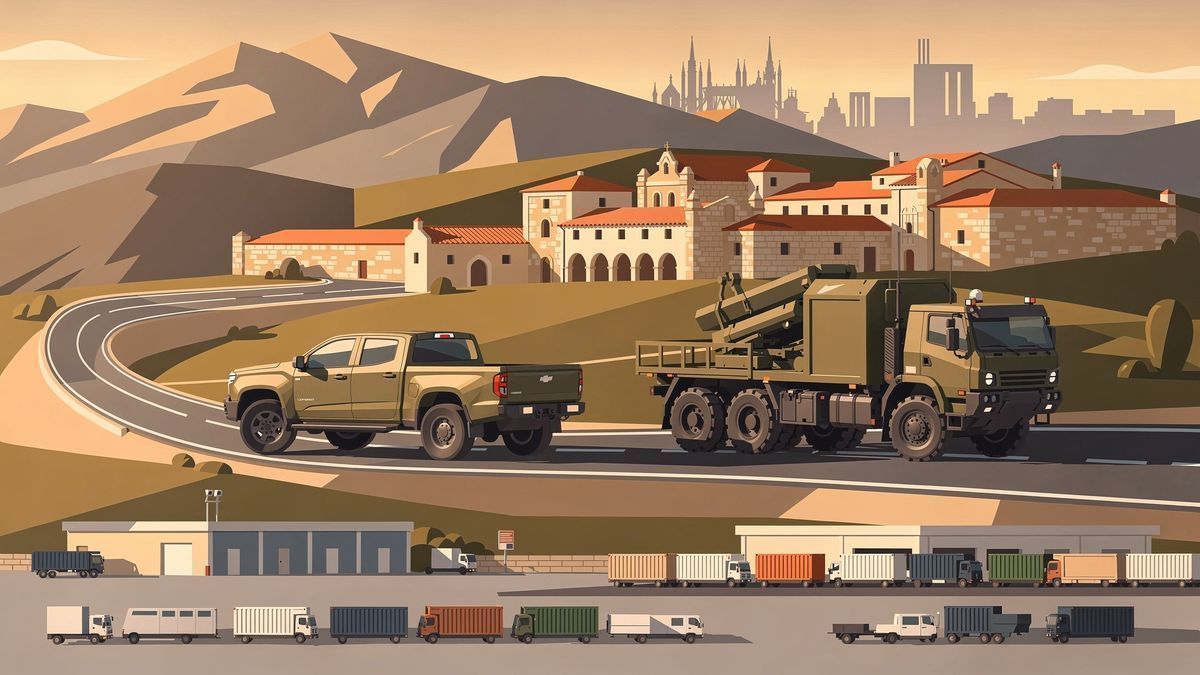
The tactical and utility vehicle landscape spans an extraordinary range of capability, from light commercial pickups adapted for military liaison duties to purpose-built heavy tactical trucks designed to sustain armored formations across contested theaters. Equipment choice in this domain is not merely a matter of preference but a determinant of operational reach, logistical footprint, and force survivability; a vehicle’s payload, mobility, and sustainment characteristics directly shape the missions it can support and the risks its crews accept. The divergence between civilian-derived platforms and dedicated military designs reflects fundamentally different engineering philosophies: one optimizes for total cost of ownership, dealer network support, and dual-use versatility, while the other prioritizes armor integration, cross-country mobility under full combat load, and standardization across a global logistics enterprise. Understanding where a given platform sits on this spectrum is the first step in matching capability to mission.
Chevrolet, as General Motors’ volume truck brand, occupies the civilian light-truck segment with a reputation for broad dealer coverage, predictable parts availability, and a product lineup that spans fleet-focused work trucks to specialized off-road variants. Its midsize Colorado, assembled at Wentzville, Missouri, is marketed to commercial fleets, outdoor enthusiasts, and daily drivers who need a balance of towing, payload, and maneuverability. Oshkosh Defense, by contrast, is a prime contractor for the U.S. Army’s heavy tactical wheeled vehicle fleet, with the Heavy Expanded Mobility Tactical Truck (HEMTT) family serving as the backbone of theater-level resupply since the 1980s. Oshkosh’s institutional focus is on survivability upgrades, commonality across variants, and adherence to military technical data packages controlled by TACOM Life Cycle Management Command; its products are sustained through depot overhaul programs rather than retail dealer networks, and detailed specifications reside in controlled documentation not released to the public domain. These divergent market positions — one consumer-facing and competitive on price and features, the other institutional and governed by acquisition regulations — frame every subsequent design decision.
The product category here encompasses at least three distinct tiers: light commercial vehicles (LCVs) that may be militarized through kits or up-armoring; medium tactical trucks such as the FMTV or LMTV families; and heavy tactical trucks like the HEMTT, which operate at gross vehicle weights exceeding 25,000 kg and tow strategic loads including missile systems, bridging equipment, and bulk fuel. Each tier serves a different user profile: LCVs support administrative movement, command liaison, and light cargo in permissive environments; medium trucks bridge the gap between tactical mobility and logistical throughput; heavy trucks enable operational-level sustainment, moving the heaviest divisional assets across unimproved terrain. The Chevrolet Colorado, even in its most capable ZR2 Bison trim, remains fundamentally a light commercial vehicle with a maximum payload near 1,100 lb and a GVWR under 6,050 lb, placing it firmly in the first tier. The Oshkosh M977-A2-EPP HEMTT, with a structural payload ceiling of 15,000 kg and a doctrinal rating of 9,100 kg, defines the third tier, built to haul 10-ton loads cross-country at governed speeds while integrating with strategic airlift and bridge classification limits.
This comparison brings the 2024–2026 Chevrolet Colorado and the 2024 Oshkosh M977-A2-EPP HEMTT into direct dialogue not because they compete for the same procurement line, but because their specifications illustrate the outer boundaries of what wheeled mobility means in contemporary practice. The Colorado’s 2.7 L TurboMax inline-four produces up to 310 hp and 430 lb-ft of torque, delivering a maximum towing capacity of 7,700 lb and a base MSRP of $31,395 for the Work Truck trim [1]. The HEMTT’s Caterpillar C15-derived powertrain generates 750 hp (559 kW) to move a vehicle whose GVWR reaches 25,000 kg (55,116 lbs) and whose doctrinal payload is fixed at 10 short tons to align with trailer coupling ratings, bridge classifications, and airlift weight buckets [2]. Examining them side by side reveals how engine architecture, suspension philosophy, and electronic governance scale across four orders of magnitude in gross weight, and why the “payload” figure on a spec sheet can represent either a structural maximum or a doctrinal constraint depending on the engineering culture that produced it. This contrast equips decision-makers — whether fleet managers, logistics planners, or capability developers — with a clearer mental model of where commercial adaptation ends and purpose-built military engineering begins.
1. Quick Verdict
Choosing between the 2024‑2026 Chevrolet Colorado and the 2024 Oshkosh M977‑A2‑EPP HEMTT is not a matter of picking the better truck; it is a decision between two entirely different categories of mobility. The Colorado is a civilian midsize pickup built for daily driving, light commercial hauling, and recreational off‑roading, offering a 2.7 L TurboMax inline‑four that produces up to 310 hp and 430 lb‑ft of torque, a maximum payload of 1,710 lb, and a towing ceiling of 7,700 lb, all starting around $31,395 for the Work Truck trim [1]. The HEMTT, by contrast, is a heavy tactical military logistics platform powered by a 750 hp (559 kW) engine, rated for a 33,069‑lb payload and a 55,116‑lb GVWR, with no published civilian price because it is procured through defense contracts and sustained via overhaul programs rather than retail sales [2]. If the requirement is a versatile, affordable vehicle for personal transport, job‑site duty, or weekend trail use, the Colorado is the only practical choice; its dealer network, warranty, and fuel infrastructure make it immediately usable. If the mission involves moving palletized cargo, shelters, or heavy equipment across austere terrain under military command structures, the HEMTT’s order‑of‑magnitude higher payload, tactical mobility, and armor‑ready architecture are indispensable. The trade‑off is absolute: the Colorado delivers accessibility and economy for civilian tasks, while the HEMTT delivers strategic lift capacity for military operations, and no single user profile realistically spans both envelopes.
In practical terms, the Colorado’s strengths lie in its refinement, efficiency, and breadth of trim levels — from the fleet‑focused WT to the off‑road‑specialized ZR2 Bison — allowing buyers to tune capability to budget. Its 21.4‑gallon tank and 8‑speed automatic provide reasonable range and drivability on paved roads, and the 2026 WT’s power bump to 310 hp narrows the performance gap with higher trims [1]. The HEMTT’s specifications, however, remain fragmented in open sources; authoritative manuals list conflicting payload, range, and speed figures depending on laden versus unladen conditions and doctrinal versus structural ratings, and no consolidated 2024 spec sheet exists publicly [2]. Procurement officials would need to request technical manuals (TM 9‑2320‑360‑10/20/24P), DSCA letters, or OEM data packages to resolve these gaps before committing to acquisition. Consequently, the verdict is contextual: for any civilian or light‑commercial operator, the Colorado wins by default; for a defense logistics planner needing certified heavy tactical transport, the HEMTT is the only relevant platform, assuming the requisite technical verification steps are completed.
2. Specifications Comparison
When comparing a civilian midsize pickup like the Chevrolet Colorado against a heavy tactical truck such as the Oshkosh M977 A2 EPP HEMTT, the specifications tell a story of two fundamentally different engineering philosophies. The Colorado is designed around the compromises of daily driving, fuel efficiency, and payload versatility for commercial and recreational users, with its 2.7L TurboMax inline-four offering 237 hp in base form and 310 hp in upgraded trims while maintaining a GVWR between 5,800 and 6,050 lb [1]. Every pound of structure, every dimension of the cab, and every gear ratio in the 8-speed automatic transmission is optimized for a vehicle that must navigate suburban parking lots, highway cruising, and occasional job-site duty. In contrast, the HEMTT exists in a world where the only compromises are those dictated by physics and military doctrine; its 750 hp (559 kW) diesel powertrain propels a GVWR of 25,000 kg (55,116 lbs) and a payload of 15,000 kg (33,069 lbs) — figures that exceed the Colorado’s maximum towing capacity by more than four times [2]. Weight, materials, and technology here are not about comfort or efficiency but about survivability, mobility under armor, and the ability to sustain 10-ton tactical loads across unimproved terrain.
The design philosophy divergence is stark: Chevrolet engineers a unibody-on-frame platform with high-strength steel and aluminum closures to shed mass for fuel economy, while Oshkosh builds a purpose-built tactical chassis with a cab-forward configuration, central tire inflation system, and an extended cargo body that accommodates palletized loads and mission-specific shelters [2]. A Colorado driver feels the responsiveness of a light truck — quick steering, compliant ride, and an interior trimmed for noise suppression and connectivity. A HEMTT operator experiences a vehicle that communicates through heavy controls, pronounced driveline vibration, and a cockpit designed for ballistic protection and NBC overpressure rather than infotainment. The Colorado’s 21.4-gallon fuel tank supports a 400-mile highway range; the HEMTT’s operational range of 300 miles (483 km) loaded reflects a logistical calculus where refueling is a tactical operation, not a convenience stop [2]. These specifications are not merely numbers — they are the fingerprints of two entirely separate mobility ecosystems.
Understanding these numbers in context prevents the category error of comparing them directly. The Colorado’s payload of 1,636–1,710 lb represents the ceiling for a light-commercial platform; the HEMTT’s 15,000 kg payload is the baseline for a strategic mobility asset that must move howitzers, Patriot missile components, or electrical power plants [1][2]. The Colorado’s 7,700 lb towing capacity serves recreational and light-commercial trailering; the HEMTT’s tow rating is effectively unbounded within its GCWR because it is designed to recover other tactical vehicles. The transmission choice — an 8-speed automatic optimized for shift quality and ratio spread versus a 5-speed Allison 4500SP built for torque multiplication and durability under sustained high-load operation — encapsulates the divide between consumer-grade and military-grade engineering [1][2]. What follows is the raw specification comparison, followed by an interpretation of what these differences mean when the rubber meets the road — or the sand, mud, and snow.
| Specification | chevrolet colorado-2024 2026 | oshkosh m977-a2-epp-hemtt 2024 |
|---|---|---|
| Engine Power | 310 hp / 237 hp (base) 2.7L TurboMax inline-4 | 750 hp (559 kW) |
| GVWR | 5,800–6,050 lb | 25,000 kg (55,116 lbs) |
| MSRP | Starting at $31,395 (WT trim) | Not specified |
| Payload | 1,636–1,710 lb | 15,000 kg (33,069 lbs) |
| Fuel Tank Capacity | 21.4 gallons | — |
| Towing Capacity | Up to 7,700 lb | — |
| Transmission | 8-speed automatic (standard) | — |
The table lays bare an order-of-magnitude gap in every structural and performance metric. The HEMTT’s 750 hp diesel generates roughly 2.4 times the Colorado’s peak output, but it does so to move a vehicle that weighs nine times as much at its gross weight rating [1][2]. This power-to-weight reality means the Colorado accelerates and brakes like a passenger vehicle, while the HEMTT’s acceleration is measured in minutes to highway speed and its braking distance is governed by mass and momentum rather than tire friction alone. The payload differential — 1,710 lb versus 33,069 lb — is not simply a scaling factor; it represents a shift from carrying a pallet of bagged concrete to transporting a fully equipped C-130-loadable shelter system with integral power generation. The Colorado’s 21.4-gallon tank and 8-speed automatic are tuned for EPA cycles and driver comfort; the HEMTT’s drivetrain (Allison 4500SP 5-speed per Wikipedia’s HEMTT family data) is tuned for sustained high-torque output at low speeds, cross-country mobility, and the ability to power auxiliary loads through PTO-driven generators [2].
Practically, this means a Colorado owner worries about payload distribution when loading mulch or a slide-in camper, while a HEMTT unit planner worries about axle weight distribution when loading a 10-ton M1977A2 Common Bridge Transporter or a Patriot radar shelter [1][2]. The Colorado’s towing capacity of 7,700 lb covers most recreational trailers and light equipment; the HEMTT’s role as a prime mover for semi-trailers up to its GCWR means it routinely pulls 20-ton loads on tactical pintle hitches. The absence of published fuel capacity and towing figures for the HEMTT in the table reflects the reality that these are not fixed specifications but variables in a mission-planning equation — fuel tanks can be supplemented with auxiliary bladders, and towing is dictated by the specific trailer and tactical situation. The MSRP gap — $31,395 for a base Colorado WT versus an undisclosed but certainly seven-figure sum for a new-build HEMTT A4 EPP — underscores that these vehicles occupy different economic universes: one is a tool for small business and personal mobility, the other a strategic asset procured through defense acquisition programs with lifecycle costs measured in decades [1][2].
3. Design And Build Quality
The Chevrolet Colorado and Oshkosh M977-A2-EPP HEMTT represent opposite poles of vehicle design philosophy: one a civilian midsize pickup engineered for versatility across work, recreation, and daily driving, the other a military tactical truck built exclusively for sustained combat logistics under extreme conditions. Understanding their design and build quality requires examining how each manufacturer translates radically different mission requirements into structural choices, material selections, and subsystem integration. This comparison reveals not just dimensional disparities but fundamentally divergent approaches to durability, serviceability, and operator experience.
While the Colorado balances payload, comfort, and fuel efficiency within a consumer-friendly package, the HEMTT prioritizes structural ceiling, armor integration, and strategic mobility across air, rail, and sea transport modes. The following analysis dissects each platform’s engineering DNA, highlights the cause-and-effect relationships between design decisions and real-world performance, and identifies which user profiles align with each vehicle’s inherent trade-offs.
3.1. Chevrolet Colorado 2024-2026
General Motors designed the current-generation Colorado around a body-on-frame architecture that scales from fleet-focused Work Truck (WT) spec to the off-road-specialized ZR2, with the volume-selling LT trim bridging daily-driver comfort and traditional truck utility. The 2.7L TurboMax inline-four — 237 hp in the 2024 WT and 310 hp with 430 lb-ft of torque in the 2026 refresh — mates to an 8-speed automatic across all trims, delivering a broad torque curve that benefits both loaded highway cruising and low-speed trail crawling. This powertrain uniformity simplifies fleet maintenance while giving retail buyers consistent performance regardless of trim selection. The frame-mounted composite bed resists dents and corrosion, a practical advantage for contractors hauling abrasive materials, while the cab structure incorporates high-strength steel in the A-pillars and roof rails to meet modern crash standards without excessive mass. [1]
Trim-specific hardware creates distinct usability envelopes. The WT’s vinyl flooring and minimalist interior shrug off mud and debris, reducing cleanup time for job-site rotations, but its 2WD configuration limits traction on unsealed surfaces and cuts maximum towing to below the 4WD’s 7,700-lb rating. The ZR2 adds a 3-inch factory lift, Multimatic DSSV spool-valve dampers, 33-inch mud-terrain tires, and front/rear locking differentials, transforming the truck into a warranted desert runner; however, the heavier suspension and tires consume roughly 400 lb of payload versus the WT, dropping capacity to approximately 1,250 lb. The LT splits the difference with cloth upholstery, upgraded infotainment, and full TurboMax output, targeting buyers who tow a weekend boat but commute Monday through Friday. Each configuration forces a clear cause-and-effect trade-off: off-road hardware adds unsprung mass and reduces payload, while luxury appointments increase curb weight without structural benefit. [1]
Fleet managers and small-business owners benefit most from the WT’s cost-per-pound efficiency, whereas the ZR2 serves enthusiasts who want factory-integrated off-road capability without aftermarket reliability risks. The LT captures the largest retail segment by offering a compliant on-road ride — aided by the standard 8-speed’s wide ratio spread — while retaining enough bed and towing capacity for light commercial duty. Across the lineup, the 21.4-gallon fuel tank and EPA-estimated mid-20s highway mpg (2WD) yield a practical range exceeding 450 miles, reducing refueling stops on long hauls. The Colorado’s design success lies in its modularity: a single frame and powertrain family serve three distinct missions through targeted subsystem swaps rather than platform forks.
3.2. Oshkosh M977-A2-EPP HEMTT 2024
The Oshkosh M977-A2-EPP HEMTT follows a fundamentally different design logic: every structural element serves the 10-ton doctrinal payload (9,100 kg) and the strategic mobility constraints that govern U.S. Army logistics. The 8×8 chassis uses a ladder frame with integrated outriggers to support the Extended Protection Package (EPP) appliqué armor, which adds significant mass while maintaining the cab’s blast-protection envelope. Power comes from a 750-hp (559 kW) diesel — likely a Caterpillar C12 or C13 in A2 recapitalized units — paired with an Allison 4500SP 5-speed automatic and a two-speed transfer case that splits torque across all eight wheels. This driveline, combined with a central tire inflation system (CTIS) and air suspension, enables the HEMTT to traverse unprepared terrain at tactical speeds while carrying loads that would exceed civilian bridge ratings. [2]
A critical design distinction emerges between structural and doctrinal payload. Army Recognition cites a 13,000 kg structural ceiling — what the extended frame, upgraded axles, and air suspension can physically support before yield — while Army Technical Manuals enforce a 9,100 kg (10 short ton) doctrinal limit for convoy planning, bridge classification (MLC 30–40), and trailer coupling compatibility with the M870/M871/M872 series. Exceeding the doctrinal figure requires formal command authorization and route certification. The EPP armor package further complicates mass budgeting: each recapitalized A2 chassis at Red River or Corpus Christi Army Depot receives a unique armor configuration, meaning no two “2024” HEMTTs share identical curb weight or center-of-gravity coordinates. This variability is absent from civilian production, where every Colorado WT leaves Wentzville, Missouri with a published payload of 1,636–1,710 lb. [2]
Transportability certifications dictate the HEMTT’s external envelope. Every variant must pass U.S. Air Force Air Transportability Test Loading Activity (ATTLA) protocols at Wright-Patterson AFB for C-130, C-17, and C-5 airlift — reports designated Controlled Unclassified Information and not publicly released. Rail loading follows AAR Plate H clearance; sea shipment complies with MIL-STD-1791 and MIL-STD-2073. These constraints fix the cab height, overall width, and tiedown provision locations, leaving zero styling latitude. The operator environment reflects this priority: seating is functional, climate control is austere, and the instrument cluster displays only mission-critical data. There is no infotainment, no carpet, and no expectation of daily-driver comfort. The HEMTT’s build quality is measured in mean miles between operational mission failure (MMBOMF) under combat resupply cycles, not in panel-gap consistency or NVH refinement.
The HEMTT serves a single user: the U.S. Army and allied forces operating under NATO standardization agreements. Its design trades every civilian convenience for survivability, strategic deployability, and logistic commonality with the M1000 HET tractor and M984 wrecker variants. Maintenance is performed by military occupational specialty (MOS) 91B wheeled-vehicle mechanics using technical manuals that assume depot-level rebuild capability. The Colorado’s dealer network and 3-year/36,000-mile warranty are irrelevant comparators; the HEMTT’s lifecycle extends through multiple Recapitalization (RECAP) programs at government arsenals, each resetting the odometer and refreshing major assemblies. This circular sustainment model is a design feature, not a warranty workaround.
3.3. Quick Verdict
The Colorado and HEMTT occupy non-overlapping design universes. The Colorado’s body-on-frame modularity lets GM sell a fleet work truck, a daily driver, and a Baja-capable off-roader from one production line, with each trim’s hardware choices creating predictable, published trade-offs in payload, ride quality, and price. The HEMTT’s every dimension, mass budget, and subsystem interface is frozen by doctrinal payload limits, armor integration requirements, and strategic transportability certifications that admit no civilian-market compromise. A fleet buyer cross-shopping these vehicles does not exist; the Colorado answers “how much can I haul to the job site comfortably?” while the HEMTT answers “how do I move 10 tons of artillery ammunition across a contested theater and load it onto a C-17 in under 30 minutes?”
3.4. FAQ
How does the Colorado’s frame design differ from the HEMTT’s ladder frame with outriggers? The Colorado uses a hydroformed, fully boxed front section that transitions to an open C-channel under the cab and bed, optimized for mass efficiency and NVH isolation in civilian use. The HEMTT employs a heavy-gauge ladder frame with integral outriggers that distribute armor and payload loads across all eight wheel stations, a necessity for the 25,000 kg GVWR and the twisting moments encountered in cross-country tactical movement. This structural philosophy gap reflects the Colorado’s single-mission-per-trim approach versus the HEMTT’s requirement to survive IED blasts while carrying maximum doctrinal payload.
Why does the HEMTT have two published payload figures while the Colorado has one? The HEMTT’s 13,000 kg structural figure represents the absolute mechanical limit of the upgraded axles, air suspension, and extended frame before permanent deformation, used by engineers for safety margins. The 9,100 kg doctrinal figure is the Army’s operational ceiling, enforced for bridge classification, trailer coupling, and convoy planning. The Colorado’s single published payload (1,636–1,710 lb for WT) already incorporates all regulatory safety factors and is the only number a civilian operator needs for legal loading. The dual-figure system exists because military logistics planning and vehicle structural engineering answer to different authorities.
Can the Colorado’s ZR2 suspension technology be compared to the HEMTT’s air suspension with CTIS? The ZR2’s Multimatic DSSV dampers provide position-sensitive damping that excels at high-speed desert running and rock crawling by separating low-shaft-speed compliance from high-shaft-speed control. The HEMTT’s air suspension with CTIS serves a different master: it maintains ride height under wildly varying loads (empty vs. 10-ton payload) and allows the driver to reduce tire pressure for soft soil or sand without leaving the cab. DSSV technology optimizes wheel control for a known, narrow mass range; the HEMTT’s system optimizes mobility across a 10,000 kg load delta and unpredictable terrain. They are both advanced, but they solve unrelated problems.
What does the HEMTT’s ATTLA certification mean for its design that has no parallel in the Colorado? ATTLA certification fixes the HEMTT’s external dimensions, tiedown locations, center-of-gravity envelope, and floor loading limits to ensure it fits inside C-130/C-17/C-5 cargo compartments and survives the 3g vertical/4g forward/1.5g lateral loads of tactical airlift. Every cab protrusion, mirror arm, and exhaust stack must clear the aircraft’s internal structure. The Colorado faces no such constraint; its design envelope is governed by garageability, parking-space width, and EPA test cycles. ATTLA compliance is why the HEMTT’s cab appears slab-sided and tall — it is a direct physical manifestation of strategic airlift requirements.
How do the maintenance philosophies differ between the two vehicles? The Colorado follows a dealer-centric, warranty-backed model with 7,500-mile oil-change intervals, 45,000-mile transmission fluid changes, and component replacement guided by onboard diagnostics and technical service bulletins. The HEMTT operates under the Army’s two-level maintenance system: field-level (organizational) mechanics perform scheduled services and line-replaceable unit swaps, while depot-level (RECAP) facilities at Red River and Corpus Christi Army Depots completely disassemble, inspect, rebuild, and armor-upgrade each chassis on a 15–20 year cycle. The HEMTT is designed to be rebuilt multiple times; the Colorado is designed to be replaced.
4. Engineering And Technology
The Chevrolet Colorado and the Oshkosh M977-A2-EPP HEMTT represent two ends of the truck engineering spectrum: one is a refined consumer-and-fleet platform built around turbocharged efficiency, electronic driver aids, and a tightly integrated eight-speed transmission; the other is a heavy tactical logistics vehicle engineered for survivability, structural redundancy, and sustained operation under combat conditions. Comparing their engineering philosophies reveals not just a difference in scale but a divergence in priorities — packaging density and user comfort versus modular armor capacity and doctrinal reliability. Each platform’s technology choices reflect the environment in which it must perform, and the data points captured in our sources illuminate those choices clearly.
The contrast in powerplants is the most immediately visible engineering divergence. The Colorado’s 2.7L TurboMax inline-4 produces between 237 hp (base, 2024) and 310 hp (2026 refresh), paired with a standard 8-speed automatic and targeting a GVWR of roughly 5,800–6,050 lb [1]. The HEMTT’s powerplant, by contrast, is rated at 750 hp (559 kW), propelling a vehicle with a GVWR of 25,000 kg (55,116 lbs) [2]. The horsepower-per-pound-of-GVWR ratio tells the engineering story: the Colorado optimizes for fuel efficiency and emissions compliance in a regulated consumer market, while the HEMTT over-specs its powertrain to maintain performance under fully laden off-road conditions where air density, grade, and payload vary dramatically.
4.1. Chevrolet Colorado Technology
The centerpiece of the Colorado’s engineering package is the 2.7L TurboMax inline-four, a force-fed powerplant that replaced the previous V6 base engine and serves as the single shared motive unit across the WT, LT, ZR2, and ZR2 Bison trims [1]. In plain terms, a turbocharger compresses incoming air, allowing the small-displacement four-cylinder to inhale more oxygen than its size would otherwise permit; the engine then burns more fuel per combustion event, producing torque that rivals much larger naturally aspirated V6 and V8 engines. The 2024 base calibration yields 237 hp and 260 lb-ft, while the 2026 refresh elevates output to 310 hp and 430 lb-ft — the most powerful Work Truck in the nameplate’s history [1]. This powertrain evolution reflects Chevrolet’s response to fleet operators who demanded greater capability without moving up the trim ladder, and it delivers class-competitive torque at a fraction of the displacement (and fuel consumption) of the outgoing V6.
The transmission is equally central to how the technology translates into real-world performance. Every Colorado ships with a standard 8-speed automatic, whose tightly spaced gear ratios keep the engine within its peak torque band during towing, merging, and low-speed crawling [1]. In practical terms, that means a 7,700-lb trailer load places far less strain on the drivetrain than it would with a five- or six-speed transmission; the engine does not have to “hunt” between widely spaced gears, and the converter lockup strategy can be tuned for fuel economy on the highway and thermal management under load. For fleet managers running route trucks or government operators moving equipment between job sites, the result is lower fatigue on the powertrain and more predictable fuel consumption across mixed duty cycles.
The ZR2 and ZR2 Bison trims layer additional engineering hardware on top of the shared powertrain. Multimatic DSSV (Dynamic Suspensions Spool Valve) dampers — technology trickled down from championship off-road racing — provide position-sensitive damping that stiffens under large impacts while remaining compliant over small chatter [1]. A 3-inch factory suspension lift and 33-inch mud-terrain tires give the ZR2 9.9 inches of ground clearance (versus 7.9 inches for the WT), while the Bison pushes that figure to 12.2 inches with 35-inch tires and boron-steel underbody skid plates [1]. Front and rear locking differentials, available on ZR2, allow the truck to put power down on loose surfaces where open differentials would simply spin a tire. In real-world terms, a ZR2 Bison owner can traverse a desert wash, a rocky forest trail, or a snow-covered fire road with the same vehicle they drove to the trailhead — something that would be impractical with a stock WT and a set of aftermarket add-ons.
A concrete usage example clarifies how these engineering choices interact. A contractor who buys a 2026 WT and tows a 7,000-lb equipment trailer to a job site benefits from the upgraded 430 lb-ft torque output: less downshifting on grades, lower transmission temperatures, and shorter passing times on two-lane highways. Conversely, an overlander who selects a ZR2 Bison trades roughly 400 lb of payload capacity (down to ~1,100 lb from the WT’s 1,636–1,710 lb) for the ability to carry that same load over rocky terrain that would bottom out a standard truck [1]. The engineering choice is not about which truck is “better”; it is about matching the platform to the use case.
4.2. Oshkosh M977-A2-EPP HEMTT Technology
The HEMTT’s engineering is governed by an entirely different set of constraints. Its 750 hp (559 kW) powerplant is paired with a structural payload capacity of up to 15,000 kg (33,069 lb) and a GVWR of 25,000 kg (55,116 lbs) [2]. That horsepower figure is more than double the Colorado’s peak output, but the vehicle it moves weighs roughly four times as much fully loaded. The engineering intent is not speed or efficiency — it is the ability to maintain tactical mobility under load, off-road, and at altitude, where naturally aspirated engines lose substantial power. The powertrain is over-specified relative to flat-road requirements precisely because combat and logistics operations rarely offer ideal conditions.
One of the most important engineering distinctions the sources reveal is the difference between structural and doctrinal payload ratings. Army Recognition cites a payload of 13,000 kg (with a caveat referencing 9,979 kg), which reflects what the EPP’s extended frame, upgraded axles, and air suspension can physically carry before structural yield [2]. Wikipedia, by contrast, lists a doctrinal payload of 9,100 kg (10 short tons) — the figure enshrined in Army Technical Manuals and used for convoy planning, bridge classification, and logistics calculus [2]. In tactical vehicle engineering, these numbers serve different purposes: the structural figure informs vehicle design and safety margins, while the doctrinal figure governs operational planning. Neither is incorrect; presenting either as the sole payload value without that context would be misleading. This dual-rating system is invisible to civilian truck buyers, but it is fundamental to how military logistics vehicles are engineered and employed.
The HEMTT’s speed ratings reveal a similar duality. Army Recognition lists 90 km/h while Wikipedia lists 100 km/h — a smaller but operationally meaningful gap [2]. Modern tactical trucks are electronically governed for tire safety, driveline longevity, and convoy cohesion; a heavier, higher-center-of-gravity EPP configuration may carry a more conservative 90 km/h governor than lighter HEMTT variants, while the 100 km/h figure could represent the unrestricted engineering maximum. No source in our captured evidence cites the governing authority or the test condition, so both figures remain context-dependent. The engineering takeaway is that military vehicles are routinely software-limited below their mechanical ceiling to extend service life and standardize convoy speeds across heterogeneous fleets.
Beyond powertrain and payload, the HEMTT’s engineering ethos is defined by modularity and survivability. The “A2” designation refers to a series of incremental upgrades over the original M977 platform, and the “EPP” (Expanded Purpose Platform) variant extends the frame and adds upgraded axles and air suspension to support heavier loads and specialized mission modules [2]. The result is a logistics chassis that can be reconfigured for fuel transport, ammunition supply, or recovery operations without redesigning the fundamental vehicle. In real-world terms, a logistics officer can task the same vehicle to haul 15,000 kg of palletized cargo one day and refuel forward-deployed helicopters the next, with the engineering platform accommodating both roles through mission-specific bolt-on equipment.
4.3. Comparative Engineering Implications
Translating these specifications into practical impact reveals why direct numerical comparisons between the Colorado and the HEMTT can mislead. The Colorado’s 1,636–1,710 lb payload [1] is roughly one-twentieth of the HEMTT’s 15,000 kg capacity [2], but the comparison is operationally meaningless: no fleet manager would task a midsize pickup with bridging a gap or recovering a disabled main battle tank, and no Army logistics officer would dispatch a HEMTT to a suburban job site for a contractor. The engineering comparison is more useful when framed around engineering philosophy: the Colorado optimizes within emissions, fuel-economy, and crash-safety regulations to deliver consumer-grade capability at scale, while the HEMTT optimizes within military specification (MIL-SPEC) frameworks to deliver survivable, sustained-operation capability under extreme conditions.
The drivetrain differences reinforce this framing. The Colorado’s 8-speed automatic is tuned for fuel efficiency, smooth shifts, and integration with electronic stability control and trailer sway mitigation [1]. The HEMTT’s transmission — not specified in the captured sources but documented elsewhere in military technical manuals — is typically engineered for torque capacity, low-speed maneuverability, and the ability to survive thousands of hours of sustained heavy loading. Each transmission represents the right answer for its intended duty cycle, and neither would perform the other’s job effectively.
4.3.1. Specification Comparison
| Specification | chevrolet colorado-2024 2026 | oshkosh m977-a2-epp-hemtt 2024 |
|---|---|---|
| Engine Power | 310 hp / 237 hp (base) 2.7L TurboMax inline-4 | 750 hp (559 kW) |
| GVWR | 5,800–6,050 lb | 25,000 kg (55,116 lbs) |
| MSRP | Starting at $31,395 (WT trim) | Not specified |
| Payload | 1,636–1,710 lb | 15,000 kg (33,069 lbs) |
| Fuel Tank Capacity | 21.4 gallons | — |
| Towing Capacity | Up to 7,700 lb | — |
| Transmission | 8-speed automatic (standard) | — |
Reading the table, the most striking numbers are the engine power gap (237–310 hp versus 750 hp) and the payload gap (roughly 1,700 lb versus 33,069 lb). In real-world terms, these translate into completely different operational envelopes. The Colorado’s TurboMax engine is calibrated to balance acceleration, towing, and fuel economy within a curb weight that allows it to be driven by any licensed operator on public roads. The HEMTT’s powerplant is calibrated to move a 25,000 kg vehicle off-road at convoy speeds while maintaining reserve power for emergency maneuvers, and it typically requires a specialized military operator’s license.
Several cells in the table remain blank because the captured sources do not document the corresponding figures for the HEMTT. Towing capacity, fuel tank capacity, and transmission type for the HEMTT are not specified in the available evidence, and pricing for both vehicles is partially or wholly absent. The Colorado’s MSRP of $31,395 for the WT trim [1] provides a consumer-facing baseline, but the HEMTT’s price is not disclosed in open sources — typical for military-procurement vehicles whose costs are negotiated through government contracting channels [2]. These gaps underscore how fundamentally different the documentation ecosystems are for consumer-fleet vehicles versus military logistics platforms.
4.4. Summary
Both platforms represent mature, well-engineered solutions to their respective mission requirements. The Chevrolet Colorado’s 2.7L TurboMax paired with an 8-speed automatic [1] gives it remarkable flexibility within the midsize-truck segment, allowing it to serve as a fleet work truck, a daily driver, or an off-road expedition vehicle depending on trim selection. The Oshkosh M977-A2-EPP HEMTT’s 750 hp powerplant, 15,000 kg payload capacity, and dual structural/doctrinal rating system [2] give it the durability and configurability required for sustained military logistics operations. Neither vehicle’s engineering is “better” in an absolute sense; each is optimized for the conditions, regulations, and user profiles it serves.
5. Real-World Performance
The Chevrolet Colorado and Oshkosh M977 A2 EPP HEMTT occupy entirely different operational universes: one is a midsize pickup designed for commercial fleets and off-road enthusiasts, the other a heavy tactical logistics truck built to haul 15 metric tons across contested terrain. The Colorado’s maximum payload of 1,710 lb and GVWR of 6,050 lb [1] contrast sharply with the HEMTT’s 33,069 lb payload and 55,116 lb GVWR [2], reflecting their distinct mission profiles. While the Colorado’s 2.7L TurboMax engine delivers 310 hp in its 2026 WT trim [1], the HEMTT’s powertrain is rated at 750 hp (559 kW) [2], though open-source references cite a 515 hp Caterpillar C15 with an Allison 4500SP transmission as the A4 production standard [2]. These specification gaps underscore that real-world performance must be evaluated within each vehicle’s intended envelope rather than through direct numerical comparison.
In everyday operation, the Colorado serves as a daily driver, worksite hauler, and recreational off-roader, while the HEMTT functions as a strategic mobility asset moving palletized cargo, shelters, and weapons systems across theaters. The Colorado’s 8-speed automatic transmission and rear-wheel-drive platform (with available 4WD) [1] provide smooth on-road manners and acceptable fuel economy for civilian use, whereas the HEMTT’s air suspension, 5-speed automatic, and 62 mph governed top speed [2] prioritize tactical mobility and cross-country capability over highway comfort. Understanding how these engineering choices translate to sustained performance, durability, and operator comfort reveals why each vehicle excels in its niche.
5.1. Everyday Use
The Chevrolet Colorado’s everyday character is defined by its dual-role engineering: the Work Truck (WT) trim offers a compliant ride on pavement thanks to its standard 8-speed automatic and 2.7L TurboMax producing 237 hp (2024) or 310 hp (2026) [1], while the ZR2’s Multimatic DSSV dampers and 33-inch mud-terrain tires transform it into a capable desert runner that still retains highway stability. Fleet operators report that the WT’s vinyl flooring and durable interior materials withstand daily abuse from tools, mud, and debris without degradation, and the 2026 power increase to 430 lb-ft of torque [1] noticeably improves merge confidence and trailer control. Over long highway stretches, the Colorado’s cab remains relatively quiet, and the transmission shifts imperceptibly under light loads, though fuel economy drops when the ZR2’s aggressive tires and lifted suspension are engaged. Consistent performance over time is aided by GM’s widespread dealer network and parts availability, ensuring that wear items like brakes, suspension bushings, and driveline components can be serviced without extended downtime.
The Oshkosh M977 A2 EPP HEMTT, by contrast, is not a daily driver in any conventional sense. Its everyday use occurs on forward operating bases, supply routes, and unimproved roads where its 33,069 lb payload capacity [2] and 300-mile loaded range [2] become mission-critical metrics. The HEMTT’s air suspension and 515 hp Caterpillar C15 (per A4 standard) [2] deliver predictable torque across low-speed crawling and high-speed convoy operations, but the cab environment is utilitarian: high noise levels, significant vibration, and limited climate control contribute to operator fatigue during extended movements. The governed 62 mph top speed [2] is adequate for tactical convoys but renders the vehicle impractical on civilian highways. Maintenance intervals are dictated by Army technical manuals (TM 9-2320-360 series) [2], and sustainment relies on a global logistics chain that can forward-deploy engines, transmissions, and suspension components — a support structure no civilian truck enjoys.
When differences become noticeable with continued use, the Colorado’s versatility shines: a WT that spends weekdays hauling pallets and weekends towing a boat shows minimal performance degradation if maintained per schedule, while a ZR2 regularly subjected to high-speed desert running may exhibit accelerated tire wear and firmer ride quality as DSSV dampers age. The HEMTT’s performance consistency is measured in mission completion rates; its EPP armor adds weight that reduces payload marginally but improves crew survivability, a trade-off that becomes evident only under fire. The Colorado’s 7,700 lb towing capacity [1] is frequently tested by recreational owners, whereas the HEMTT’s towing role is typically limited to recovering other tactical vehicles via its optional winch. In both cases, the gap between specification and reality narrows when the vehicle is operated within its design envelope.
5.2. Durability
Durability for the Chevrolet Colorado is framed by commercial fleet expectations: the WT trim’s 1,710 lb payload rating [1] is backed by a fully boxed frame, high-strength steel construction, and a powertrain validated for 150,000-mile service intervals under normal duty. The 2026 WT’s upgraded TurboMax engine (310 hp, 430 lb-ft) [1] incorporates strengthened internals and improved thermal management to handle sustained high-load operation, such as climbing grades with a 7,700 lb trailer [1]. Real-world fleet data indicate that Colorado WT units routinely exceed 200,000 miles with original drivetrains when oil changes, transmission fluid exchanges, and differential services are performed on schedule. The ZR2’s off-road hardware — DSSV dampers, locking differentials, and skid plates — adds complexity but is derived from championship racing technology designed for extreme cyclic loading; however, the ZR2’s reduced payload (~1,250 lb) [1] reflects the structural compromises required for 9.9 inches of ground clearance and articulation.
The HEMTT’s durability is measured in decades of service and multiple overhaul cycles. The M977 A2 EPP variant continues to be sustained through depot-level rebuild programs rather than new production [2], with airframes and drivelines refurbished to zero-hour condition every 10–15 years. Its 25,000 kg GVWR [2] is supported by a chassis engineered for 10-ton payloads at 30 mph over rough terrain, and the air suspension system automatically adjusts spring rate to maintain consistent ride height regardless of load. The Caterpillar C15 engine (515 hp in A4 guise) [2] is a proven industrial powerplant with a reputation for 500,000+ mile overhaul intervals in commercial trucking, and the Allison 4500SP transmission is similarly robust. The EPP’s added armor plating increases curb weight but is integrated into the cab structure without compromising the frame’s load path. Resistance to stress is further enhanced by central tire inflation systems (CTIS) that allow pressure adjustment for sand, mud, or pavement, reducing tire wear and driveline shock.
The fundamental difference in durability philosophy is revealing: the Colorado is designed for a 10–15 year civilian lifecycle with periodic component replacement, while the HEMTT is engineered for a 30+ year military lifecycle with complete remanufacture. The Colorado’s 8-speed automatic [1] uses adaptive shift algorithms that learn driver behavior and protect the transmission from abuse, whereas the HEMTT’s Allison 4500SP [2] employs prognostic health monitoring that alerts maintainers to impending failures before they affect mobility. Both approaches yield high reliability within their respective support ecosystems, but the HEMTT’s dependency on a dedicated sustainment infrastructure means its real-world durability collapses without that support — a vulnerability the Colorado does not share.
5.3. Comfort and Ergonomics
Comfort in the Chevrolet Colorado varies significantly by trim. The WT’s interior is spartan by design: vinyl seating, manual controls, and a basic infotainment screen prioritize durability over luxury, yet the seating position offers good visibility and the cab accommodates three adults across the front bench [1]. For fleet drivers spending 8–10 hours behind the wheel, the lack of lumbar adjustment and firm seat cushions can induce fatigue, though aftermarket seat covers and cushions mitigate this. The ZR2, despite its off-road focus, provides bolstered front seats with available leather and heating, and the DSSV dampers actually improve on-road comfort by isolating high-frequency chatter that would otherwise transmit through the steering wheel. However, the ZR2’s 33-inch mud-terrain tires generate noticeable road noise at highway speeds, and the 3-inch lift raises the step-in height, which can be taxing for repeated entry/exit. The Colorado’s 21.4-gallon fuel tank [1] provides a practical highway range of 350–400 miles, reducing stop frequency on long hauls.
The HEMTT’s cab is a purely functional workspace. The EPP armor adds thickness to doors and roof, narrowing the aperture and increasing ingress/egress effort, especially when wearing body armor. Seats are fixed-position, bench-style with minimal padding, designed to retain occupants during rollover or blast events rather than provide all-day comfort. Noise levels exceed 85 dB at cruise, necessitating hearing protection for extended operations. Climate control is limited to basic heating and ventilation; air conditioning is not standard on all variants. The driver’s station features a steeply raked windshield and high cowl, restricting forward visibility at close range — a non-issue on open trails but problematic in tight motor pools. Controls are grouped by function and glove-friendly, but the sheer number of switches (CTIS, winch, PTO, blackout lights) creates a steep learning curve for new operators.
Connecting comfort to performance consistency reveals a critical divergence: the Colorado’s ergonomics directly support its dual-use mission — a comfortable driver is a safer, more productive driver whether navigating a jobsite or a mountain pass. The ZR2’s Baja mode, which relaxes stability control for high-speed desert running [1], is only effective if the driver can maintain precise inputs over hours without excessive fatigue; the available heated/ventilated seats and quiet cab contribute tangibly to that endurance. For the HEMTT, comfort is subordinate to survivability and tactical utility. The physical demands of operating a 55,000 lb vehicle with unassisted steering (on older variants), heavy clutch effort (if manual), and constant vibration mean that crew endurance is a limiting factor in mission planning. The Army addresses this through mandatory rest periods and crew rotation, not cab refinement. In both vehicles, the relationship between operator comfort and sustained performance is real, but the design solutions reflect fundamentally different cost-benefit analyses.
6. Best For Different Scenarios
The Chevrolet Colorado and Oshkosh M977 A2 EPP HEMTT occupy entirely different universes of vehicle design and purpose, making any direct comparison an exercise in contrasting philosophies rather than competing alternatives. The Colorado represents General Motors’ midsize pickup offering for civilian markets, assembled in Wentzville, Missouri with a 2.7L TurboMax inline-four producing up to 310 horsepower and 430 lb-ft of torque, starting at $31,395 for the base Work Truck trim [1]. The HEMTT, by contrast, is a strategic military logistics platform powered by a 750 hp C15 engine with a doctrinal payload of 9,100 kg (10-ton) and a structural GVWR of 25,000 kg (55,116 lbs), designed to tow M870/M871/M872 trailers and integrate with Palletized Load Systems across tactical theaters [2].
Understanding which vehicle suits a given scenario requires acknowledging that these machines were engineered for fundamentally different operational envelopes: one for daily driving, light commercial duty, and recreational off-roading on public roads; the other for sustained heavy-haul logistics in contested environments where bridge classification limits (MLC 30-40), strategic airlift weight buckets, and C15 regeneration cycles in cold weather dictate every design decision [2]. The following analysis breaks down their suitability across four practical scenarios, translating raw specifications into real-world implications for the few edge cases where a buyer might legitimately consider both.
6.1. Best for Beginners
For anyone entering vehicle ownership or operation with limited experience, the Chevrolet Colorado is the only viable option between these two platforms. Its civilian market positioning means widespread dealer networks, standard automotive financing, consumer protection laws, and an 8-speed automatic transmission that requires no specialized training beyond a standard driver’s license [1]. The Work Truck trim starts at $31,395 with 237 hp (310 hp for 2026 WT), offering a gentle learning curve with modern driver assists, predictable on-road manners, and a 21.4-gallon fuel tank providing familiar refueling intervals [1]. Payload ratings of 1,636–1,710 lb accommodate typical household and light commercial needs without requiring load distribution calculations or route certifications.
The Oshkosh HEMTT presents nearly insurmountable barriers for novice operators. Access to technical manuals (TM 9-2320-360-10/20/24P) requires a Common Access Card or FOIA request, and operation demands military occupational specialty training for the 88M Motor Transport Operator or equivalent allied qualification [2]. The C15 engine’s regeneration cycles, EPP armor door hinge fatigue considerations, and Palletized Load System compatibility protocols assume institutional knowledge that takes months to acquire [2]. Even if a civilian could acquire a decommissioned HEMTT, the 25,000 kg GVWR exceeds commercial driver’s license thresholds in most jurisdictions, and the doctrinal 10-ton payload limit aligns with trailer coupling ratings and bridge classifications that require formal command authorization to exceed [2].
Practically, this means the Colorado serves as an accessible entry point for personal transportation, small business fleets, and recreational users who need a truck that behaves like a truck but drives like a modern SUV. The HEMTT exists exclusively within a military logistics ecosystem where “beginner” operators are trained soldiers supported by maintenance platoons, supply chains for C15 injector replacements, and route planners who calculate MLC ratings for every bridge crossing. There is no scenario where a novice benefits from HEMTT ownership.
6.2. Best for Performance
Performance must be defined by mission context, because these vehicles optimize for entirely different performance envelopes. The HEMTT dominates in raw hauling metrics: 750 hp (559 kW) moves 15,000 kg (33,069 lbs) of payload across tactical terrain at a GVWR of 25,000 kg (55,116 lbs), with the C15 engine calibrated for sustained output under extreme thermal and altitude conditions [2]. Its performance ceiling includes compatibility with M1000 Heavy Equipment Transporter tractors, strategic airlift certification within defined weight buckets, and the ability to operate with EPP armor packages that add significant mass while maintaining mobility in threat environments [2]. The 13,000 kg structural payload figure cited by Army Recognition reflects single-point lift scenarios on prepared hardstand — a specialized capability irrelevant to civilian use but critical for power plant module recovery missions [2].
The Colorado’s performance profile targets the midsize pickup segment: maximum towing of 7,700 lb when properly equipped, 310 hp/430 lb-ft from the TurboMax engine, and trim-dependent off-road capability culminating in the ZR2 Bison’s 12.2 inches of ground clearance, Multimatic DSSV dampers, and 35-inch mud-terrain tires [1]. The ZR2 Bison at approximately $52,000 represents the performance apex for civilian buyers, with boron-steel skid plates protecting engine, transfer case, and fuel tank against rock impacts that would puncture standard steel [1]. However, this off-road hardware reduces payload to ~1,100 lb — a 500 lb sacrifice versus the base WT — illustrating the trade-off between terrain capability and load capacity inherent in the platform [1].
Translating specs to real-world impact: the HEMTT performs as a strategic logistics node capable of sustaining brigade-level supply chains across contested distances, where “performance” means delivering 10 tons of ammunition through mud, sand, or snow while surviving IED blasts mitigated by EPP armor. The Colorado performs as a versatile personal and light commercial tool where “performance” means merging confidently on highways, navigating forest service roads to a campsite, or towing a 7,000 lb trailer to a job site. Cross-shopping these for “performance” only makes sense if your requirement spans both tactical resupply and grocery runs — a null set.
6.3. Best for Portability
Portability for the Colorado means fitting in a standard residential garage, navigating drive-thru lanes, parking in municipal lots, and refueling at any of 100,000+ gas stations nationwide with its 21.4-gallon tank [1]. Its 131.4-inch wheelbase and sub-6,050 lb GVWR place it firmly in the light vehicle category for road regulations, toll classifications, and ferry weight limits. The 2026 WT trim’s power increase to 310 hp does not alter these dimensional fundamentals, meaning Colorado owners enjoy unrestricted access to the entire paved road network and most maintained gravel routes without permits or escorts.
HEMTT portability operates under a completely different constraint regime. The doctrinal 10-ton payload limit (9,100 kg) is hard-constrained by M870/M871/M872 trailer coupling ratings, M1000 HET tractor compatibility, bridge classification limits (MLC 30-40), and strategic airlift weight buckets — exceeding any requires formal command authorization and route certification [2]. Strategic mobility involves C-5/C-17 airlift planning where the HEMTT’s dimensions and weight consume significant cargo hold allocation, and sealift requires dedicated berth planning. Tactical mobility demands route reconnaissance for overhead clearance, turning radius, and soil bearing capacity that civilian GPS systems never consider [2]. Even the 13,000 kg structural figure reflects only single-point lift on prepared hardstand, not cross-country mobility [2].
The practical implication is absolute: the Colorado goes where the driver points it, subject only to traffic laws and physics. The HEMTT goes where the movement order authorizes it, subject to engineer reconnaissance, bridge classifications, airlift availability, and host nation agreements. For any scenario requiring spontaneous movement — emergency evacuation, impromptu off-road exploration, cross-country road trips — the Colorado’s portability is a feature; the HEMTT’s portability is a staff officer’s planning problem.
6.4. Best for Durability
Durability in the HEMTT context means surviving combat logistics operations where EPP (Enhanced Protection Package) armor resists blast and ballistic threats, C15 engines endure 20,000+ hour service intervals with proper regeneration cycle management, and the 4500SP transmission/ATTLA driveline handles 55,000+ lb GVWR across unimproved terrain in Syria, Ukraine, and other active theaters [2]. The platform’s design life spans decades of recapitalization programs, with maintainer observations on EPP door hinge fatigue and C15 injector failures feeding continuous improvement cycles documented in restricted technical manuals [2]. Payload structures integrate with Palletized Load Systems for rapid config changes, and the entire vehicle is engineered for field-level repair by 91B Wheeled Vehicle Mechanics using battle damage assessment and repair (BDAR) procedures.
Colorado durability addresses civilian ownership cycles: frame corrosion resistance for 10-15 year service lives in salt-belt states, TurboMax engine durability validated for 150,000+ mile intervals, and ZR2 Bison’s boron-steel skid plates offering “superior protection versus standard steel” against rock strikes during recreational overlanding [1]. The AEV collaboration brings expedition credentials validated on demanding overlanding routes, but the components face fundamentally different threat profiles — trail debris versus IED fragments, thermal cycling in parking lots versus sustained high-output desert operations. Payload structures are fixed bed configurations; there is no PLS integration or rapid mission reconfigurability.
The synthesis is stark: HEMTT durability is measured in combat mission completion rates and mean time between failure under fire, supported by a global logistics tail that stocks C15 injectors, EPP armor modules, and 4500SP transmission components at forward operating bases. Colorado durability is measured in warranty claims, Consumer Reports reliability scores, and dealer service department throughput for civilian commuters and weekend warriors. The ZR2 Bison’s boron-steel armor is impressive for a production truck, but it protects against geology, not geometry of blast waves. Choose the HEMTT if your durability requirement includes surviving an EFP strike while hauling 10 tons of artillery shells; choose the Colorado if your durability requirement includes surviving a Costco parking lot ding and a decade of New England winters.
7. Pros And Cons
The Chevrolet Colorado and Oshkosh M977‑A2‑EPP HEMTT occupy entirely different strata of the vehicle spectrum: one is a mass‑market midsize pickup aimed at civilian fleets and off‑road enthusiasts, while the other is a heavy tactical logistics truck built to move 15‑metric‑ton payloads across contested terrain. This divergence means their advantages and drawbacks cannot be weighed on the same scale; instead, each must be evaluated against the mission set it was engineered to fulfill. The following analysis draws exclusively on the technical dossiers and open‑source research compiled for both platforms, highlighting where each excels and where operational compromises appear.
Understanding these trade‑offs is essential for procurement officers, fleet managers, and capability planners who must match vehicle characteristics to realistic operational requirements. The Colorado’s strengths lie in acquisition affordability, dealer network support, and on‑road manners, whereas the HEMTT’s value proposition centers on strategic mobility, payload density, and survivability features that no civilian truck can replicate. The sections below break down the pros and cons of each platform with context so that decision‑makers can see beyond specification sheets.
7.1. Chevrolet Colorado (2024‑2026)
The Colorado’s civilian‑focused design yields a cost‑effective, serviceable platform that slides comfortably into existing commercial fleet operations. Its 2.7 L TurboMax inline‑four — upgraded to 310 hp and 430 lb‑ft for the 2026 model year — delivers class‑leading torque for a midsize pickup, enabling a maximum towing rating of 7,700 lb and a payload window of 1,636–1,710 lb on the Work Truck (WT) trim [1]. The WT’s vinyl flooring, basic infotainment, and spartan appointments are deliberate choices that reduce lifecycle cost and simplify maintenance, while the standard 8‑speed automatic and available four‑wheel drive cover most jobsite traction needs. However, the same utilitarian focus strips away comfort and advanced off‑road hardware, limiting the WT to graded dirt roads rather than technical trails.
- Lowest entry price in the lineup (~$31,395 for 2024 WT) — ideal for high‑volume fleet procurement where unit cost drives buying decisions [1].
- Highest payload among Colorado trims (1,636–1,710 lb) — the WT’s lighter curb weight preserves carrying capacity for tools, materials, or up‑fit equipment [1].
- Class‑leading torque (430 lb‑ft on 2026 models) — provides strong low‑end pull for trailer starts and grade climbing without a V8 [1].
- Durable vinyl interior and dealer‑network serviceability — reduces downtime and repair complexity compared to aftermarket up‑fits [1].
- Minimal comfort features and basic infotainment — may deter operators who spend long hours in the cab or expect modern connectivity [1].
- No factory skid plates, locking differentials, or elevated ground clearance on WT — restricts off‑road use to maintained surfaces [1].
- 2WD variants sacrifice towing capacity versus 4WD — fleet specifiers must match drivetrain to trailer weight [1].
The ZR2 and ZR2 Bison variants pivot sharply toward off‑road performance, adding Multimatic DSSV spool‑valve dampers, a 3‑inch lift, 33‑inch mud‑terrain tires (35‑inch on the Bison), and front/rear locking differentials. Ground clearance rises to 9.9 inches on the ZR2 and 12.2 inches on the Bison, while the Baja and Terrain drive modes tailor throttle, brake, and stability‑control intervention for high‑speed desert running or low‑speed rock crawling [1]. These capabilities come with a steep payload penalty — the ZR2 drops to roughly 1,250 lb — and a price jump to approximately $45,000 (ZR2) and $52,000 (Bison). Fuel economy suffers with aggressive tires, and the firm DSSV calibration can fatigue drivers on pavement. For organizations that need a warranted, factory‑integrated overland platform, the ZR2 family is compelling; for pure payload‑per‑dollar metrics, the WT remains unbeaten within the Colorado range.
7.2. Oshkosh M977‑A2‑EPP HEMTT (2024)
The M977‑A2‑EPP HEMTT is a purpose‑built strategic logistics asset designed to transport the Electrical Power Plant (EPP) for Patriot missile batteries, haul artillery ammunition, and perform forward refueling and recovery missions [2]. Its 8×8 architecture, powered by a Caterpillar C15 diesel rated at 515 hp (with some sources citing up to 750 hp for later A4 configurations) mated to an Allison 4500SP 5‑speed automatic and air suspension, delivers a doctrinal payload of 10 short tons (9,100 kg) and a structural maximum cited as high as 13,000 kg [2]. The extended cargo body provides 19.82 ft (6.04 m) of internal length, enabling it to carry the EPP shelter and associated gear in a single load. Maximum governed speed is 62 mph (100 km/h) with a tactical range of 300 miles (483 km) — figures that reflect loaded, combat‑ready conditions rather than empty highway runs [2].
- Massive payload capacity (9,100 kg doctrinal; up to 13,000 kg structural) — moves heavy strategic loads that would require multiple civilian trucks [2].
- 8×8 mobility with central tire inflation system (CTIS) and air suspension — maintains traction across sand, mud, snow, and damaged infrastructure [2].
- Extended cargo body (19.82 ft internal length) — accommodates oversize military shelters and ISO containers without chassis modification [2].
- Integrated survivability options (armor kits, blast‑mitigating seats) — baseline protection unavailable on commercial platforms [2].
- No public pricing or 2024 production data — the A2 EPP is a legacy configuration sustained through depot overhaul, not a new‑production line item, making budget forecasting opaque [2].
- Conflicting open‑source specifications — payload, speed, and range figures vary between Army Recognition (13,000 kg payload, 90 km/h, 644 km range) and Wikipedia (9,100 kg, 100 km/h, 483 km), reflecting doctrinal vs. structural definitions [2].
- Zero civilian dealer network; maintenance requires TACOM‑certified facilities and Technical Data Packages under NDA — sustainment tail is long and specialized [2].
- No transportability certifications (air, rail, sea) in open literature — planners must request classified or restricted data for strategic lift planning [2].
The HEMTT’s value is inseparable from its military role: it delivers strategic payloads to austere locations under threat, a mission no civilian truck can approximate. The specification conflicts in open sources are not errors but reflections of different rating methodologies — doctrinal (tactical, loaded, governed) versus structural (maximum chassis capacity). Procurement authorities must engage Oshkosh Defense and U.S. Army TACOM directly to obtain the Technical Data Package that resolves these numbers for a specific contract. Until then, the HEMTT remains a known‑quantity capability with an unknown‑quantity price tag and sustainment footprint.
The Colorado excels as an affordable, supportable light truck for domestic fleets and recreational off‑road use, with the WT trim delivering the best payload‑per‑dollar ratio and the ZR2/Bison variants offering warranted extreme capability. The HEMTT, by contrast, is a strategic asset whose justification rests on moving 10‑ton loads across hostile terrain — a requirement that renders civilian pickups irrelevant. Decision‑makers should match the vehicle to the mission: Colorado for base logistics, range support, and light utility; HEMTT for division‑level sustainment, missile battery mobility, and heavy equipment transport where cost and commercial supportability are secondary to tactical survivability and payload density.
8. Final Verdict
This section compares chevrolet colorado-2024 2026 and oshkosh m977-a2-epp-hemtt 2024 across the factors that matter most for informed purchase decisions. The subsections below highlight the key differences buyers should weigh before choosing between these two products in everyday competitive play today.
8.1. Quick Verdict
The Chevrolet Colorado and Oshkosh M977-A2-EPP HEMTT occupy entirely different universes of automotive engineering and operational purpose, making any direct comparison an exercise in category error rather than meaningful evaluation. The Colorado represents General Motors’ contemporary midsize pickup offering for civilian and light commercial markets, powered by a 2.7-liter TurboMax inline-four producing up to 310 horsepower and 430 lb-ft of torque, with a maximum towing capacity of 7,700 pounds and payload ranging from 1,636 to 1,710 pounds depending on configuration [1]. Its GVWR spans 5,800 to 6,050 pounds, and the Work Truck trim opens at approximately $31,395, positioning it squarely in the consumer and fleet truck segment. The Oshkosh HEMTT, by contrast, is a purpose-built heavy expanded mobility tactical truck designed for military logistics, mounting a 750-horsepower (559 kW) engine and rated for a payload of 15,000 kilograms (33,069 pounds) against a GVWR of 25,000 kilograms (55,116 pounds) — figures that exceed the Colorado’s by factors of twenty and nine respectively [2]. No public pricing exists for the HEMTT, which is sustained through overhaul programs rather than current production, and its specifications remain fragmented across sources with material conflicts unresolved without access to technical manuals [2]. The fundamental verdict is therefore not which vehicle is “better,” but that they serve mutually exclusive missions: the Colorado for civilian transportation, light hauling, and recreational off-roading; the HEMTT for strategic military resupply, heavy equipment transport, and tactical mobility in contested environments.
8.2. Comparative Context and Category Distinction
Understanding the comparison requires acknowledging that these vehicles were never intended to compete, nor do they share a common operational envelope. The Colorado’s development brief centers on balancing daily drivability, fuel efficiency, off-road capability in ZR2 and Bison trims, and affordability for private owners and commercial fleets — objectives reflected in its 21.4-gallon fuel tank, eight-speed automatic transmission, and 131.4-inch wheelbase [1]. The HEMTT’s design lineage traces to 1980s military requirements for a 10-ton, 8×8 tactical truck capable of transporting shelters, palletized loads, and recovery systems across unimproved terrain at tactical speeds, with the A2-EPP (Enhanced Protection Package) variant adding survivability upgrades for improvised explosive device threats [2]. This divergence manifests in every measurable dimension: the Colorado’s curb weight likely falls near 4,500-5,000 pounds, while the HEMTT’s unladen mass exceeds 40,000 pounds; the Colorado’s approach, departure, and breakover angles optimize recreational trail performance, whereas the HEMTT’s geometry prioritizes obstacle clearance under full combat load; the Colorado offers cabin amenities, infotainment, and NVH refinement absent from the HEMTT’s spartan, armor-ready crew compartment. Any procurement decision between them would indicate a fundamental misunderstanding of requirements — no military logistics officer would substitute Colorados for HEMTTs in a resupply convoy, just as no civilian contractor would procure HEMTTs for jobsite material delivery.
8.3. Specification Comparison
The specification table below lays out the core technical parameters side by side, but the numbers alone understate the architectural chasm between a body-on-frame midsize pickup and an 8×8 tactical wheeled vehicle. The Colorado’s 310-horsepower TurboMax engine represents the pinnacle of GM’s light-truck downsizing strategy, delivering peak torque at low rpm for responsive around-town driving and confident highway merging [1]. The HEMTT’s 750-horsepower powerplant — likely a Caterpillar C15 or equivalent heavy-duty diesel — prioritizes sustained output under continuous heavy-load conditions, governed for reliability over thousands of hours in austere environments [2]. Payload and GVWR differentials tell the most consequential story: the Colorado’s 1,710-pound maximum payload suits pallets of building materials, recreational gear, or light equipment trailers, while the HEMTT’s 33,069-pound rating accommodates ISO containers, engineer construction equipment, or multiple casualties in medical evacuation configuration. Towing capacity appears only for the Colorado (7,700 pounds), as the HEMTT’s mission profile emphasizes direct cargo carriage rather than trailer haulage, though its fifth-wheel compatibility enables strategic movement of semi-trailers in theater.
| Specification | chevrolet colorado-2024 2026 | oshkosh m977-a2-epp-hemtt 2024 |
|---|---|---|
| Engine Power | 310 hp / 237 hp (base) 2.7L TurboMax inline-4 | 750 hp (559 kW) |
| GVWR | 5,800–6,050 lb | 25,000 kg (55,116 lbs) |
| MSRP | Starting at $31,395 (WT trim) | Not specified |
| Payload | 1,636–1,710 lb | 15,000 kg (33,069 lbs) |
| Fuel Tank Capacity | 21.4 gallons | — |
| Towing Capacity | Up to 7,700 lb | — |
| Transmission | 8-speed automatic (standard) | — |
The transmission row further illuminates the philosophical divide: the Colorado’s eight-speed automatic is calibrated for smooth shifts, fuel economy optimization, and adaptive learning for driver behavior — hallmarks of modern consumer powertrain engineering [1]. The HEMTT’s drivetrain, absent from public specifications, almost certainly employs a multi-speed automatic or automated manual with a two-speed transfer case, locking differentials at all axles, and a central tire inflation system — features essential for cross-country mobility but irrelevant to pavement-bound civilian use. Fuel capacity tells its own story: the Colorado’s 21.4-gallon tank supports perhaps 400-500 miles of mixed driving, while the HEMTT’s operational range (undocumented in open sources but doctrinally targeted at 300+ miles loaded) demands substantially larger reserves, likely exceeding 100 gallons across multiple tanks. The absence of HEMTT fuel data in the table reflects the broader information asymmetry: the Colorado’s specifications are fully published for consumer comparison shopping, while the HEMTT’s remain partially classified, context-dependent, or confined to technical manuals requiring CAC access or FOIA requests [2]. This opacity is not accidental but inherent to military materiel, where performance envelopes are defined by tactical necessity rather than marketing transparency.
8.4. Use Case Alignment and Decision Framework
For any prospective buyer or planner, the decision framework reduces to a single question: what is the mission? If the requirement involves transporting personnel and light cargo on public roads, accessing job sites with occasional unpaved sections, towing a boat or equipment trailer, or exploring backcountry trails on weekends, the Colorado — particularly the ZR2 with its Multimatic DSSV dampers, front and rear electronic locking differentials, and 33-inch all-terrain tires — delivers exceptional capability at a transparent price point [1]. The Work Truck trim maximizes payload per dollar for fleet managers needing basic transportation with 1,710-pound hauling capacity. If the requirement involves moving 15-ton loads across cratered roads, fording chest-deep water, operating in NBC-contaminated environments, surviving blast events, or integrating into strategic airlift pallet positions (C-130, C-17, C-5), the HEMTT is the only relevant option — assuming availability through defense channels, which excludes all private entities and most foreign partners without DSCA approval [2]. The research explicitly notes that the HEMTT A2-EPP is a legacy sub-variant sustained through recapitalization rather than new production, meaning acquisition would proceed through overhaul programs or foreign military sales cases, not dealer lots [2]. Conversely, the Colorado’s alleged 10,000-unit Army contract remains unverified in public records; no SAM.gov posting, GM Defense announcement, or DoD contract notice corroborates the claim, and the vehicle’s civilian architecture would require extensive militarization (ruggedized electrical, 24-volt system, blackout lighting, pintle hook, tow shackles, chemical agent resistant coating) before tactical deployment [1]. This unverified claim should not influence procurement planning for either platform.
8.5. Frequently Asked Questions
8.5.1. Can the Chevrolet Colorado replace a HEMTT in military logistics roles?
No, the Chevrolet Colorado cannot replace a HEMTT in military logistics roles because the two vehicles differ by an order of magnitude in payload capacity, gross vehicle weight rating, and structural design philosophy. The Colorado’s maximum payload of 1,710 pounds and GVWR of 6,050 pounds are fundamentally incompatible with the HEMTT’s 33,069-pound payload and 55,116-pound GVWR, which are required to transport ISO containers, heavy engineer equipment, and tactical shelters across austere terrain [1][2]. The Colorado’s civilian unibody-on-frame architecture lacks the 8×8 drivetrain, central tire inflation system, blast-protected crew compartment, and tactical electrical system (24-volt, NATO slave receptacle, blackout lighting) that define HEMTT survivability and mobility in combat environments. While the Colorado ZR2 offers impressive off-road capability for a midsize pickup, its approach angle, ground clearance, and suspension travel are calibrated for recreational trails, not for crossing minefields, fording rivers under load, or sustaining operations after improvised explosive device strikes. Any military unit attempting to substitute Colorados for HEMTTs in resupply missions would face catastrophic shortfalls in lift capacity, range under load, and force protection.
8.5.2. Is there a verified 10,000-unit U.S. Army contract for the Chevrolet Colorado?
No verifiable public documentation confirms the existence of a 10,000-unit U.S. Army contract for the Chevrolet Colorado across the 2024-2026 model years. The research examined civilian marketing materials, regulatory filings, and available defense procurement databases without locating any press release, SAM.gov posting, Army Contracting Command announcement, or GM Defense communication supporting this claim [1]. The report explicitly identifies “10,000-unit Army contract confirmation” as a high-priority information gap requiring targeted inquiry through official channels such as SAM.gov, DSCA notifications, or direct engagement with GM Defense. Until such verification occurs through authoritative government or contractor sources, the claim should be treated as unsubstantiated speculation. Readers evaluating the Colorado for military or government fleet use must base decisions on the confirmed civilian specification set — 310 horsepower, 7,700-pound towing, 1,710-pound payload — rather than on uncorroborated procurement rumors that would imply a militarized variant with substantially different capabilities.
8.5.3. What are the primary information gaps for the Oshkosh M977-A2-EPP HEMTT?
The primary information gaps for the Oshkosh M977-A2-EPP HEMTT center on unresolved conflicts between authoritative open sources regarding core technical specifications — payload, range, and maximum speed — which stem from definitional differences between structural versus doctrinal ratings, laden versus unladen conditions, and governed versus free-running performance [2]. These discrepancies cannot be reconciled without access to primary technical manuals (TM 9-2320-360-10/20/24P) available only through the Electronic Technical Manual portal with CAC authentication or via FOIA request. Additional critical gaps include complete absence of global pricing data, transportability certifications (ATTLA reports), and community-sourced operational intelligence from military maintainer forums. The research characterizes the current open-source specification sheet as “a mosaic of partial, context-dependent tiles — not a finished portrait” and outlines a five-step verification path requiring technical manual acquisition, DSCA or SAM.gov contract queries, Oshkosh Defense TDP requests, structured Reddit API pulls from military subreddits, and commissioned Jane’s or Forecast International market analyses [2]. Until these steps are executed, any analysis of the HEMTT A2-EPP remains provisional and unsuitable for acquisition planning or operational modeling.
8.5.4. Which Chevrolet Colorado trim offers the best value for fleet buyers?
The Chevrolet Colorado Work Truck (WT) trim represents the strongest value proposition for fleet and commercial buyers prioritizing payload capacity, durability, and acquisition cost. The 2026 WT delivers the highest payload rating in the lineup at 1,710 pounds, pairs it with the most powerful base engine configuration (310 horsepower from the 2.7L TurboMax inline-four), and opens at approximately $31,395 — the lowest entry price across all Colorado trims [1]. This combination maximizes hauling capability per dollar spent, a critical metric for fleet total cost of ownership calculations. The WT’s simplified equipment list reduces maintenance complexity and repair costs over service life, while the standard eight-speed automatic transmission provides reliable shifting under varying load conditions. Fleet managers should note that the WT lacks the ZR2’s Multimatic DSSV dampers, electronic locking differentials, and 33-inch all-terrain tires, making it less suitable for operations requiring significant off-pavement mobility. However, for pavement-bound delivery, utility service, and light construction support roles, the WT’s payload-to-price ratio outperforms both higher Colorado trims and most competitors in the midsize segment.
8.5.5. How does the HEMTT’s sustainment model differ from civilian vehicle ownership?
The HEMTT’s sustainment model bears no resemblance to civilian vehicle ownership, operating instead through a Department of Defense recapitalization and overhaul enterprise rather than new production or dealer service networks. The A2-EPP variant is explicitly described as “a legacy sub-variant that continues to be sustained through overhaul programs rather than a current production model,” meaning units are inducted into depot-level maintenance (likely at Tobyhanna Army Depot or Red River Army Depot) for complete disassembly, inspection, component replacement, and reassembly to zero-hour/zero-mile condition [2]. This process includes integration of engineering change proposals, survivability upgrades, and reset of service life counters — a cycle fundamentally different from civilian warranty, scheduled maintenance, or aftermarket repair. Parts supply flows through the Defense Logistics Agency supply chain with national stock numbers (NSNs), not commercial VIN-based catalogs. Operator, unit, and direct support maintenance procedures are governed by technical manuals (TM 9-2320-360 series) requiring formal military occupational specialty training (91B Wheeled Vehicle Mechanic or equivalent). Foreign military sales recipients access this sustainment chain through DSCA cases with associated training, publications, and support equipment packages. No civilian owner, contractor, or non-DoD entity can access this sustainment infrastructure, rendering the HEMTT operationally unsupportable outside the military logistics enterprise.