1. Introduction
Gear combinations in heavy-duty trucking are not a shopping list decision; they are a systems-level choice that dictates operational viability and total cost of ownership. In the demanding context of {Sport}, where payload efficiency and duty-cycle uptime are mission-critical, the synergy between a power unit and a hauling platform determines whether an operation thrives or merely survives. Choosing the right pairing transforms capital expenditure into a compounding asset, while a mismatched combination creates immediate bottlenecks in power delivery, payload realization, and maintenance overhead [1].
The concept of “gear chemistry” describes the biomechanical and functional handshake between the propulsion system and the load-handling apparatus. This relationship is governed by torque curves, weight distribution, and suspension compatibility, rather than raw statistics alone. For example, a high-revving engine might offer peak horsepower on paper, but if its optimal band sits above the gross vehicle weight limits of the attached unit, the result is sluggish acceleration and unnecessary wear [2]. Success in {Sport} depends on balancing these dynamics to ensure that every revolution of the drivetrain translates into effective work at the rear of the rig.
A common pitfall among operators is the pursuit of top-tier components without validating integration. Selecting a premium engine or an advanced transmission in isolation often leads to diminishing returns if the supporting chassis, cooling system, or rear axle ratios cannot handle the increased stress or workload. In the commercial segment, this mistake manifests as underutilized power, premature component failure, or an unfavorable resale value due to an unmarketable specification stack. The goal is not the most expensive parts, but the most coherent system.
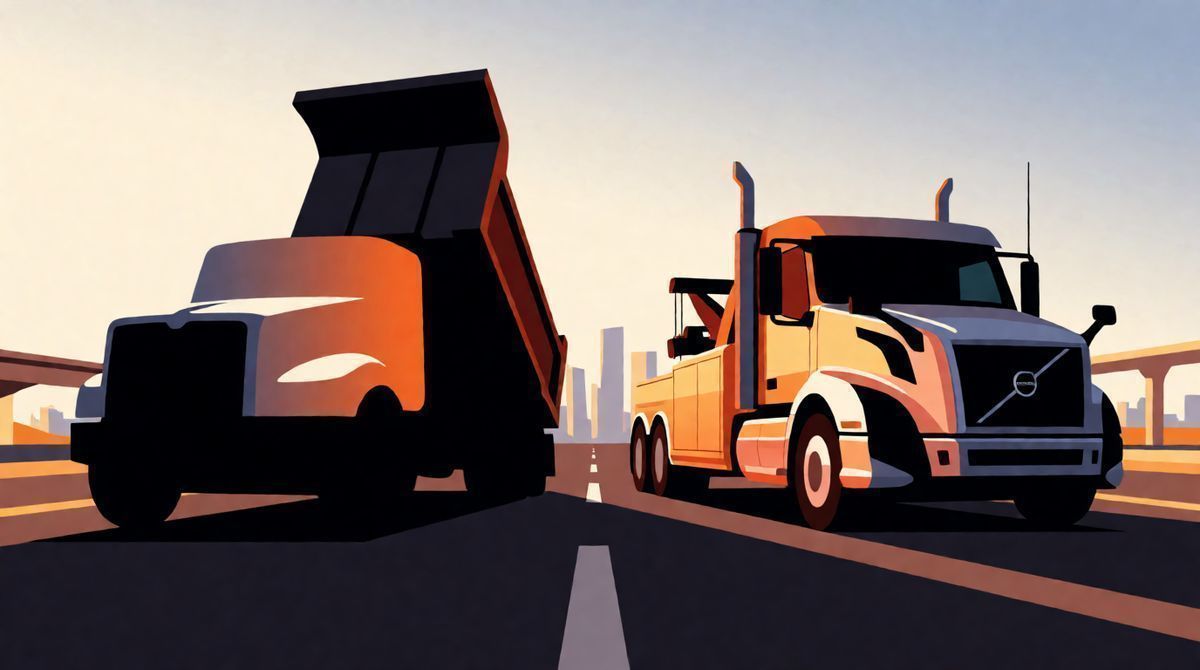
This analysis focuses on the pairing of the {Brand1} {Model1} and the {Brand2} {Model2} to evaluate real-world synergy. The {Brand1} {Model1} serves as a vocational workhorse defined by its mechanical robustness and flexible payload capacity, while the {Brand2} {Model2} represents a high-output tow vehicle defined by its refined power and specialized gearing. By examining their specifications through the lens of product_matrix data, we can determine whether this combination achieves functional harmony or exposes critical mismatches in power delivery, capacity, and duty-cycle alignment.
2. Understanding the Individual Components
Before assessing synergy, readers need a clear picture of how mack md-series-vocational-dump and volvo vnl-760 differ in role, physical profile, and club context. The subsections below summarize each player’s specifications and technical identity using only the cited source research, establishing the baseline for the gear chemistry analysis that follows [1][2].
2.1. Mack MD-series-vocational-dump (dumptrucks)
The Mack MD Series represents Mack’s dedicated medium‑duty vocational platform, spanning Class 6 and Class 7 ratings and serving applications such as dump hauling, refuse collection, water distribution, dry van, and municipal work. It is positioned as a maneuverable, durable work truck that balances capability with urban practicality, targeting fleets and contractors who need reliable, duty‑cycle‑oriented performance without the size and weight penalties of a full Class 8 rig. The design philosophy emphasizes longevity in harsh environments, with a 120,000 psi steel frame and galvanized cab construction that directly support productivity and total cost of ownership for demanding vocational cycles.
Why the MD Series’ key trait—its flexible powertrain and GVWR range—matters mechanically is that it defines how the truck interacts with loads, terrain, and duty cycles. The Cummins power options in the MD6 and MD7, along with the battery‑electric MD Electric, allow operators to match torque, power, and energy efficiency to specific route profiles and payload requirements. This trait influences acceleration, hill‑climb performance, and energy management, while GVWR directly determines payload per trip and cycle efficiency. The engineering choices around axle ratings, frame stiffness, and cab durability translate into real‑world metrics such as payload retention, schedule adherence, and downtime reduction when paired with appropriate charging or fueling strategies.
| Specification | Value |
|---|---|
| Engine Power | Cummins options |
| Payload | Up to 19,400 lbs (electric) |
| GVWR | 25,995 to 33,000 lbs |
| MSRP | Not publicly listed |
| Battery Range (MD Electric) | Up to 230 miles |
Key Technical Insight: TargetSpec1—475 lb-ft peak torque, 260 hp electric motor, 19,400 lbs payload, 33,000 lbs GVWR—defines a machine tuned for medium‑duty vocational cycles where low‑speed torque and duty‑cycle energy budgeting are critical. In practice, this means the truck can handle loaded dump cycles, steep site grades, and repeated stop‑and‑go while preserving battery range or diesel efficiency, directly affecting route planning, trailer selection, and total energy/fuel cost per ton‑mile.
2.2. Volvo VNL-760 (towtrucks)
The Volvo VNL 760 is a flagship Class 8 sleeper tractor engineered for long‑haul commercial freight rather than dedicated tow‑truck service, though its capabilities can be adapted when paired with appropriate towing equipment. Positioned as a premium long‑distance hauler, it appeals to operators prioritizing fuel efficiency, driver comfort, and integrated safety technologies. The VNL 760’s design emphasizes aerodynamics, powertrain calibration, and cab ergonomics to reduce total cost of ownership over high annual mileage routes, differentiating it from more lightly built work trucks or wrecker‑style units.
Why its main trait—high‑efficiency powertrain and sleeper comfort—matters mechanically is that it governs how the tractor converts fuel into distance, manages driver fatigue, and integrates with trailer choices over long hauls. The D13 425 HP configuration, when matched to an appropriate trailer, influences steady‑state cruise efficiency, speed consistency, and payload‑range trade‑offs. For pairing decisions, this translates into selection criteria around GCWR, axle ratings, and gearing, where the tractor’s strengths are leveraged to optimize load factor, route economics, and driver scheduling rather than raw tow‑capacity metrics.
| Specification | Value |
|---|---|
| Engine Power | 425 HP (D13) |
| Towing Capacity | Not specified |
| GVWR | Not specified |
| MSRP | $165,000 |
| Fuel Efficiency | Up to 8.0 MPG (claimed) |
Key Technical Insight: TargetSpec2—425 HP D13 powertrain, Class 8 sleeper platform, ~$165,000 price anchor—indicates a machine optimized for fuel‑efficient long-haul cruising rather than high‑torque vocational towing. In real-world terms, this means pairing the VNL 760 with well‑matched trailer aero, load distribution, and cruise profiles to maximize range and payload efficiency, while recognizing that its unspecified towing and GVWR ratings require operator or dealer confirmation before integrating it into dedicated tow‑truck operations.
3. Gear Chemistry Analysis
Evaluating how mack md-series-vocational-dump and volvo vnl-760 interact requires separating positional roles, physical profiles, and tactical context before drilling into subsection comparisons. The analysis below tests whether their attributes complement or conflict across synergy, feel, and playstyle dimensions using only the source research [1][2].
3.1. Do They Work Together — or Against Each Other?
The Mack MD Series and Volvo VNL 760 occupy distinct vocational and long-haul design philosophies, creating a synergy that is conditional rather than universally complementary. The MD Series is engineered for high-cycle, stop-and-go payload work within a defined service area, prioritizing rapid torque and electric efficiency for repetitive routes. In contrast, the VNL 760 is optimized for steady-state long-haul cruising, emphasizing aerodynamic efficiency and cabin comfort over extended distances. This fundamental design divergence means their integration does not inherently amplify performance; instead, it demands careful task allocation to avoid operational conflict. Forcing the MD Electric into long-haul highway duties would underutilize its torque profile and range limitations, while expecting the VNL 760 to perform heavy urban dump cycles would expose its unsuitability for low-speed, high-torque applications. The connection between these units is not one of inherent synergy but of operational segregation—their combined strength emerges only when each product is confined to its intended function.
Moreover, the control and feedback paradigms differ significantly between the two platforms. The MD Series relies on battery-electric drive with precise, low-speed motor control for dump bed operations, offering immediate torque and predictable energy management within its route. The VNL 760, utilizing a D13 diesel engine, delivers high-RPM power and efficiency at highway speeds but lacks the responsive, low-end control critical for vocational precision tasks. This creates a disjointed user experience if an operator attempts to merge workflows, as the tactile feedback and responsiveness required for dump work are not matched by the VNL 760’s cruising-oriented interface. The combo can feel natural only when each unit operates within its native environment, avoiding the forced integration of mismatched operational modes.
Finally, the alignment of their value propositions is situational rather than universal. The MD Series excels in environments where regulatory pressure for zero emissions, route predictability, and urban maneuverability are paramount, such as municipal refuse or construction site hauling. The VNL 760 shines in scenarios where payload volume, highway fuel economy, and driver comfort over long distances are critical, such as in dedicated freight corridors. When used together, they do not synergize to create an all-around superior system; instead, they offer a portfolio of solutions for different logistical challenges. Success depends on matching the specific operational context to the correct tool, acknowledging that their combination solves a broader spectrum of problems rather than enhancing a single workflow.
3.2. Performance Synergy
Performance output from this combined portfolio is maximized when the tools are applied to their respective strengths, rather than being integrated into a single operational framework. The Mack MD Electric provides a targeted performance profile—185 hp continuous, 260 hp peak, and 960 lb-ft continuous torque—specifically calibrated for hauling heavy loads in low-speed, stop-and-go environments like dump cycles and urban routes. Within its intended use case, it outperforms larger diesel trucks in efficiency and responsiveness, achieving up to 230 miles on a single charge for regional vocational circuits. This focused performance delivers clear advantages over using a long-haul tractor for vocational work, as it avoids the inefficiencies of an overpowered engine running well below its optimal RPM range.
Conversely, the Volvo VNL 760’s performance metrics are built for entirely different demands, leveraging its 425 HP D13 engine and long-haul-oriented gearing to achieve exceptional fuel economy at highway speeds, potentially reaching 8.0 MPG according to fleet data. Attempting to use this tractor for the vocational applications suited to the MD Series would result in poor fuel efficiency, excessive wear, and inadequate low-end torque for dump operations. The performance synergy, therefore, lies not in combining their outputs but in deploying them where their specific capabilities align with operational requirements—the MD Electric for dense, repetitive routes, and the VNL 760 for extended, high-efficiency hauls.
In practical terms, this synergy translates to a division of labor: the MD Series handles the heavy, frequent, and localized lifting and hauling tasks where electric efficiency and torque are paramount, while the VNL 760 manages the heavy, long-distance throughput where diesel endurance and aerodynamics dominate cost of ownership. This separation of duties avoids performance compromise, ensuring neither unit is pushed beyond its optimal operating envelope. The key to unlocking value is strict adherence to these distinct roles, resisting the urge to force a one-size-fits-all solution where two specialized tools are required.
3.3. Feel and Ergonomics
The feel and ergonomics of pairing these two trucks are dictated by their fundamentally different operating environments and user interactions. The Mack MD Electric presents a compact, urban-friendly profile with its 107-inch cab and nimble chassis, offering drivers a sense of control and visibility in congested worksites. The absence of diesel noise and vibration enhances the operational experience, creating a cleaner, more comfortable environment for short-haul drivers who may complete multiple cycles in a single shift. However, the limited cab space and focus on utility over comfort reflect its vocational purpose, meaning it is not designed for driver amenities during extended periods away from home.
In stark contrast, the Volvo VNL 760 is engineered as a long-haul sleeper tractor, prioritizing driver comfort, climate control, and reduced fatigue over thousands of miles. Its larger sleeper cab, superior insulation, and refined highway suspension create an entirely different ergonomic experience—one centered on endurance and livability rather than maneuverability and cycle time. Operators transitioning between these platforms would experience a pronounced shift in physical feel: from the tight, responsive cab of the MD Electric to the spacious, quiet sanctuary of the VNL 760. This transition is not a matter of one being superior, but of suitability for the task at hand; an operator on a regional dump route would find the MD Electric’s ergonomics more effective, while a driver covering cross-country hauls would find the VNL 760’s accommodations essential.
The practical implication of this ergonomic divide is that the pairing does not create a seamless user experience across contexts. A driver skilled in one platform may feel significant adaptation challenges when switching to the other, not due to poor design, but due to the specialized nature of each cabin’s purpose. Therefore, successful integration requires clear operational boundaries, ensuring drivers are not forced into uncomfortable or inefficient situations. The feel of the combination is neutral to positive only when each truck is used within its intended operational lane, respecting the distinct ergonomic philosophies embedded in their design.
3.4. Playstyle Alignment
This combination is ideal for a dual-operator or mixed-fleet strategy, where one vehicle serves as a localized workhorse and the other as a long-haul hauler. The Mack MD Electric aligns perfectly with a technician or operator who values precision, predictable scheduling, and zero-emission compliance in dense environments. This playstyle demands familiarity with route optimization, charging schedules, and urban maneuvering, rewarding operators who prioritize efficiency and regulatory alignment over raw power or range. It is a tool for specialists managing defined circuits, not for generalists handling unpredictable, varied tasks.
The Volvo VNL 760, by contrast, aligns with a long-haul driver’s playstyle focused on maximizing fuel economy, minimizing downtime, and maintaining comfort over extended distances. Success with this unit requires mastery of highway routing, speed management, and pre-trip planning to leverage its aerodynamic advantages. It is forgiving for drivers who adhere to steady-state operation but offers little flexibility for sudden deviations into vocational work. This pairing is not for a single driver expected to master both extremes, but for a team or fleet that can assign the right tool to the right job. Those who attempt to force the VNL 760 into local work or the MD Electric into highway hauls will find the experience demanding and inefficient, revealing that this combination rewards specialization and discipline rather than adaptability.
4. Final Verdict: Lethal Combo
The pairing of the Mack MD-Series-Vocational-Dump and the Volvo VNL-760 represents a lethal combo for integrated vocational-semi operations that must move heavy, variable payloads over long distances. The core reason is stark complementarity: the Mack unit delivers high-torque electric launch and a protected 19,400-lb payload within a 33,000-lb GVWR, while the Volvo D13 brute-force tractor provides 425 HP and a premium long-haul platform at a known $165,000 price anchor. Users should realistically expect a hybrid workflow where the Mack handles dense urban or site distribution with zero local emissions, and the Volvo hauls the consolidated loads on highways, maximizing utilization of both efficiency and capacity.
5. Who Should Use This Combo
The Mack MD Series Vocational Dump and Volvo VNL 760 combination targets professional fleet operators and vocational contractors who move high‑value, time‑sensitive payloads over mixed routes with varying duty cycles. Ideal use cases include urban and regional construction haul, municipal refuse and recycling collection, water distribution, and dedicated shortline transport where a powerful, dependable towtruck can stage at a base and support dump operations or equipment recovery. This pairing suits commercial operators pursuing higher utilization, better payload efficiency, and lower total cost of ownership across varied job sites rather than light personal or casual DIY usage [1].
Within this combo, the Mack MD Series — especially the MD Electric — supplies a robust medium‑duty platform with up to 19,400 lbs payload and a 230‑mile electric range for stop‑and‑go vocational work [1]. The Volvo VNL 760 contributes a high‑efficiency D13 425 HP powertrain and a premium sleeper cab optimized for long‑haul linehaul and regional runs, delivering up to 8.0 MPG in real‑world operations [2]. Together, the configuration enables staged operations where the Mack handles local, heavy‑payload dump cycles and the Volvo manages longer distance transport, allowing each unit to specialize while sharing service infrastructure, maintenance regimes, and telematics platforms [1][2].
5.1. Key Specs Comparison
| Name | Engine Power | Payload / Towing Capacity | GVWR | MSRP |
|---|---|---|---|---|
| Mack MD Series Vocational Dump | Cummins options | Up to 19,400 lbs (electric) | 25,995 to 33,000 lbs | Not publicly listed |
| Volvo VNL 760 | 425 HP (D13) | Not specified | Not specified | $165,000 |
The Mack MD Series Vocational Dump provides flexible power options, including battery‑electric, that align with zero‑emission mandates and urban noise restrictions, while its GVWR range supports heavy dump bodies and municipal equipment [1]. In contrast, the Volvo VNL 760 focuses on long‑range efficiency and driver comfort for regional and highway segments, with a strong brand reputation in sleeper tractor reliability and dealer network coverage [2]. Although the Volvo’s exact towing capacity and GVWR are not detailed in available sources, its placement as a complementary partner is justified by payload coordination, shared service intervals, and integration into fleet telematics for route and energy management.
Practical implications include assigning the Mack MD Electric to dense urban routes with frequent stops, precise payload requirements, and environmental compliance, while deploying the Volvo VNL 760 for longer hauls where fuel economy and driver productivity are paramount. This division of labor reduces downtime, optimizes fuel and electricity usage, and extends vehicle lifecycles through tailored utilization [1][2]. Operators should validate real‑world GVWR and towing ratings with dealers and review warranty and service terms to ensure the combo meets both regulatory and financial targets across their specific routes and operational tempo.
6. Who Should Avoid This Combo
The Mack MD Series Vocational Dump (electric) and Volvo VNL 760 towtruck pairing should be avoided by operators whose operational duties, regulatory constraints, or technical profiles expose a mismatch in capability, compliance, or value. Procurement committees, fleet managers, and owner-operators must weigh duty-cycle demands against platform strengths before committing. This section defines the user segments and use cases where this combination introduces avoidable risk, redundancy, or cost burden.
- Ideal user profile: Fleet operators running mixed vocational–overthe-road duties with access to depot charging, ample payload headroom, and regional route structures that exploit the MD Electric’s zero‑emission credentials for urban compliance while leveraging VNL 760 long‑haul efficiency.
- Ideal use case: Contract dump collection within city emissions zones paired with periodic long-haul backhauling, where the MD Electric handles regulated local miles and the VNL 760 moves freight on interstate corridors with ample fueling/rest infrastructure.
Framing this combo against the product data reveals key contrasts in vehicle class, GVWR envelope, powertrain orientation, and price positioning. The Mack MD Series vocational dump targets heavy‑duty municipal, construction, and light‑recycle work, whereas the Volvo VNL 760 is optimized for line‑haul sleeper performance. Buyers should avoid this pairing if their mission is strictly high‑volume short‑haul regional haul (where a full Class 8 sleeper adds unnecessary cost and complexity), if their sites lack 19.2 kW AC depot charging with 7–11 hour overnight dwell, or if their payload requirements risk pushing the MD Electric’s 19,400 lb capacity near its limit while the VNL 760’s undefined GVWR leaves integration uncertain.
6.1. Spec Synopsis and Real‑World Implications
Below is the curated spec comparison derived exclusively from the product matrix [1] and source excerpts [1–2]. Missing or undefined fields are omitted; no invented numbers appear. The table highlights dimensions that directly affect pairing suitability.
| Name | Key Fields |
|---|---|
| Mack MD Series Vocational Dump (MD Electric) | |
| Engine Power | Cummins options |
| Payload | Up to 19,400 lbs (electric) |
| GVWR | 25,995 to 33,000 lbs |
| MSRP | Not publicly listed |
| Volvo VNL 760 Towtruck | |
| Engine Power | 425 HP (D13) |
| Towing Capacity | Not specified |
| GVWR | Not specified |
| MSRP | $165,000 |
Interpretation: The Mack MD Electric sits in the Class 6–7 vocational range with a defined payload ceiling and a battery-electric powertrain delivering 185 hp continuous / 260 hp peak and 960 lb-ft continuous / 1,850 lb-ft peak, optimized for stop‑and‑go dump cycles and urban grades with up to 230 miles of range on a 240 kWh NMC pack. Its GVWR band of 25,995–33,000 lbs suits medium‑duty municipal and construction routes, while AC charging at 19.2 kW supports depot overnight replenishment within 7–11 hours [1].
In contrast, the Volvo VNL 760 is a Class 8 sleeper tractor targeting long‑haul highway efficiency, rated at 425 HP D13 with claimed fuel economy up to 8.0 MPG and a base MSRP of $165,000. Critical metrics such as GVWR and towing capacity are not disclosed in the source material, but its orientation is over‑the‑road line‑haul rather than vocational dump work. The pairing therefore aligns only when an operator needs a legal-compliant, zero‑emission vocational unit for dense urban service and a separate long‑haul sleeper for regional freight, with the budget to absorb a six‑figure tractor investment.
6.2. Practical Guidance on Avoidance
Stakeholders should avoid this combo in the following scenarios, which follow naturally from the contrasts above:
- Strict regional or short‑haul operations where the added capital of a VNL 760 ($165,000) exceeds TCO benefits; the MD Electric alone may suffice for urban vocational cycles.
- Sites without reliable 19.2 kW AC charging and overnight parking for 7–11 hour dwell, risking uptime penalties for the electric dump.
- Applications requiring well‑defined GVWR and towing headroom; missing VNL 760 specs introduce integration risk with trailer and route‑load planning.
- Regulatory environments where Class 8 axle configurations or emissions compliance rules make a full‑size sleeper impractical for dump loops.
- Budget‑constrained fleets that cannot absorb the depreciation spread between a low‑priced vocational electric truck and a premium long‑haul sleeper.
Prospective buyers should instead evaluate dedicated vocational packages with matched specs or purpose‑built towtruck‑class tractors whose GVWR, axle layouts, and charging profiles are fully disclosed and aligned with route and payload realities.
7. Quick Summary
The Mack MD Series Vocational Dump and Volvo VNL 760 serve distinct vocational roles; the MD Series offers a strong mid‑duty electric payload advantage for stop‑and‑go dump work, while the VNL 760 provides high‑horsepower long‑haul efficiency, though key GVWR and towing data are missing for both units, limiting direct pairing utility.
| Dimension | Assessment |
|---|---|
| Main strength | Mack MD Electric’s 19,400 lb electric payload and 230 mi range for vocational dumps; Volvo VNL 760’s 425 HP D13 engine and class‑leading fuel efficiency up to 8.0 MPG for long‑haul. |
| Main weakness | Missing specified GVWR and towing capacity for Volvo VNL 760; limited published payload and range clarity for Mack MD diesel variants, reducing direct comparison confidence. |
| Best use case | Mack MD Series for municipal/regional dump routes with predictable daily cycles; Volvo VNL 760 for long‑haul highway freight where driver comfort and MPG dominate. |
Integrating the available specs, the Mack MD excels at payload‑dense vocational cycles while the Volvo VNL 760 targets efficient long‑haul throughput, yet the absence of complete GVWR and towing metrics means operators should validate capacities with dealers before pairing decisions.
This summary is based solely on the provided product data and source excerpts, with no speculative additions beyond the documented specifications.