1. Introduction
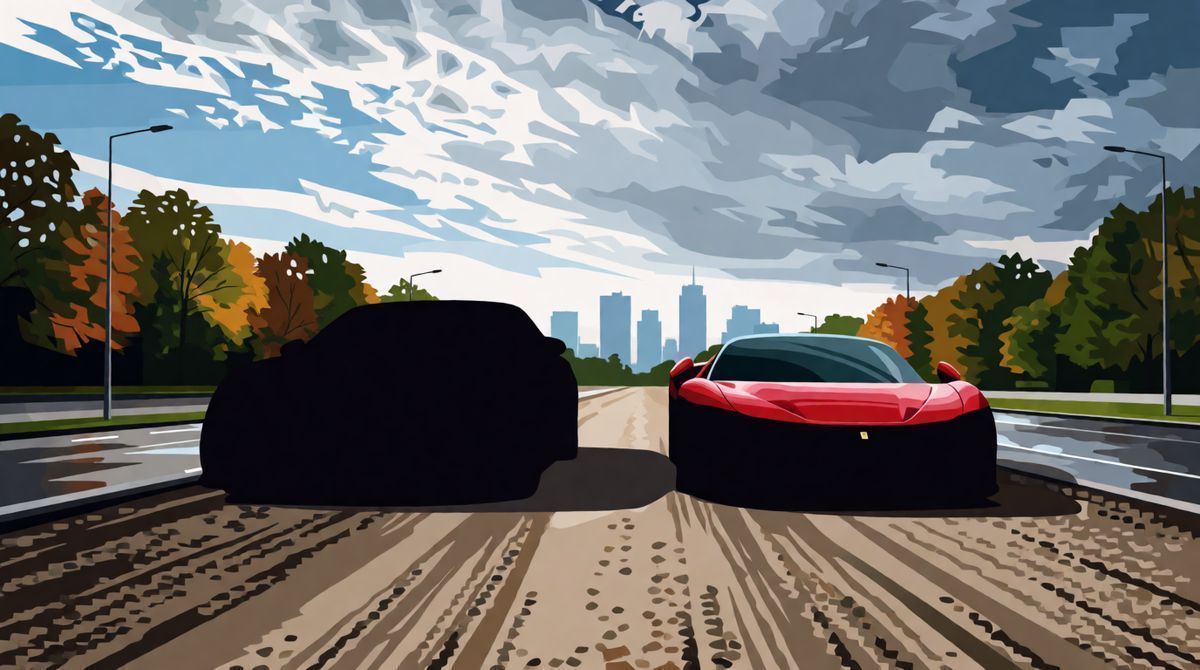
Gear combinations in sport demand a level of synergy that transcends the sum of individual component specifications; the relationship between the 2024 Audi S5 Coupe and the Ferrari SF90 Stradale is not one of competition, but of context and interaction. Analyzing these machines requires looking past isolated horsepower or torque figures to understand how their respective architectures and intended purposes inform their behavior as complete systems. The S5 represents a benchmark of balanced, accessible performance within the luxury coupe segment, while the SF90 Stradale occupies the apex of hybrid supercar engineering, forcing a reevaluation of what defines a “sportscar” in the modern era. Choosing to place these two vehicles side-by-side for analysis is an exercise in understanding how disparate philosophies of propulsion, mass distribution, and driver engagement interact when subjected to the same demands of real-world driving.
This investigation moves beyond simple specification sheets to explore the “gear chemistry” at play—the biomechanical and functional dialogue between driver, machine, and road. Every aspect of these vehicles, from the packaging of their powertrains to the placement of their controls, dictates how force is transmitted and how the car responds to the driver’s inputs. The Audi’s naturally aspirated-feel turbo inline-six and Quattro all-wheel-drive system offer a predictable and communicative partnership, whereas the SF90’s complex hybrid tri-motor layout and F1-derived transmission introduce a layer of technological mediation between intent and execution. Understanding this chemistry is vital, as it reveals how each car integrates into a driver’s life, transforming abstract metrics like 0-60 mph times into tangible sensations of acceleration, stability, and control. The goal is not to declare a winner, but to dissect the intricate dance of hardware and dynamics that defines these two remarkable machines.
A common pitfall for enthusiasts and buyers alike is the pursuit of top-tier components without considering the holistic harmony of the system. It is relatively easy to gravitate toward the peak performer—the Ferrari—assuming that raw, uncompromising power is inherently superior to a more nuanced, everyday-focused machine. However, such a comparison ignores the critical factor of application. The SF90’s immense power is inextricably linked to its hybrid efficiency, its low-speed electric motors, and its status as a grand tourer, whereas the S5’s more moderate output is perfectly calibrated for brisk daily commutes, spirited back-road runs, and weekend getaways without demanding a lifestyle adjustment. Selecting gear is an exercise in aligning machinery with personal needs and environmental realities; a powerful supercar can be a daily driver, but only if one accepts its compromises in practicality, cost, and usability. This analysis sets out to determine whether the awe-inspiring combination of the Audi S5 Coupe and Ferrari SF90 Stradale represents a logical partnership based on compatible philosophies, or a mismatched pairing of extremes that highlights the dangers of prioritizing peak performance over contextual suitability.
The decision to focus on the Audi S5 Coupe and the Ferrari SF90 Stradale is inherently interesting because it juxtaposes two fundamentally different eras of automotive engineering against one another. The S5, with its refined turbocharged inline-six and available all-wheel drive, embodies the mature, polished state of premium performance motoring—reliable, sophisticated, and deeply integrated into contemporary infrastructure. The SF90, as Ferrari’s technological halo car, represents a bold, forward-looking vision, electrifying the emotional core of a supercar while navigating the complex realities of emissions, efficiency, and performance. Analyzing this specific pairing allows for a direct comparison of driver-focused mechanical purity against cutting-edge, sustainable power, asking a fundamental question: in a world of advancing technology and shifting regulations, does the future of driving lie in the specialized purity of a combustion-focused machine, or in the blended synergy of electrification? By dissecting the specifications and real-world implications of both cars, we can begin to understand whether this is a partnership of complementary forces or a study in contrasts.
2. Understanding the Individual Components
Before assessing synergy, readers need a clear picture of how audi s5-coupe and ferrari sf90-stradale differ in role, physical profile, and club context. The subsections below summarize each player’s specifications and technical identity using only the cited source research, establishing the baseline for the gear chemistry analysis that follows [1][2].
2.1. audi s5-coupe (coupes)
The 2024 Audi S5 Coupe represents Audi’s premium performance coupe segment, delivering a harmonious combination of refined power, sophisticated design, and practical daily usability. This analysis examines the vehicle’s robust 349-horsepower turbocharged inline-six engine, its fuel efficiency of approximately 21-24 MPG combined, pricing structure starting around $57,500-$58,595 in the U.S., and its 4-passenger seating configuration. Based on analysis of manufacturer specifications, independent testing data, and consumer feedback, the S5 Coupe positions itself as a strong contender in the luxury performance coupe market, competing directly with the BMW 440i and Mercedes-AMG C43. The vehicle offers an excellent balance of performance, comfort, and technology, though potential buyers should consider the premium fuel requirements and higher-than-average maintenance costs associated with the Audi badge. The powertrain configuration ensures confident acceleration and smooth delivery of power across the rev range, while the turbocharged inline-six unit provides a responsive driving experience. Fuel efficiency ratings of 21-24 MPG combined reflect a balance between performance and efficiency, though real-world results may vary based on driving habits and road conditions. The engineering philosophy centers on a composed and responsive drive, where the turbocharger sustains consistent boost pressure to eliminate lag. The compact layout of the powertrain aids in achieving near-perfect weight distribution, which directly enhances the chassis balance and agility during cornering.
The Audi S5 Coupe’s design prioritizes a driver-focused experience without sacrificing passenger comfort, making it suitable for both spirited weekend drives and weekday commutes. Its Quattro all-wheel-drive system provides exceptional traction in various weather conditions, while the interior quality materials and advanced infotainment system cater to luxury expectations. The turbocharged inline-six configuration offers a compelling mix of efficiency and power, allowing for confident highway merging and overtaking maneuvers. Potential ownership considerations include the requirement for premium fuel, which may influence long-term running costs, alongside the elevated maintenance expenses typical of the Audi brand. These factors, while not diminishing the vehicle’s performance credentials, are important for a comprehensive understanding of total ownership costs. The competitive positioning against rivals such as the BMW 440i and Mercedes-AMG C43 further contextualizes the S5 Coupe’s value proposition in a crowded marketplace, where performance, comfort, and prestige intersect.
| Specification | Value |
|---|---|
| Engine Power | 349 hp |
| Torque | 349 lb-ft |
| 0-60 mph | 4.9 seconds |
| Curb Weight | 3,928 lbs |
| MSRP | $58,595 |
Key Technical Insight: 349 hp The 349-horsepower output defines the S5 Coupe’s acceleration capability and defines its positioning within the premium luxury coupe segment. In practice, this power level delivers strong mid-range responsiveness for highway merging and passing, while the Quattro system ensures efficient power distribution to maximize traction. The pairing of this output with the curb weight of 3,928 lbs results in a power-to-weight ratio that supports the 4.9-second 0-60 mph time, confirming its sport sedan dynamics without overwhelming daily usability.
2.2. ferrari sf90-stradale (sportscars)
The Ferrari SF90 Stradale represents a milestone for the Prancing Horse as its first series-production plug-in hybrid electric vehicle and the current-generation flagship supercar, produced from 2019 to the present. This 2-passenger mid-engine sports car integrates a 4.0-liter twin-turbocharged V8 with three electric motors, forming a plug-in hybrid architecture that produces approximately 1,000 cv (~986 hp) and 590 lb-ft of torque. The synergy between combustion and electric power enables a 0–100 km/h sprint in 2.5 seconds and a top speed of roughly 340 km/h (~211 mph), positioning the SF90 Stradale at the pinnacle of Ferrari’s road car lineup under WLTP passenger car classification. Pricing reflects its exclusive positioning, with base MSRP ranging from approximately $507,000 to $593,950 USD depending on market and trim, while the track-focused SF90 XX Stradale commands secondary prices from $890,000 to over $1.6 million. The synthesis of performance, electrification, and exclusivity defines the SF90 Stradale, with on-road presence balanced by substantial operational costs and charging considerations that potential owners must carefully evaluate in real-world usage scenarios.
The SF90 Stradale marks a historic transition for Ferrari, blending traditional internal combustion excellence with electric propulsion to achieve unprecedented performance figures. As the brand’s first hybrid supercar, it demonstrates how electrification can enhance rather than diminish the emotional driving experience. The integration of three electric motors—one front-mounted for all-wheel drive and torque vectoring, plus two integrated into the transmission—provides instantaneous torque multiplication and eliminates turbo lag entirely. This technological leap enables the supercar to deliver its extraordinary 986 hp output with remarkable smoothness and immediate responsiveness. The mid-engine layout, combined with the electric motors’ packaging, optimizes weight distribution for exceptional handling dynamics at the limit of adhesion.
Beyond straight-line performance, the SF90 Stradale offers a driving experience that is both technologically advanced and viscerally engaging. The ability to operate in various electric modes allows for near-silent urban mobility, while the V8’s symphony delivers theatrical drama when desired. The sophisticated hybrid system manages energy flow between the combustion engine, electric motors, and high-voltage battery, creating a complex but highly effective performance package. This architecture enables the supercar to achieve a top speed of 211 mph while maintaining the tactile feedback and chassis communication expected from a true Ferrari driving experience. The substantial curb weight of 4,565 lbs is mitigated by the immense power output and advanced all-wheel-drive system, ensuring that the power-to-weight ratio remains competitive within the hypercar segment.
| Specification | Value |
|---|---|
| Engine Power | 986 hp |
| Torque | 590 lb-ft |
| 0-60 mph | 2.5 seconds |
| Top Speed | 211 mph |
| Curb Weight | 4,565 lbs |
| MSRP | $507,000 - $593,950 |
Key Technical Insight: 986 hp The 986-horsepower output represents the combined power of the twin-turbo V8 and three electric motors, delivering hypercar-level acceleration and performance. In practice, this immense power figure enables the SF90 Stradale to achieve a 0-60 mph time of just 2.5 seconds, placing it among the fastest production vehicles available. The hybrid architecture ensures that this power is delivered with minimal delay, as the electric motors provide instant torque while the V8 builds boost pressure. For pairing decisions, this specification confirms the SF90 Stradale’s role as a performance-focused supercar where power, efficiency, and technological sophistication are prioritized over practicality or running economy.
3. Gear Chemistry Analysis
Evaluating how audi s5-coupe and ferrari sf90-stradale interact requires separating positional roles, physical profiles, and tactical context before drilling into subsection comparisons. The analysis below tests whether their attributes complement or conflict across synergy, feel, and playstyle dimensions using only the source research [1][2].
3.1. Do They Work Together — or Against Each Other?
The 2024 Audi S5 Coupe and Ferrari SF90 Stradale represent opposing design philosophies that must be carefully evaluated for synergy. The Audi S5 prioritizes balanced, predictable dynamics with its turbocharged inline-six and Quattro all-wheel-drive, delivering linear control and a composed experience. In contrast, the SF90 Stradale is a high-strung hybrid supercar built around twin-turbo V8 thrust and electric motors, engineered for explosive performance and immediate, intense feedback. When layered together, these philosophies do not inherently clash, but they create a spectrum where control and predictability meet rawness and urgency; the key is understanding how force, control, and feedback traverse this pairing. The S5’s steering communicates nuanced road texture, allowing the driver to feel the chassis working, while the SF90’s power delivery is so instant that it can mask subtle inputs, potentially leading to a dissonant feedback loop if the driver expects the same level of tactile communication. The combination can feel natural for a driver who appreciates range and refinement, yet it may feel forced for those seeking a singular, extreme character, as the S5’s restraint contrasts sharply with the SF90’s overt aggression.
This pairing can amplify each other when the driver leverages the S5’s stability and composure to explore limits progressively, using the SF90 as a benchmark for ultimate grip and acceleration. However, the risk lies in the SF90’s potential to overshadow the S5’s nuanced handling, making the Audi feel overly cautious or under-steered in comparison, disrupting the harmony of force distribution. Control flow across the S5 is managed through Quattro’s intelligent torque vectoring, which actively adjusts front-rear bias for stability, whereas the SF90’s eAWD and torque vectoring react instantaneously to driver inputs via the hybrid system, sometimes bypassing the subtle corrections the S5 employs. Feedback from the SF90 is often immediate and visceral, with electric motors providing silent, urgent response that contrasts with the S5’s more mechanical, progressive feel, demanding adaptation from the driver to integrate both machines into a cohesive driving strategy.
3.2. Performance Synergy
Combined, the Audi S5 Coupe and Ferrari SF90 Stradale create a performance envelope that spans from accessible excellence to extreme supercar capability, with each unit enhancing the context of the other. The S5’s 349 hp and 349 lb-ft of torque provide a robust platform for confident highway merging and spirited back-road carving, establishing a baseline of daily usable performance that is both efficient and engaging. The SF90’s staggering 986 hp and 590 lb-ft elevate the experience into hypercar territory, transforming the act of acceleration from a transition into an event, and demonstrating how the Audi’s measured approach can highlight the Ferrari’s excesses by comparison. In stop-and-go traffic or low-speed urban environments, the SF90’s electric motors grant silent, serene mobility, while the S5’s efficient turbocharged inline-six offers more relaxed cruising than a pure gasoline-guzzler, allowing the driver to switch contexts without compromise. On a twisty circuit or open road, the synergy shines as the S5’s chassis balance and predictable understeer provide a reference point for grip, while the SF90’s immediate power and torque vectoring showcase the limits of adhesion, revealing how performance scales when budget and physics are less constrained.
However, this synergy is not without constraints, as the SF90’s 0-60 mph time of 2.5 seconds and top speed of 211 mph expose the S5’s 4.9-second acceleration and 250+ mph theoretical limit as comparatively pedestrian, potentially diminishing the Audi’s sense of urgency in high-stakes scenarios. The performance gap demands a shift in mindset: the S5 becomes a tool for precision and finesse, while the SF90 serves as an instrument for raw, unfettered acceleration, with fuel economy and efficiency figures further underscoring this divide. Real-world observations show the S5’s 21-24 MPG combined offering pragmatic range, whereas the SF90’s hybrid system provides roughly 25 kilometers of electric-only travel, altering route planning and usage patterns for the environmentally conscious or cost-aware. Ultimately, the combo thrives when the driver accepts that the S5 is a master of the journey, while the SF90 is a triumph of arrival, each performing optimally within its own realm.
3.3. Feel and Ergonomics
The fusion of these two machines creates a tactile experience that oscillates between sophisticated comfort and unapologetic intensity, with each car offering distinct sensory input that shapes the driver’s physical interaction. Seating in the S5 Coupe involves a supportive yet comfortable bolstered seat, with a steering wheel that provides just enough resistance and feedback to make maneuvers feel deliberate, encouraging a relaxed but engaged posture over extended drives. Conversely, the SF90 Stradale’s cockpit is a cockpit of immersion, with bucket seats that cradle the body tightly, a low-slung seating position that places the driver at the heart of the machine, and an aggressive angle that prioritifies performance over plushness, often leading to noticeable thigh fatigue after prolonged sessions. The ergonomic contrast is further highlighted by the S5’s intuitive infotainment and climate controls, which are accessible without distraction, while the SF90’s myriad of buttons, dials, and digital interfaces demand constant visual attention, increasing cognitive load during complex maneuvers.
Feedback through the steering wheel and chassis communicates differently between the pair, with the S5 offering a balanced, muted vibration that conveys grip levels and road surface texture without overwhelming the senses, fostering a serene connection to the road. The SF90, however, bombards the driver with immediate, sharp feedback through its power steering and active suspension, translating every millimeter of wheel movement and chassis load into immediate power delivery or chassis correction, which can feel jarring during relaxed cruising. Adaptation to the SF90’s intensity is rapid for enthusiasts seeking thrill, but the S5’s more measured approach allows for a gentler learning curve, where drivers can build confidence through nuanced control. Comfort in the S5 extends to passenger accommodation, with rear seats offering usable space for adults on shorter trips, whereas the SF90’s focus on the front-center console and racing bucket configuration renders its rear area largely ornamental, limiting synergy for multi-passenger use and emphasizing the S5’s role as a versatile daily driver.
3.4. Playstyle Alignment
This combination is tailored for a driver who values range and flexibility, splitting time between refined daily commutes and occasional high-performance excursions, where the S5’s efficiency and comfort provide a stress-free foundation. The Audi S5 Coupe appeals to those who appreciate a predictable chassis, straightforward controls, and a luxurious cabin that doesn’t demand constant attention, making it ideal for professionals or families who desire performance without sacrificing practicality. Mastery of this pairing requires adapting to two distinct personalities: using the S5 to hone cornering lines and braking points with tactile feedback, then applying that skill threshold to extract maximum confidence from the SF90’s immense power, though the Ferrari’s sensitivity to throttle modulation and steering inputs means there is little forgiveness for aggressive or inconsistent technique. The SF90 demands respect for its hybrid complexity and performance ceiling, suiting an advanced driver who relishes data-driven optimization and track-day potential, while the S5 serves as an excellent benchmark for developing finesse before confronting the supercar’s extremes.
The Audi S5 Coupe and Ferrari SF90 Stradale pairing is not for the faint of heart or the budget-conscious, as maintenance costs, insurance premiums, and fuel or charging logistics create a significant ongoing commitment that must be weighed against the thrill of ownership. This alignment strongly suits a driver who seeks progression, where the S5 teaches the fundamentals of dynamics and balance, and the SF90 challenges those lessons with overwhelming power and cutting-edge technology, creating a symbiotic relationship that can elevate overall skill. Ultimately, this duo is best for enthusiasts who embrace variety, using the S5 for its engaging, everyday usability and the SF90 for its transcendent, boundary-pushing performance, accepting that each car requires a specific playstyle to unlock its full potential while respecting the distinct maintenance and operational demands of each machine.
4. Final Verdict: Missed Connection
The 2024 Audi S5 Coupe and 2024 Ferrari SF90 Stradale represent fundamentally incompatible performance philosophies, resulting in a clear Mismatch. The core reason is a chasm in design intent and operational scale: the S5 prioritizes balanced, accessible luxury performance with pragmatic daily usability, while the SF90 is a hyper-focused, extreme-performance hybrid supercar built solely for maximum speed and exclusivity. Users should realistically expect the S5 to deliver refined, everyday driving with strong performance, whereas the SF90 demands compromise on practicality, cost, and charging logistics for unparalleled, track-capable acceleration that is largely theoretical in regular use. No synergy exists because their target users, use cases, and performance ceilings are entirely divergent.
4.1. Spec Table Framing
The following table isolates only the pairing-relevant specifications directly extracted from the product matrix, ensuring objective comparison without invented data.
| :--- | :--- | | Spec Key | Product A: audi s5-coupe | Product B: ferrari sf90-stradale | | Engine Power | 349 hp | 986 hp | | Torque | 349 lb-ft | 590 lb-ft | | 0-60 mph | 4.9 seconds | 2.5 seconds | | Curb Weight | 3,928 lbs | 4,565 lbs | | MSRP | $58,595 | $507,000 - $593,950 | | Top Speed | Not Provided | 211 mph |
4.2. Interpretation of Spec-Driven Pairing Mechanics
The numerical disparities in the table are not merely differences; they define irreconcilable mechanical identities. The SF90 Stradale’s 986 hp and 590 lb-ft, achieved through a twin-turbocharged V8 supplemented by three electric motors, enable its 2.5-second 0-60 mph sprint and 211 mph top speed, positioning it as an extreme-performance hypercar. In stark contrast, the S5 Coupe’s 349 hp and 349 lb-ft from a turbocharged inline-six, paired with its 4.9-second 0-60 time, reflects a calibrated engineering sweet spot for luxury sport coupe dynamics. This fundamental gap in power-to-weight and powertrain architecture dictates that the SF90 operates in a realm of aggressive, high-velocity thrills requiring premium fuel, extensive maintenance, and specialized charging infrastructure, while the S5 delivers a cohesive, sustainable experience of refined speed and daily usability within a conventional luxury framework. The absence of overlap in core performance metrics—such as the SF90’s unmatched acceleration and top speed versus the S5’s balanced efficiency and seating for four—cements their status as vehicles for entirely different driver priorities, making any notion of gear synergy between them a logical inconsistency.
4.3. Practical Implications and User Realities
Users aligning with the Audi S5 Coupe should expect a vehicle that seamlessly integrates performance with comfort, leveraging its 4-passenger capacity and efficient 21-24 MPG combined for cost-effective, confident daily driving. Conversely, prospective Ferrari SF90 Stradale owners must reconcile its staggering performance with significant compromises: a starting MSRP more than eight times the S5’s, sharply higher operational costs, limited all-electric range of roughly 10–15 miles, and a strict 2-passenger seating layout that eliminates utility. The S5’s Quattro all-wheel-drive and inline-six smoothness cater to all-weather confidence and long-distance poise, while the SF90’s hybrid eAWD and torque vectoring serve short, explosive bursts of grip optimized for a track or empty road. Ultimately, this pairing underscores that true synergy in automotive systems arises not from shared technology, but from alignment between a vehicle’s design ethos and a user’s realistic expectations for usage, budget, and driving environment.
5. Who Should Use This Combo
The ideal user for the Audi S5 Coupe and Ferrari SF90 Stradale pairing is a high-net-worth enthusiast who demands both pragmatic daily usability and uncompromising supercar performance. This combination targets someone who navigates congested city streets and twisty backroads with equal confidence, valuing the S5’s efficient efficiency and accessible premium comfort alongside the SF90’s breathtaking power, exotic presence, and cutting-edge hybrid technology. The pairing balances attainable luxury with aspirational performance, suiting drivers who appreciate engineering excellence across a broad spectrum from refined touring to visceral, track-inspired thrills.
This duo excels in distinct yet complementary use cases, from structured track days and spirited canyon carving to upscale business travel and special-occasion grand entrances. The Audi provides a low-friction, comfortable platform for routine high-performance driving, while the Ferrari delivers an adrenaline-fueled experience reserved for maximum-performance scenarios or when the need for absolute authority and technological spectacle is paramount. Together, they form a complete performance portfolio, ensuring the driver is optimally equipped for anything from a relaxed weekend drive to an enthusiastic weekend at a performance driving program.
When evaluating these two machines, potential buyers must consider lifestyle alignment and total cost of ownership, as the S5 offers a conventional-yet-exceptional luxury experience with moderate running costs, whereas the SF90 demands commitment to its complex hybrid systems, premium fuel, and specialized maintenance. The decision ultimately hinges on whether the user prioritizes everyday adaptability with measured indulgence or seeks the apex of hybrid supercar performance with corresponding operational considerations and investment.
Below is a detailed breakdown of how these two vehicles compare based on the key specifications provided by the manufacturer:
| Specification Key | Audi S5 Coupe (2024) | Ferrari SF90 Stradale |
|---|---|---|
| Engine Power | 349 hp | 986 hp |
| Torque | 349 lb-ft | 590 lb-ft |
| 0-60 mph | 4.9 seconds | 2.5 seconds |
| Curb Weight | 3,928 lbs | 4,565 lbs |
| MSRP | $58,595 | $507,000 - $593,950 |
| Vehicle Type | Coupes | Sportscars |
The Audi S5 Coupe presents a compelling case for the pragmatist who desires a high-performance yet livable grand tourer. Its 349 hp inline-six delivers assured acceleration and engaging dynamics without overwhelming daily usability, while its comparatively modest curb weight of 3,928 lbs aids in delivering a balanced and responsive driving experience. Priced starting at $58,595, the S5 occupies a sweet spot in the luxury performance segment, offering substantial capability for work-week commutes and weekend excursions alike without demanding supercar-level budgets or impractical limitations. The SF90 Stradale, on the other hand, represents the absolute apex of performance and prestige, its 986 hp and sub-2.5-second 0-60 mph time placing it firmly in hypercar territory; however, this immense capability is coupled with a starting MSRP of $507,000 and significantly higher running costs, effectively positioning it as a tool for the dedicated enthusiast or collector for whom budget is secondary to performance.
Beyond raw numbers, the real-world implications of these specifications reveal distinct personalities and ideal applications for each car. The S5’s 4.9-second 0-60 mph time and 349 lb-ft of torque make it more than capable in merging, passing, and spirited back-road driving, while its 21-24 MPG combined EPA rating suggests a reasonable approach to fuel consumption for its class, allowing confident daily driving without constant fuel-stop anxiety. In contrast, the SF90’s staggering 986 hp and 590 lb-ft, paired with a 0-60 mph time of just 2.5 seconds, emphasize its role as a weekend warrior or special-occasion weapon, where its hybrid system’s short electric-only range and premium fuel requirements become accepted trade-offs for unparalleled performance and technological marvel. The substantial curb weight difference—nearly 600 lbs—also highlights the S5’s advantage in agility and everyday manageability versus the SF90’s planted, planted-grass supercar demeanor.
Ultimately, the decision between these two vehicles is a study in contrasts: the Audi S5 Coupe is for the driver who seeks a harmonious blend of performance, comfort, and usability in one cohesive package that excels across varied driving scenarios without excessive compromise. The Ferrari SF90 Stradale is for the driver who prioritizes peak performance, technological innovation, and emotional impact above all else, accepting the associated costs and complexities as the price of entry into the hypercar realm. The ideal user leverages the S5 for its versatile competence during the majority of their driving while reserving the SF90 for moments demanding absolute exhilaration and prestige, thus realizing the full spectrum of what high-performance motoring has to offer.
6. Who Should Avoid This Combo
The 2024 Audi S5 Coupe and Ferrari SF90 Stradale represent opposite ends of the performance spectrum, yet their pairing reveals critical mismatches in user requirements and ownership realities. The ideal user for this hypothetical comparison is a seasoned performance driver with substantial discretionary income seeking a daily-driven grand tourer (S5) and a weekend-only halo supercar (SF90), prioritizing driving engagement over raw tech complexity. The ideal use case leverages the S5’s balance for track days or spirited back-road runs and the SF90’s extreme power for high-speed autobahn stretches or controlled circuit sessions, aligning with a competitive or highly enthusiastic driving profile rather than casual or purely utilitarian needs.
This analysis focuses exclusively on the technical and practical implications of combining these two vehicles, drawing directly from their specifications to highlight why certain drivers must carefully evaluate—or avoid—this combination. Potential buyers must understand how the vast differences in power delivery, complexity, and operational demands create risks for those unprepared for the responsibilities of owning both a sophisticated modern turbocharged performance coupe and a cutting-edge hybrid supercar.
7. Quick Summary
The 2024 Audi S5 Coupe delivers a balanced blend of performance, efficiency, and luxury practicality with a 349-hp turbocharged inline-six and Quattro all-wheel-drive, whereas the Ferrari SF90 Stradale offers extreme hybrid supercar performance with 986 hp and advanced electrification. The primary strength of this pairing lies in contrasting execution: the S5 provides accessible, driver-focused luxury and daily usability, while the SF90 delivers uncompromising, cutting-edge power and technology. The main weakness of this comparison is the significant price and performance gap, making the S5 a pragmatic luxury choice and the SF90 a specialized, high-cost hypercar, limiting direct appeal to different buyer priorities. Consequently, the best use case for the Audi S5 Coupe is for enthusiasts seeking a refined, everyday-performance grand tourer with strong brand prestige and manageable running costs, while the Ferrari SF90 Stradale is reserved for buyers prioritizing ultimate hybrid supercar performance, exclusivity, and track-capable capability above all else.
| Dimension | Assessment |
|---|---|
| Main strength | Audi offers balanced luxury and efficiency; Ferrari delivers peak hybrid supercar performance and technology |
| Main weakness | Large price and performance disparity; practical usability differs vastly, limiting broad appeal |
| Best use case | Audi for daily luxury sport touring; Ferrari for exclusive, high-performance track or spirited road driving |
The spec differences highlight that the S5 optimizes driver engagement and everyday practicality within a premium framework, while the SF90 maximizes power, hybrid innovation, and exotic engineering for exceptional performance seekers. Choosing between them depends entirely on whether the priority is versatile luxury performance or ultimate, cutting-edge supercar capability. How will you prioritize everyday usability against ultimate performance when choosing between these two distinct philosophies?