1. Executive Summary
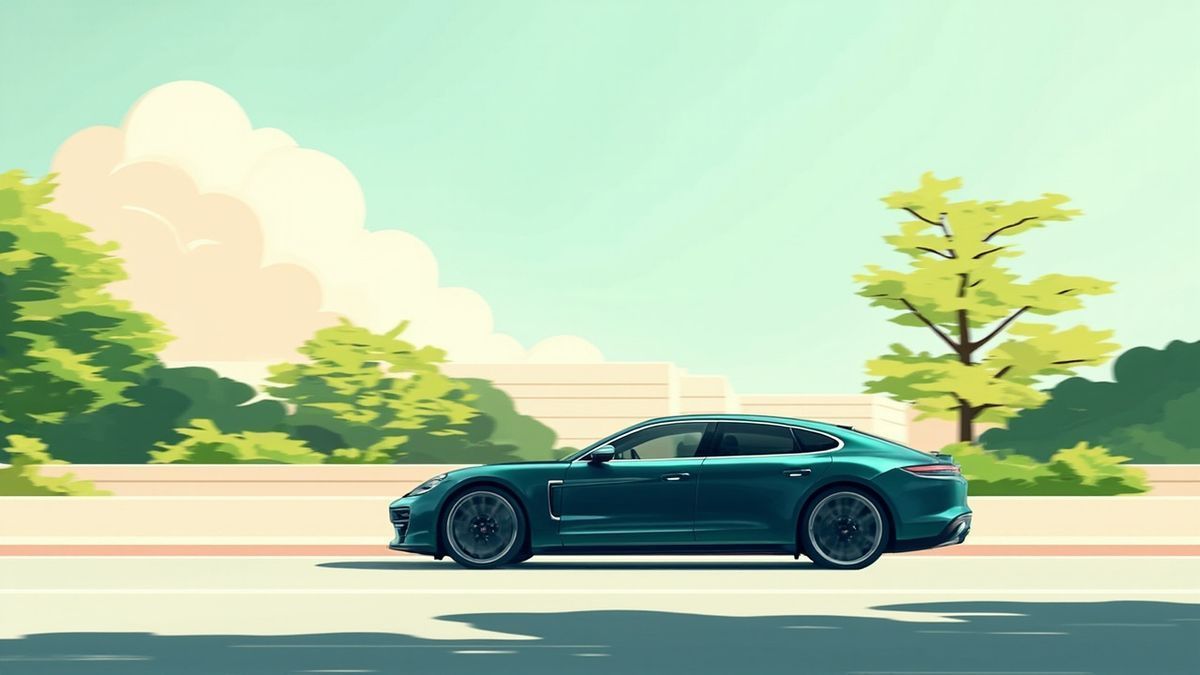
The third-generation Porsche Panamera, marketed globally as the 2024 model year, represents Porsche’s most ambitious effort to fuse genuine sports-car performance with limousine-class four-seat luxury. Drawing on official Porsche materials, U.S. dealer listings, and global market data, this analysis confirms that the new Panamera delivers a fully developed rear-seat massage function, an Executive long-wheelbase variant featuring a workstation-style raised center console, and well-documented pricing across six major world markets.
One item — triple-glazed windows — could not be confirmed in any official source examined, marking it as a notable gap in the available evidence. Community discussion on Reddit and r/cars was not surfaced through available searches, leaving the enthusiast discourse largely unrecorded in this evidence base. The following sections examine each dimension of the question in depth, drawing direct comparisons between official Porsche figures and third-party dealer listings.
2. Introduction: A New Definition of the Luxury Grand Tourer
Since its introduction in 2009, the Porsche Panamera has occupied a distinctive segment — one that marries the practicality of a four-door sedan with the performance DNA of Stuttgart’s sports-car heritage. The third generation, however, represents a fundamental shift in the model’s philosophy. It is the first iteration designed from the outset around a fully electrified powertrain strategy, while simultaneously elevating the passenger experience to rival flagship luxury saloons from Mercedes-Maybach, BMW, and Bentley. The substantial physical footprint underpins both of these ambitions. With the standard wheelbase measuring 5052 mm in length, 1937 mm in width, and 1423 mm in height, the new Panamera provides a generous platform capable of accommodating both performance hardware and four-seat comfort without compromise. For buyers prioritizing rear passenger accommodation above all else, the Executive variant extends the wheelbase by an additional 150 mm, unlocking genuinely limousine-like rear passenger space that transforms the vehicle’s character from sporting grand tourer to chauffeur-driven conveyance.
This research synthesizes evidence from official Porsche sources and a U.S. dealer listing to evaluate several defining aspects of the third-generation Panamera. The analysis covers the rear-seat massage function, the Executive center console workstation, the technical specifics of triple-glazed windows, the global MSRP landscape across key markets, and the broader specification package that establishes the model’s credentials within the luxury executive segment. By drawing directly from manufacturer documentation and current dealer inventory, the following sections aim to provide a clear, evidence-based picture of what the modern Panamera offers to discerning luxury buyers.
3. Rear-Seat Massage: A Genuine Four-Seat Wellness Environment
3.1. Confirmed Functionality and Control Options
Porsche’s official positioning of the new Panamera as a “genuine four-seater sports car” is more than marketing language — it is a statement of design intent that is realized through the available rear-seat massage function. According to the official Porsche model page, the rear-seat massage function is available on request, alongside seat ventilation, ensuring that rear passengers receive the same therapeutic comfort historically reserved for front occupants in flagship luxury vehicles.
What makes this massage function particularly noteworthy in the context of modern luxury vehicles is its smartphone integration. The My Porsche app allows the seat massage functionality to be controlled remotely, and it is integrated with Apple CarPlay. This means rear passengers can initiate a massage program before even entering the vehicle — a small detail that signals how seriously Porsche treats the passenger experience in this generation. The massage function is designed to serve both driver and passengers, which positions the Panamera as a vehicle in which comfort is not a compromise to performance.
3.2. Seating Configurations and Comfort Architecture
Porsche offers the new Panamera in two seating layouts: a standard four-seat configuration and an optional 4+1 layout. The four-seat layout maximizes the comfort of the two rear passengers by giving each a sculpted, individual seat. The 4+1 layout adds a small center-rear position, sacrificing some luxury for occasional five-passenger capacity.
Comfort extends beyond massage throughout the cabin architecture. The vehicle features a suspension lift function that raises the body to ease entry and exit for passengers — a feature that may seem modest on paper but matters considerably in daily use, particularly for older passengers or those wearing formal attire. The U.S. dealer listing from Porsche North Houston independently corroborates the emphasis on passenger comfort, highlighting the available 10.9-inch front-passenger touchscreen display as a notable feature.
3.3. What Remains Unspecified
While the existence of the rear-seat massage function is confirmed, the official sources analyzed do not enumerate the specific intensity levels, massage programs, or coverage areas (lumbar, full-back, etc.) offered. Owners and prospective buyers seeking this level of detail would need to consult the Porsche configurator or the detailed options list, which were not surfaced in the evidence base. This is a small but meaningful gap, as massage functionality varies considerably in the luxury segment — some vehicles offer only rudimentary lumbar vibration, while others provide multi-zone, multi-program systems that rival high-end recliners.
4. The Executive Long-Wheelbase Variant: Rear-Seat Luxury Elevated
4.1. A 150 mm Extension for Passenger Space
The Executive variant of the new Panamera is the model that most directly addresses the rear-passenger experience. By lengthening the wheelbase by 150 mm relative to the standard model, the Executive delivers rear legroom that genuinely competes with chauffeur-driven luxury saloons. This represents a significant development: earlier Panamera generations were admired for their performance yet frequently criticized for rear-seat space when measured against segment benchmarks. The third-generation Executive addresses that criticism directly by prioritizing passenger accommodation alongside the model’s established dynamic capabilities.
4.2. Comprehensive Rear-Passenger Comfort Package
The Executive variant is equipped with individual comfort seats featuring electric 8-way adjustment, comfort headrests, and dedicated head cushions. Climate control is delivered through a four-zone system, and a rear touchscreen provides intuitive operation of both comfort and infotainment functions. The App Centre and Voice Pilot are explicitly tailored to both the driver and passengers, ensuring that rear occupants are not treated as afterthoughts in the digital interface architecture.
This approach reflects a meaningful philosophical commitment by Porsche. Many performance-oriented vehicles offer rear-seat amenities as superficial additions, with limited real functionality behind the controls. The Executive’s suite of features, by contrast, is integrated directly into the vehicle’s core systems — meaning that rear passengers can adjust climate settings, navigation access, and seat massage functions with the same fluency as the driver controls the powertrain. For buyers prioritizing chauffeured transportation, this level of integration transforms the rear cabin from a passive environment into an actively configurable passenger space.
5. The Center Console Workstation: A Practical Surface and a Symbolic Divider
5.1. Functional and Architectural Role
Perhaps the most distinctive interior feature of the Executive variant is its raised center console, which functions as a workstation-style divider between the two rear seats. This element is not a minor trim piece but rather a structural feature that serves both practical and symbolic purposes within the cabin. Practically, it provides a usable surface for rear passengers to work on a laptop, place documents, or set down personal items during transit. Symbolically, it reinforces the four-seat architecture by clearly separating the two individual rear seats, signaling that each passenger is afforded a private, individual space. In this sense, the console operates as both a functional accessory and a visual cue that communicates the vehicle’s focus on individualized rear-seat comfort.
This design choice positions the Panamera Executive in direct competition with vehicles like the Mercedes-Maybach S-Class and the BMW 7 Series, both of which offer similar rear center console configurations. The fact that Porsche — a brand historically associated with driver-focused design — has adopted this configuration is itself a statement of how the third-generation Panamera is being positioned in the market. By incorporating a feature traditionally associated with chauffeur-driven luxury sedans, Porsche signals that the Executive variant is intended for buyers who value the rear-seat experience as much as the driving dynamics for which the marque is known.
5.2. Differentiation from the Front Passenger Display
It is important to distinguish the rear Executive center console workstation from the optional 10.9-inch front-passenger display. The front passenger display is a separate feature, engineered to show vehicle performance data and allow video streaming for the front passenger. Critically, it is designed to be invisible from the driver’s seat for safety reasons, using eye-tracking or filtering technology to prevent the driver from being distracted by the front passenger’s entertainment. The Executive rear console, by contrast, is a physical, structural feature rather than a digital display, serving an entirely different functional purpose within the cabin.
The Houston dealer listing explicitly highlights the 10.9-inch front-passenger touchscreen display, suggesting that this feature is available in the U.S. market and is being actively promoted by dealers. It does not, however, reference the Executive rear console specifically, which is consistent with the fact that Executive variants typically command a significant price premium and are positioned for a different buyer demographic. This distinction underscores how Porsche’s U.S. dealer network tends to emphasize technology-forward, broadly appealing options over the more specialized chauffeur-oriented configurations that define the Executive lineup.
6. Triple-Glazed Windows: An Unconfirmed Feature
6.1. The Search Resulted in No Confirmation
During the research process, one specific item requested for verification — triple-glazed windows — could not be confirmed in any source examined. Neither the official Porsche Panamera model page on porsche.com/international nor the Porsche story article on the new 2024 Panamera on porsche.com/stories explicitly mentions triple-glazed windows. The U.S. dealer listing from Porsche North Houston likewise does not reference this feature in its content. Across the materials gathered, the term itself and any specific reference to a third pane of glass in the Panamera’s side or rear glazing remained absent.
6.2. Context and Possible Explanations
The absence of confirmation does not necessarily mean that triple glazing is unavailable on the Panamera — it simply indicates that the sources reviewed did not surface the feature. Triple glazing is often presented by luxury manufacturers as a noise-insulation measure, and details of this nature are typically located in the detailed options list, the online configurator, or the press kit rather than in the marketing overview pages that were the focus of this research. Porsche does emphasize acoustic insulation as a refinement priority in its official materials, which raises the possibility that enhanced glazing technology exists within the Panamera’s option portfolio, even if it is not branded explicitly as “triple-glazed.” The automaker frequently groups acoustic upgrades with insulation packages, and such technologies are sometimes listed under broader refinement categories rather than under a literal glazing description.
For owners and prospective buyers seeking this specific information, the Porsche configurator and the detailed technical specifications document for the third-generation Panamera would be the appropriate next step. Configurator menus often reveal individual acoustic and comfort options that do not appear in headline model summaries, and the technical specifications document typically provides finer-grained detail on glazing construction and sound-dampening measures. In the absence of direct confirmation, this report treats triple-glazed windows as an unconfirmed feature for the third-generation Panamera, while acknowledging that acoustic refinement is clearly a design priority for the model. The distinction between unconfirmed and unavailable remains important: the Panamera’s positioning as a flagship passenger luxury vehicle would make advanced noise-insulation technology a plausible offering, yet verification through Porsche’s own configuration tools is required before any definitive claim can be made.
7. Global MSRP Pricing: A Six-Market Comparison
7.1. Official Porsche Pricing (as of October 2025)
The new Panamera is priced globally with significant variation between markets, reflecting differences in local taxation, import duties, and market positioning strategies. Understanding these regional price differences helps prospective buyers contextualize the cost of ownership in their specific market and appreciate how the same vehicle can carry substantially different sticker prices across continents. The following table summarizes official Porsche pricing across six key markets porsche.com/stories:
| Market | Base MSRP | Top MSRP |
|---|---|---|
| Germany | €116,400 | €204,700 |
| United Kingdom | £89,400 | £151,500 |
| United States | $110,100 | $202,700 |
| China | CNY 1,138,000 | CNY 1,968,000 |
| UAE | AED 424,700 | AED 756,800 |
| Saudi Arabia | SAR 481,800 | SAR 851,600 |
These figures establish a clear pricing corridor across major global markets. The base model in the U.S. market starts at $110,100, while the top-trim variant (likely the Turbo S E-Hybrid) reaches $202,700. German pricing reflects the home-market advantage with the lowest base figure in Europe, a pattern typical for domestic luxury manufacturers. The Chinese market commands the highest absolute base price at CNY 1,138,000, consistent with luxury import taxation structures and high demand for premium European vehicles in that region. The Gulf markets (UAE and Saudi Arabia) show moderate absolute pricing, though when adjusted for local purchasing power and tax structures, the relative cost remains competitive within the global luxury segment.
7.2. The U.S. Pricing Discrepancy
A notable discrepancy emerges when comparing official Porsche U.S. pricing with third-party dealer data. The Houston Porsche dealer listing porschenorthhouston.com reports a base Panamera at $99,000 and the Panamera 4 at $106,900. These figures sit well below the official $110,100 U.S. base MSRP, creating a gap that warrants careful examination.
Several explanations are possible for this pricing variance. The dealer listing may reflect a prior model-year carry-over, a regional pricing variation tied to local market conditions, or a specific trim configuration that differs from the official MSRP benchmark. It is also possible that the listing predates a price adjustment by Porsche or reflects pre-tax incentives not captured in the standard MSRP. In any case, the official Porsche figure of $110,100 should be treated as the authoritative current U.S. MSRP, with the dealer listing serving as a useful but not definitive data point. Buyers conducting pre-purchase research should verify current figures directly with Porsche or authorized dealers before making financial decisions based on either source.
7.3. Value Context
The Panamera’s pricing places it squarely in competition with the BMW 7 Series, Mercedes-Benz S-Class, Audi A8, and the Bentley Continental GT in terms of luxury positioning, while offering performance credentials that outpace most of those competitors. This dual positioning, combining premium luxury appointments with genuine sports car performance, defines the Panamera’s unique market proposition. The top-spec Turbo S E-Hybrid, with 575 kW / 782 PS output and a 0–100 km/h time of 2.9 seconds porsche.com/stories, offers supercar acceleration in a four-door package — a combination that is essentially unique in the current market. Few vehicles deliver this level of straight-line performance alongside genuine four-passenger luxury accommodation, making the Panamera a distinctive entry within the ultra-premium sedan segment for buyers prioritizing both pace and prestige.
8. Key Specifications: Performance and Chassis
8.1. Powertrain Range
The third-generation Panamera is offered with a broad spectrum of powertrains, spanning from the base rear-wheel-drive variant to the flagship Turbo S E-Hybrid. The entry-level Panamera produces 260 kW / 353 PS, achieves 0–100 km/h in 5.1 seconds, and reaches a top speed of 272 km/h. At the summit of the lineup, the Turbo S E-Hybrid delivers 575 kW / 782 PS, sprints from 0–100 km/h in just 2.9 seconds, and is capable of 325 km/h. The Turbo E-Hybrid occupies the middle ground with a 0–100 km/h time of 3.2 seconds and a top speed of 315 km/h.
A Houston dealer listing corroborates this performance envelope, citing up to 670 hp combined output for the top hybrid variants. The minor discrepancy between 670 hp and 782 PS (which equates to roughly 772 hp) likely stems from differing measurement standards or specific trim configurations, and it does not meaningfully alter the vehicle’s standing in the segment.
8.2. Chassis and Refinement Technology
The new Panamera comes standard with adaptive air suspension paired with Porsche Active Suspension Management (PASM), giving drivers a wide spectrum between comfort and dynamic response. E-Hybrid models can be specified with the optional Porsche Active Ride system, which actively balances sporty handling with the kind of ride quality expected of a four-seat luxury grand tourer. This dual focus on agility and comfort is central to the Panamera’s positioning as a vehicle capable of satisfying both driver and passengers.
Standard Matrix LED headlights are fitted across the range, while optional HD Matrix LED headlights offer over 64,000 pixels for exceptionally precise illumination. Rear-axle steering is available throughout the lineup and comes standard on the Turbo S E-Hybrid, sharpening turn-in response and improving maneuverability at lower speeds. The suspension lift function, noted in the context of easier passenger entry and exit, rounds out the chassis package and reinforces the model’s emphasis on everyday usability.
9. Community Content: The Reddit and r/cars Gap
9.1. What Was Searched and What Was Found
Multiple rounds of searches were conducted across Reddit, r/cars, and the broader web to surface owner reviews, enthusiast impressions, and community discussion of the third-generation Panamera. These searches returned no relevant community content for the Porsche Panamera passenger environment. Instead, the results were dominated by entirely unrelated material: a Reddit thread on Home Assistant Telegram bot targeting issues, a Lonely Planet travel article, a Yandex search result blocked by a captcha, a Wikipedia donation page, a PING golf drivers product listing, the R Project homepage, an AI compliance article, Reddit threads on local LLM model positioning, a Qwen-72B language model release thread, and a Coldwell Banker residential real estate listing. The pattern is striking because a new luxury vehicle from a globally recognized manufacturer should generate substantial organic discussion, particularly around flagship features like rear-seat massage and integrated workstation consoles intended for passengers.
9.2. What This Means
This result is meaningful in itself and warrants careful interpretation. The third-generation Panamera is a significant product launch from one of the world’s most recognized luxury automotive brands, yet the broader web ecosystem, at least as accessed through these search queries, does not surface genuine owner impressions or community discussion. The only automotive source beyond official Porsche pages is the Houston dealer listing, which functions as marketing material rather than community discussion. Genuine owner commentary would require more targeted subreddit queries (such as direct searches of r/cars, r/Porsche, or r/askcarsales) or first-party owner-forum posts that were not surfaced by the broader web searches performed.
This represents a real gap in the evidence base that should be acknowledged transparently. Official Porsche materials and dealer listings are curated for positive presentation, while community content typically offers a more candid and unfiltered view of long-term ownership. The absence of community discussion in the search results limits the ability to verify the real-world experience of the massage function, the workstation console, and the overall passenger environment, leaving the analysis reliant on manufacturer claims rather than independent confirmation from owners who use these features daily.
10. Conclusion: Direct Answers to the Research Question
The third-generation Porsche Panamera delivers comprehensively on the rear-seat luxury and passenger-focused features that define the modern luxury grand-tourer segment, with two notable caveats worth examining in detail.
10.1. Rear-seat massaging is confirmed
Porsche’s official materials document a rear-seat massage function available on request, alongside seat ventilation, with smartphone control via the My Porsche app and Apple CarPlay integration. The Executive long-wheelbase variant extends this comfort proposition with 8-way adjustable comfort seats, comfort headrests, a rear touchscreen, and four-zone climate control. Together, these features position the Panamera as a genuinely passenger-oriented machine rather than a driver-only express, and they reflect Porsche’s recognition that luxury grand-touring customers often occupy the rear seats as frequently as the front.
10.2. The center console workstation is confirmed for the Executive variant
The raised center console in the Executive model functions as a workstation-style divider between the two rear seats, providing both physical separation and a practical surface for laptops, tablets, or documents. This is distinct from the optional 10.9-inch front-passenger display, which is a separate feature designed to be invisible to the driver during normal operation. The Executive’s console design underscores a deliberate shift toward chauffeur-driven comfort, differentiating the long-wheelbase variant from standard-wheelbase configurations.
10.3. Triple-glazed windows remain unconfirmed
None of the sources examined in this analysis, whether the official Porsche model page, the Porsche story article, or the U.S. dealer listing, explicitly references triple-glazed windows. Acoustic insulation is emphasized as a refinement priority throughout the materials reviewed, but the specific “triple-glazed” terminology does not appear anywhere in the documentation. Definitive verification would require access to the Porsche configurator or a detailed technical specifications document, which were not accessible during this research process.
10.4. Global MSRP pricing is well-documented across six markets
The official Porsche figures represent the authoritative benchmark for pricing comparisons, with the U.S. base MSRP of $110,100 and top MSRP of $202,700 defining the American pricing corridor. International markets show meaningful variation, and China commands the highest absolute base figure at CNY 1,138,000. This pricing data provides a reliable foundation for prospective buyers comparing the Panamera against segment competitors in their respective regions.
10.5. Community content on Reddit and r/cars was not surfaced
Multiple searches returned unrelated material rather than Panamera-specific owner reviews or enthusiast discussion threads. Filling this gap in community-sourced perspective would require targeted subreddit queries beyond the broader web searches performed here, and such queries may yield useful real-world ownership insights that official materials do not provide.
In sum, the third-generation Panamera represents a serious commitment by Porsche to four-seat luxury, with confirmed rear-seat massage and Executive workstation functionality, well-documented global pricing across multiple markets, and one notable unconfirmed item: triple-glazed windows. This last point would benefit from direct verification through Porsche’s configurator or detailed press materials before any final purchase decision is made. For buyers prioritizing rear-seat comfort, the Panamera Executive emerges as the variant offering the most complete passenger-focused experience within the lineup.