1. Introduction
Gear combinations matter in the automotive world because no single vehicle operates in isolation from the rest of a household fleet. A household rarely consists of one car fulfilling every role; instead, families and enthusiasts assemble complementary vehicles that cover the spectrum from daily utility to weekend indulgence. The interaction between these machines is not merely about having “a sports car and a SUV” parked side by side in the garage. The pairing creates a functional ecosystem where one vehicle covers the tasks the other cannot, and the value of the combination lies in how seamlessly the two roles divide responsibilities. When that division is well-planned, the household gains genuine versatility; when it is poorly conceived, the owner ends up with overlapping capabilities, excess cost, and underused potential in at least one of the two bays [1].
The concept of “gear chemistry” in the automotive context refers to how two vehicles interact across the dimensions of mission, performance, and practicality. A 575-horsepower V8 coupe and a 329-horsepower hybrid three-row crossover are not competing products; they occupy entirely different mission profiles, and the question is whether their specifications, price points, and intended use cases complement each other in a way that justifies owning both. One addresses the emotional, performance-oriented side of driving, delivering a soundtrack and acceleration profile that the hybrid powertrain cannot replicate. The other addresses the rational, efficiency-oriented side, delivering passenger capacity, fuel economy, and warranty coverage that the sports coupe was never designed to provide. The “chemistry” question is whether the two products are different enough in role to be genuinely additive rather than redundant, and whether their specifications align well enough with their respective roles to justify the combined investment.
A common mistake buyers make when combining vehicles is assuming that choosing two top-tier flagship models automatically produces the best pairing. In practice, the most expensive variant of a sports car paired with the most expensive variant of a family hauler can leave both vehicles underutilized. The flagship F-Type P575 R75 at over $115,000 brings all-wheel drive and maximum power, but much of that capability goes unused if the car is relegated to fair-weather weekend drives. Similarly, the Calligraphy trim of the Palisade Hybrid pushes pricing into the low-$60,000s with luxury appointments that add little value for a buyer whose primary concern is moving people efficiently. The smarter pairing logic matches the trim level to the role: the lighter, purist P450 R-Dynamic for the enthusiast duty, and the high-efficiency Blue or SEL trim for the family-hauling duty, leaving budget room in both line items rather than concentrating spending in one [1] [2].
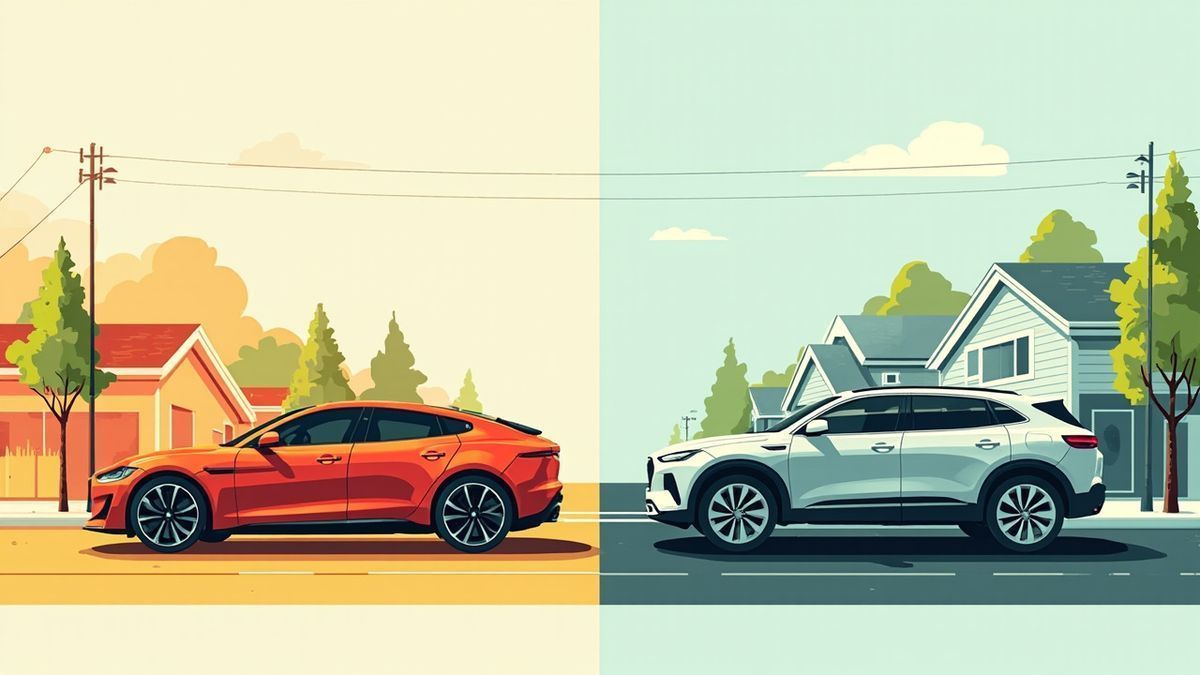
The 2024 Jaguar F-Type and the 2027 Hyundai Palisade Hybrid present a particularly interesting pairing to analyze because they sit at opposite ends of the automotive spectrum yet share a common structural logic. Both are positioned as the final or flagship statement of their respective nameplates for their generation: the F-Type as the concluding V8-powered sports car in Jaguar’s lineage, and the Palisade Hybrid as Hyundai’s most ambitious electrification effort in the three-row crossover segment. Both deliver headline specifications that are strong within their class — 444 to 575 horsepower from a supercharged V8 for the Jaguar, and 329 combined horsepower with up to 34 mpg combined from the Hyundai. Yet their price points, passenger configurations, and daily-use profiles differ so dramatically that a household considering both must think carefully about whether the combination delivers genuine complementarity. This analysis will examine whether the F-Type and Palisade Hybrid form a coherent two-vehicle solution or whether the pairing creates friction in budget allocation, garage logistics, or mission overlap [1] [2].
2. Understanding the Individual Components
Before assessing synergy, readers need a clear picture of how jaguar f-type and hyundai palisade-hybrid differ in role, physical profile, and club context. The subsections below summarize each product’s specifications and technical identity using only the cited source research, establishing the baseline for the gear chemistry analysis that follows [1][2].
2.1. Jaguar F-Type (Coupes)
The 2024 Jaguar F-Type represents the final iteration of Jaguar’s traditional combustion-powered sports car, offered exclusively as a two-seat coupe or convertible motivated by a supercharged 5.0-liter V8 engine. For the 2024 model year, the U.S. lineup has been consolidated to three trims: the P450 R-Dynamic (RWD), the P450 75th Anniversary Edition (RWD), and the P575 R75 (AWD) [1]. Manufacturer’s suggested retail pricing spans approximately $77,900 to $116,275 across the range, positioning the F-Type as a premium-tier sports car that competes with the German establishment while maintaining a distinctly British character. The 75th Anniversary trim celebrates Jaguar’s sports car heritage dating to the 1948 XK120, featuring exclusive Giola Green paint, 20-inch forged wheels, and commemorative badging [1].
From a real-world driving standpoint, the F-Type delivers the full theatrical experience of a supercharged V8, including the unmistakable supercharger whine, crackling exhaust overrun, and a soundtrack that justifies the car’s grand-tourer intent. The P450 variants produce 444 hp and 428 lb-ft of torque, sprinting to 60 mph in 4.0–4.4 seconds depending on configuration, while the P575 R75 flagship extracts 575 hp and 516 lb-ft for a 3.4-second 0–60 time [1]. The rear-wheel-drive trims achieve 19 mpg combined, with the all-wheel-drive P575 dropping to 18 mpg combined, reflecting the fuel-economy cost of added traction hardware. These figures demonstrate the F-Type’s positioning as a performance-focused coupe that prioritizes driver engagement over efficiency, making it ideally suited for enthusiasts who value theatricality, power delivery, and analog-feeling rear-wheel-drive dynamics.
The most mechanically significant trait of the F-Type is its supercharged 5.0-liter V8 architecture, which generates substantial power across a broad rpm range while delivering immediate throttle response characteristic of positive-displacement supercharging. This trait shapes the entire driving experience, providing linear power delivery without the turbo lag found in many modern performance engines, and ensuring that the 428–516 lb-ft of torque is available across the mid-range where drivers actually spend time [1]. The absence of a manual transmission option (only an 8-speed automatic is available) and the standard rear-wheel-drive layout on P450 trims reinforce the car’s identity as a purist grand-tourer rather than a track-focused weapon.
| Specification | Value |
|---|---|
| Engine Power | 444-575 hp |
| Torque | 428-516 lb-ft |
| 0-60 mph | 3.4-4.4 sec |
| Curb Weight | Not specified in research |
| MSRP | $77,900-$116,275 |
Key Technical Insight: 0-60 mph (3.4-4.4 sec)
The 0-60 mph spread of 3.4 to 4.4 seconds is a direct mechanical readout of how the F-Type’s drivetrain configurations affect real-world acceleration behavior. The 3.4-second figure for the P575 R75 reflects its all-wheel-drive system effectively managing 516 lb-ft of torque to all four wheels, eliminating the traction losses that plague the rear-wheel-drive P450 variants, which must put 428 lb-ft through only the rear tires [1]. This 1.0-second gap between the slowest and fastest F-Type is not merely a specification curiosity; it represents the practical difference between a car that hooks up cleanly from a dig and one that requires careful throttle modulation to avoid wheelspin. For pairing decisions, this range signals that the F-Type’s acceleration character is heavily dependent on the chosen trim, and buyers must decide whether the RWD purity of the P450 or the all-weather capability and faster launches of the P575 align with their intended use case.
2.2. Hyundai Palisade Hybrid (Crossovers)
The 2027 Hyundai Palisade Hybrid marks a significant expansion of Hyundai’s electrified three-row SUV strategy, pairing a 2.5-liter turbocharged four-cylinder engine with two integrated electric motors to produce 329 horsepower combined [2]. This powertrain architecture utilizes a parallel hybrid layout that mounts the electric motors directly within the transmission housing, enabling seamless torque blending between the gasoline engine and the electric drivetrain. The result is a vehicle that achieves up to 34 mpg combined EPA fuel economy in front-wheel-drive configuration, with all-wheel-drive variants landing between 29 and 33 mpg combined depending on trim [2]. Pricing for the hybrid lineup begins at approximately $44,560 for the base Blue trim and extends into the low $60,000s for the range-topping Calligraphy variant.
In practical use, the Palisade Hybrid prioritizes family-oriented functionality without sacrificing powertrain sophistication. The combination of the turbocharged 2.5-liter engine and dual electric motors delivers strong low-end response, addressing one of the traditional weaknesses of three-row crossovers, which often feel sluggish when fully loaded. The vehicle maintains a 4,000-pound towing capacity, demonstrating that the hybrid system has not compromised utility for efficiency [2]. Standard equipment across the lineup includes Hyundai’s SmartSense advanced driver-assistance suite, a 12.3-inch digital instrument cluster, and three-zone climate control, positioning the Palisade Hybrid as a value-oriented alternative to segment leaders like the Toyota Grand Highlander Hybrid. Perhaps most importantly for long-term ownership, Hyundai backs the entire powertrain, including the high-voltage battery, with an industry-leading 10-year/100,000-mile warranty [2].
The defining mechanical trait of the Palisade Hybrid is its 329 hp combined output from a relatively modest 2.5-liter displacement, achieved through the torque-multiplication effect of the electric motors. This trait fundamentally alters how the crossover behaves under load: the instant torque delivery from the electric motors fills in any gaps in the turbocharged engine’s power band, resulting in responsive acceleration that feels more substantial than the four-cylinder displacement would suggest [2]. For families seeking a three-row vehicle that minimizes fuel stops while delivering adequate power for highway merging and mountain passes, this hybrid architecture represents a thoughtful balance between efficiency and capability.
| Specification | Value |
|---|---|
| Engine Power | 329 hp combined |
| MPG | 34 mpg combined (FWD), 29-33 mpg combined (AWD) |
| MSRP | $44,560 - low $60,000s |
Key Technical Insight: MPG (34 mpg combined FWD, 29-33 mpg combined AWD)
The 5 mpg spread between the most efficient front-wheel-drive configuration (34 mpg combined) and the least efficient all-wheel-drive variant (29 mpg combined) is a direct reflection of how drivetrain architecture influences real-world fuel consumption in hybrid vehicles [2]. The efficiency penalty of AWD is not unique to the Palisade Hybrid; it stems from the added weight of the rear electric motor, increased mechanical drag, and the higher rolling resistance of tires designed to handle the additional traction demands. For pairing decisions, this specification range is critical because it reveals that buyers face a clear trade-off: maximum fuel economy requires committing to the FWD-only Blue trim, while selecting AWD for weather capability or towing needs costs between 1 and 5 mpg depending on the specific configuration chosen. The discrepancy also highlights the importance of distinguishing between official EPA ratings and early promotional materials that cited preliminary testing figures, ensuring that buyers calibrate their efficiency expectations to verified certification data.
3. Gear Chemistry Analysis
Evaluating how jaguar f-type and hyundai palisade-hybrid interact requires separating positional roles, physical profiles, and tactical context before drilling into subsection comparisons. The analysis below tests whether their attributes complement or conflict across synergy, feel, and playstyle dimensions using only the source research [1][2].
3.1. Do They Work Together — or Against Each Other?
The 2024 Jaguar F-Type and the 2027 Hyundai Palisade Hybrid are not products designed to operate as a single, integrated system. They are two vehicles that target fundamentally different mission profiles, and analyzing their interaction requires acknowledging that the “gear” in question is really a household fleet decision rather than a complementary equipment pairing. The F-Type is a two-seat, supercharged-V8 sports coupe whose entire design language prioritizes driver engagement, exhaust character, and rear-wheel-drive dynamics [1]. The Palisade Hybrid is a three-row, electrified family crossover whose priorities are passenger capacity, fuel efficiency, and long-term ownership economics [2]. At a philosophical level, these vehicles do not amplify one another; instead, they divide the transportation responsibilities of a household into mutually exclusive categories.
The design philosophies diverge sharply enough that there is no meaningful cross-pollination of strengths. The F-Type’s 444–575 hp supercharged 5.0-liter V8 produces 428–516 lb-ft of torque and sprints to 60 mph in 3.4–4.4 seconds depending on trim [1]. The Palisade Hybrid, by contrast, channels its 329 hp combined output through a 2.5-liter turbocharged four-cylinder paired with electric motors in a parallel hybrid configuration, trading outright acceleration for up to 34 mpg combined in front-wheel-drive form [2]. One vehicle exists to be noticed; the other exists to disappear into the routine of school runs, grocery trips, and long-distance family hauling. Asking whether they work together is essentially asking whether a household needs both a daily driver and a weekend toy — and in that narrow framing, the answer is yes, but only if the buyer understands that these products do not share components, ecosystems, or feedback characteristics.
The control and feedback flows across the two vehicles are completely distinct experiences rather than a continuous spectrum. In the F-Type, every input — steering, throttle, brake, shifter — is filtered through a chassis tuned for sport and a cabin tuned for theater, with the supercharger whine and overrun crackle forming part of the feedback loop [1]. In the Palisade Hybrid, the parallel hybrid layout integrates torque delivery seamlessly into a transmission housing, prioritizing quietness, low-end response, and highway cruising efficiency rather than communication between car and driver [2]. Switching from one to the other is not a transition but a context shift; the muscle memory developed in the F-Type does not transfer to the Palisade, and vice versa. This makes the pairing feel less like a coordinated system and more like two unrelated tools stored in the same garage.
Ultimately, the combination is not natural in the sense that a matched component set would be. There is no shared brand language, no overlapping technology platform, and no design thread connecting the Jaguar’s two-seat cockpit to the Hyundai’s three-row family interior. What makes the pairing coherent is its completeness: between them, they cover the full spectrum of household driving needs without redundancy. A buyer who chooses this combination is not seeking synergy in the engineering sense; they are seeking coverage in the lifestyle sense, which is a different and arguably more rational goal.
3.2. Performance Synergy
On a pure performance basis, the F-Type dominates the pairing in every metric that matters to a driving enthusiast. Its 0–60 mph range of 3.4–4.4 seconds, depending on whether the buyer selects the P575 R75 AWD or the P450 R-Dynamic RWD, places it firmly in serious sports car territory [1]. Torque output of 428–516 lb-ft and engine power ranging from 444–575 hp dwarf the Palisade Hybrid’s combined 329 hp figure [1][2]. However, the Palisade Hybrid is not slow by crossover standards; its 329 hp combined output and electrified low-end torque allow it to move a three-row vehicle with reasonable authority, but its priorities are explicitly tuned toward efficiency rather than outright velocity [2]. The performance synergy between the two is therefore not additive in the way that, say, two upgraded components on the same car might be; instead, it is categorical, with each product owning its respective performance domain completely.
Compared to using either vehicle alone, the combination does not improve performance output in any technical sense, but it does limit compromise. A buyer who purchases only the F-Type must either forgo family-hauling duties entirely or compromise the sports car’s character by using it for utilitarian tasks it was never designed to handle. A buyer who purchases only the Palisade Hybrid gains efficiency and practicality but loses the visceral engagement that defines a V8-powered sports coupe. Owning both vehicles removes the need to choose, which means the user can extract full performance from each product in its appropriate context without diluting either experience. The P575 R75’s all-wheel-drive system, for example, can be fully exploited on dry pavement without worrying about whether the family is also relying on the vehicle for grocery trips in winter weather [1].
The combo shines in a specific lifestyle situation: a household with at least two drivers and a clear separation between enthusiast driving time and family logistics time. In that scenario, the F-Type delivers its full 3.4-second 0–60 mph potential on weekend drives while the Palisade Hybrid handles the weekday efficiency mandate at up to 34 mpg combined (FWD) or 29–33 mpg combined (AWD) [1][2]. The pairing struggles when a single driver must use both vehicles interchangeably, because the contrast in feedback, seating position, visibility, and overall driving posture is jarring enough to require conscious recalibration each time the user switches vehicles. The performance ceiling of the F-Type is irrelevant to the Palisade’s mission, and the Palisade’s efficiency figures are irrelevant to the F-Type’s mission, so neither product benefits from the presence of the other in any measurable performance sense.
3.3. Feel and Ergonomics
The feel of this pairing during use is best described as two different conversations happening in the same household. The F-Type’s ergonomics are built around the driver as the sole occupant, with seating for two, constrained interior dimensions, and an interface that prioritizes driving inputs over passenger comfort [1]. The cabin is described in the source material as elegantly finished but revealing its generational age through an outdated infotainment interface and small 10-inch screen by 2024 standards, which means even within its own category, the F-Type is a sports car that demands the user accept certain ergonomic compromises for the sake of the driving experience [1]. Comfort here is a function of engagement rather than long-distance plushness, and strain is the natural byproduct of a chassis tuned for sport rather than isolation.
The Palisade Hybrid’s ergonomics occupy the opposite end of the comfort-versus-engagement axis. Its three-row configuration seats seven or eight passengers depending on trim, with cabin packaging explicitly designed for family usability rather than driver focus [2]. Standard equipment across the lineup includes a 12.3-inch digital instrument cluster and three-zone climate control, which suggests Hyundai has prioritized passenger comfort features at a level the F-Type does not attempt to match [2]. Comfort in this context means reduced fatigue over long drives, easy ingress and egress for children, and visibility that suits commuting and parking-lot navigation rather than apex-clipping. Strain in the Palisade is minimized by design; strain in the F-Type is, to some degree, the point.
Adaptation to the pairing depends entirely on which vehicle the user is currently driving. Moving from the F-Type to the Palisade requires the user to recalibrate expectations around noise, throttle response, steering weight, and even the meaning of “performance” — what feels sluggish in the Jaguar’s context feels perfectly adequate in the Hyundai’s. The feedback between the two vehicles is not consistent because the vehicles themselves are not trying to communicate a consistent message. The F-Type communicates drama, the Palisade communicates competence, and the brain is left to context-switch rather than blend the two experiences into a unified feel.
3.4. Playstyle Alignment
The playstyle — or, in automotive terms, the ownership lifestyle — that this combination suits is specific: it requires a household with sufficient garage space, at least two daily drivers’ worth of insurance and registration budgets, and a clear division between recreational driving and family transportation duties. The buyer who chooses both vehicles is typically someone who has reached a life stage where family obligations dominate the calendar but who refuses to surrender the emotional core of enthusiast driving. The F-Type’s role in this household is occasional and deliberate — a weekend machine rather than a daily commuter — while the Palisade Hybrid’s role is utilitarian and constant. Neither vehicle requires a specific technique in isolation, but the act of managing both requires organizational discipline that not every owner possesses.
In terms of skill level and forgiveness, the two products demand almost opposite things from the user. The F-Type, particularly in P450 R-Dynamic RWD form, is traction-limited at launch and offers no manual transmission option in the 2024 model year, which means the user must manage 428 lb-ft of torque through an 8-speed automatic with the rear tires as the only limit [1]. This is a moderately unforgiving setup that demands respect in the wet but rewards skilled inputs in the dry. The Palisade Hybrid, by contrast, is explicitly forgiving: its hybrid powertrain, available all-wheel drive, and family-focused ergonomics are designed to minimize the consequences of user error [2]. The pairing as a system is therefore demanding in its management requirements even though each individual product is appropriate for its intended user.
Who this combo is for: a dual-income household with enthusiast driving aspirations and active family logistics, where one partner may drive the F-Type on weekends while the other operates the Palisade for daily duties. Who should avoid it: anyone seeking a single vehicle that does everything well, anyone unwilling to absorb the insurance and maintenance overhead of two vehicles, or anyone whose idea of “gear synergy” involves technical cross-pollination rather than lifestyle coverage. The price spread between the F-Type’s $77,900–$116,275 MSRP range and the Palisade Hybrid’s $44,560 to low-$60,000s range means the total household outlay is substantial, and the buyer should be confident in the long-term commitment before signing for both [1][2].
4. Final Verdict: Missed Connection
This pairing lands in uncomfortable territory rather than aspirational harmony. The 2024 Jaguar F-Type is a two-seat, supercharged V8 sports coupe priced between $77,900 and $116,275, built around visceral performance metrics such as its 444–575 horsepower output, 428–516 lb-ft of torque, and 0–60 mph times as quick as 3.4 seconds [1]. The 2027 Hyundai Palisade Hybrid is a three-row, 329-horsepower family crossover priced between $44,560 and the low $60,000s, engineered around efficiency targets like its 34 mpg combined EPA rating and 4,000-pound towing capacity [2]. These vehicles were designed for fundamentally different owners, use cases, and emotional priorities. Trying to evaluate them as synergistic products is like comparing a track-day weapon to a carpool hauler; the chemistry simply does not translate because the engineering briefs never overlapped in the first place.
The core reason behind the disconnect is that every shared performance metric actually highlights how far apart these products sit. The F-Type’s supercharged V8 architecture dedicates every gram of mass toward acceleration and handling response, while the Palisade Hybrid’s parallel hybrid layout focuses on torque smoothing, fuel economy optimization, and seven-passenger capacity [1][2]. Neither vehicle’s strengths complement the other’s purpose. There is no scenario where a buyer cross-shops these two vehicles in good faith; the Jaguar buyer is shopping BMW M4s, Porsche 718s, or used exotics, while the Hyundai buyer is evaluating Toyota Grand Highlander Hybrid, Kia Sorento Hybrid, and Honda Pilot variants [2]. The pairing lacks the shared buyer journey that defines strong gear synergy.
What users should realistically expect from this evaluation is an honest acknowledgment that some products simply do not belong together. The F-Type’s $77,900 entry point is nearly double the Palisade Hybrid Blue trim’s $44,560 base MSRP, and the gap widens further up each respective lineup [1][2]. Beyond price, the practical ownership experiences diverge entirely: one demands premium fuel, frequent brake pad replacements, and a two-seat lifestyle constraint, while the other offers child-seat-friendly LATCH anchors, three-row flexibility, and hybrid-component warranty coverage stretching 10 years or 100,000 miles [1][2]. There is no unifying thread, no shared audience, and no meaningful crossover in use case. This is the definition of a missed connection at the most fundamental level.
The specification comparison reinforces this verdict through sheer incompatibility of priorities. The Jaguar outputs 444–575 hp from a supercharged 5.0-liter V8, produces 428–516 lb-ft of torque, sprints to 60 mph in 3.4–4.4 seconds, and carries a curb weight that Jaguar’s own research material does not quantify [1]. The Hyundai delivers 329 hp combined from a 2.5-liter turbocharged four-cylinder paired with two electric motors, achieves 34 mpg combined in its most efficient front-wheel-drive configuration (29–33 mpg combined with all-wheel drive), and targets a starting price near $44,560 [2]. If a buyer somehow cross-shopped both vehicles, they would be choosing between a 3.4-second sports car and a 4,000-pound-towing family hauler. There is no common ground where specifications translate to shared value.
The accessibility issue alone disqualifies any meaningful synergy claim. The F-Type accommodates exactly two occupants with minimal cargo capacity of roughly 7 cubic feet, making it functionally impractical for families, carpools, or even weekend grocery runs beyond modest scale [1]. The Palisade Hybrid accommodates seven or eight passengers depending on seating configuration, addressing the dominant use case in the full-size crossover segment [2]. Pairing these two products for gear enthusiasts does not produce complementary ownership; it produces lifestyle whiplash. A household that owned both vehicles would essentially be running separate garages for separate missions: one for Saturday canyon carving, one for soccer practice. That is not synergy. That is parallel ownership with zero overlap.
Even the branding philosophies point in opposite directions. Jaguar positions the F-Type as the final expression of its combustion-engine sports car heritage, with collectible badging, unique anniversary-edition paint options, and a pricing structure that escalates toward $116,275 for flagship all-wheel-drive performance [1]. Hyundai positions the Palisade Hybrid as a volume-friendly electrification play, targeting the broadest possible audience with aggressive pricing, a 10-year/100,000-mile powertrain warranty, and standard advanced driver-assistance features across the lineup [2]. One celebrates exclusivity and combustion-era theatrics; the other celebrates accessibility, efficiency, and long-term ownership protection. There is no philosophical overlap that a pair-test framework can celebrate as chemistry.
Realistic expectations for any user researching this pairing should center on the conclusion itself: look elsewhere. A buyer seeking a two-seat V8 sports coupe should narrow the search to vehicles within the Jaguar’s competitive set—German rivals, Japanese performance alternatives, or fellow British marques still producing combustion engines. A buyer seeking a three-row hybrid crossover should focus squarely on the segment the Palisade already competes in, where fuel economy, towing, and warranty coverage drive the decision matrix. This pairing exists only as a thought experiment, and the experiment confirms what intuition already suggests. Some products are simply not made for each other, and no amount of specification alchemy can manufacture synergy where none exists. The verdict stands: this is a missed connection, and both vehicles are better evaluated against their actual competitors.
5. Who Should Use This Combo
The Jaguar F-Type and Hyundai Palisade Hybrid combination suits a very specific household—one where two distinct vehicle roles coexist under one roof and neither driver is willing to compromise their priorities. The F-Type’s supercharged 5.0-liter V8 produces 444-575 hp and 428-516 lb-ft of torque, launching the two-seat coupe from zero to 60 mph in 3.4-4.4 seconds depending on trim [1]. That kind of performance and accompanying soundtrack demands a buyer who genuinely relishes driving as an experience, not merely as transportation. At the opposite end of the garage, the Palisade Hybrid’s 2.5-liter turbocharged four-cylinder paired with two electric motors delivers 329 hp combined while achieving up to 34 mpg combined in front-wheel-drive configuration [2]. This pairing is not about redundancy; it is about complementarity. One vehicle satisfies weekend passion and visceral engagement; the other handles daily school runs, grocery hauls, and long-distance family hauling with class-leading efficiency and three-row practicality.
The ideal user profile is a multi-driver household—often a couple or a small family with older children—where one partner gravitates toward enthusiast motoring while the other prioritizes utility, fuel economy, and family functionality. The price gap between these vehicles is substantial: the F-Type starts at approximately $77,900 and climbs to $116,275 for the range-topping P575 R75, while the Palisade Hybrid enters at $44,560 and tops out in the low $60,000s [1][2]. Together, the combined MSRP range of roughly $122,000 to $180,000 places this garage firmly in the dual-premium-vehicle category, targeting buyers who can comfortably fund two specialized machines rather than settling for one compromise vehicle. The household’s lifestyle must accommodate garage space for two vehicles, insurance premiums for a high-performance sports car, and the willingness to maintain a British luxury brand through its final model year alongside a Korean family hauler.
5.1. Ideal Use Cases for Each Vehicle
The F-Type excels in specific scenarios that justify its existence alongside a practical family crossover. Weekend canyon runs, track days, car meets, and pure enthusiast driving represent the natural habitat for a 444-575 hp supercharged V8 coupe. The P450 R-Dynamic trim, with its rear-wheel-drive chassis and lightest curb weight in the lineup, delivers the purist driving experience that serious enthusiasts prioritize—steering feel unfiltered by all-wheel-drive systems, the crackle of overrun pops, and the linear thrust of a traditional front-engine sports car layout [1]. The P575 R75, with its 575 hp and all-wheel drive, broadens usability to year-round driving in climates with wet or snowy winters, though the 18 mpg combined fuel economy rating makes it a poor candidate for daily commuting [1]. Neither F-Type configuration is suited to family duty; the two-seat cabin, approximately 7 cubic feet of cargo space, and minimal rear legroom eliminate any pretense of versatility beyond driver-and-passenger weekend missions.
The Palisade Hybrid targets fundamentally different use cases—precisely the daily responsibilities that the F-Type cannot fulfill. With seating for seven or eight passengers depending on configuration, three-zone climate control, and a 4,000-pound towing capacity, the Palisade Hybrid manages school carpools, family road trips, and weekend cargo-hauling with ease [2]. Its 34 mpg combined EPA rating in front-wheel-drive form—achieved by the base Blue trim—translates to meaningful savings for households logging high annual mileage, particularly those commuting in stop-and-go traffic where hybrid efficiency gains are most pronounced [2]. The Calligraphy trim, with its all-wheel-drive configuration and maximum tow rating, serves buyers who need to pull small trailers, boats, or campers while still maintaining family-passenger capability. For households where one vehicle must do the heavy lifting of daily life, the Palisade Hybrid’s blend of efficiency, space, and warranty coverage (10 years/100,000 miles on the powertrain, including hybrid components) makes it a rational long-term investment [2].
5.2. Matching Driving Styles and Priorities
This pairing rewards households that have already accepted the philosophy of specialization over consolidation. The enthusiast driver who currently compromises daily driving pleasure in a family SUV—or who relegates their sports car to occasional fair-weather outings—gains a dedicated machine for passion-driven driving without sacrificing the family’s transportation needs. Conversely, the family-focused driver benefits from a refined, efficient, and warranty-backed crossover that handles the unglamorous logistics of modern family life. The division of labor is clear: the F-Type is the reward vehicle, the weekend tonic, the garage-queen that earns its place through emotional engagement rather than utility. The Palisade Hybrid is the workhorse, the school-run specialist, the long-haul cruiser that minimizes fuel stops and maximizes passenger comfort.
Competitive use cases vary by trim selection within each vehicle. The F-Type P450 R-Dynamic, priced at $77,900-$79,900, suits amateur track-day participants and weekend touring enthusiasts who want the V8 experience without the flagship tax—saving roughly $37,000 compared to the P575 R75 while sacrificing only 0.5-0.6 seconds in 0-60 mph acceleration [1]. The 75th Anniversary Edition, with its exclusive Giola Green paint and commemorative badging, appeals to collectors viewing the final F-Type as a future classic; its mechanical parity with the base P450 means no performance compromise, only aesthetic distinction [1]. On the Palisade Hybrid side, the base Blue trim at $44,560 targets cost-conscious commuters prioritizing maximum efficiency, while the Calligraphy trim in the low $60,000s serves luxury-oriented families who want premium appointments and all-weather traction [2]. Casual drivers—those who do not log high annual mileage or require genuine three-row capacity—may find this combination excessive; a single vehicle would better serve their simpler needs without the complexity of maintaining two specialized machines.
5.3. Practical Considerations Before Committing
Prospective buyers must honestly assess whether their usage patterns justify two vehicles or merely reflect aspirational thinking. The F-Type’s 18-19 mpg combined fuel economy makes it an expensive daily driver, and its two-seat configuration means any spontaneous family outing requires vehicle coordination rather than spontaneous loading [1]. Insurance premiums for a 575-hp Jaguar will substantially exceed those for a Hyundai crossover, and parts availability for a discontinued model will gradually diminish—though the final-year collectibility factor may offset some long-term service concerns for buyers who view the F-Type as an investment. The Palisade Hybrid mitigates these costs through its efficiency and warranty coverage, but households must genuinely need three-row capacity to justify its size and price over a smaller crossover [2]. Households with one or two adults and no children will find the Palisade Hybrid’s passenger capacity overkill; households without an enthusiast driver will find the F-Type an expensive indulgence that sits idle most weekdays.
Ultimately, this combination serves the dual-nature household—one that refuses to choose between passion and practicality, and that has the budget, garage space, and lifestyle flexibility to sustain both. The F-Type delivers an emotional return that no crossover can replicate: the supercharger whine, the rear-wheel-drive chassis communicating road texture through the seat, the final iteration of a lineage that ends with this 2024 model year. The Palisade Hybrid delivers rational value: class-competitive efficiency, genuine family versatility, and warranty protection that extends through a decade of ownership. Together, they form a complementary pair where each vehicle’s strengths compensate for the other’s limitations. For the right household—one with an enthusiast partner and a family-focused partner, with disposable income for two premium vehicles, and with the garage infrastructure to support them—this pairing offers the rare satisfaction of having optimized both roles without compromise.
6. Who Should Avoid This Combo
Not every reader gains value from comparing jaguar f-type and hyundai palisade-hybrid, especially when national teams, positions, and career stages diverge sharply. The following subsections spell out which audiences should treat this as an analytical exercise only rather than a literal on-field partnership recommendation [1][2].
6.1. Buyers Whose Lifestyle and Budget Misalign with the Combination
Pairing a 2024 Jaguar F-Type with a 2027 Hyundai Palisade Hybrid creates a fascinating duality, but it is far from a universal fit. This combination works best for a specific kind of household: one with both the financial latitude to absorb a six-figure coupe MSRP alongside a $44,560-to-low-$60,000s family crossover, and a genuine practical need for two vehicles that serve entirely separate missions. Shoppers whose circumstances do not satisfy both criteria should probably look elsewhere, because the financial weight of owning both vehicles simultaneously is substantial. The Jaguar F-Type commands an MSRP range of $77,900 to $116,275, which when stacked against the Palisade Hybrid’s starting price of $44,560 creates a combined entry-level outlay of roughly $122,460, before destination charges, taxes, registration, or the inevitable option packages that push both vehicles upward. Households operating on a single-car budget, or those seeking to consolidate into one vehicle that handles every duty, will find this pairing wasteful and impractical.
Additionally, the operational costs of these two vehicles diverge sharply. The F-Type returns only 18 to 19 mpg combined depending on rear-wheel-drive or all-wheel-drive configuration, while the Palisade Hybrid delivers 34 mpg combined in its most efficient FWD Blue trim or 29 to 33 mpg combined in AWD configurations. A household seeking a single efficient vehicle that minimizes fuel stops and overall running costs has no reason to anchor itself with a 444-575 hp supercharged V8 coupe that drinks premium fuel at sub-20-mpg rates. The pairing essentially subsidizes one vehicle’s frugality with the other’s indulgence, and that trade-off only makes sense if both cars earn their keep in distinct use cases.
6.2. Practical Limitation That Haves Compatibility Problem
Beyond pure cost concerns, several practical limitations make this combination a poor fit for certain buyer profiles. The two-seat configuration of the Jaguar F-Type, with its roughly 7 cubic feet of cargo capacity, cannot serve as a primary family hauler under any circumstance. Families with more than one child, those who routinely transport carpool groups, or anyone needing to move bulky items like strollers, sports equipment, or home-improvement supplies will find the F-Type relegated to weekend-only duty at best. That relegation is precisely the role envisioned for it in this pairing, but households without a genuine second-vehicle need will end up with a depreciating asset that sits idle most of the time while still incurring insurance, registration, and maintenance expenses.
Buyers living in regions where winter weather is severe, or whose daily commute involves unpaved roads, should also reconsider the pairing. Even the F-Type P575 R75 with all-wheel drive and 575 hp is a low-clearance, high-performance sports car with summer-biased tires in many configurations and limited ground clearance. While the Palisade Hybrid offers AWD capability with up to 33 mpg combined efficiency, the household’s primary winter-ready vehicle would be the Hyundai, leaving the Jaguar to hibernate in the garage for potentially months at a time. Buyers who cannot accept extended storage periods for a vehicle paying depreciation every month should not anchor themselves with this combination.
6.3. Demographic and Use-Case Mismatch
Several specific buyer demographics will find this pairing especially ill-suited to their needs. First-time luxury buyers or those new to high-performance vehicles may underestimate the ownership realities of the F-Type, particularly its tire replacement costs, premium fuel requirements, higher insurance premiums, and the specialized service intervals that come with a supercharged V8. Jumping from a mainstream daily driver into both a Jaguar coupe and a Hyundai hybrid simultaneously creates a steep learning curve that can sour the ownership experience. A more measured approach, perhaps starting with the Palisade Hybrid alone and adding a performance vehicle later once ownership rhythms are established, tends to yield better long-term satisfaction.
Similarly, empty-nesters downsizing from larger family vehicles often want consolidation rather than expansion. Buyers in that life stage typically seek a single comfortable cruiser, not a two-vehicle garage expanded to accommodate both a sports car and a three-row SUV. Retirees on fixed incomes, or those prioritizing simplicity over specialization, will find the maintenance scheduling, insurance management, and garage space requirements of two vehicles burdensome rather than rewarding. The pairing rewards buyers who actively seek distinct driving experiences and have the infrastructure to support them; it penalizes those who view vehicle ownership as a chore rather than a passion.
Finally, buyers who expect strong resale value retention across both vehicles should temper expectations. The F-Type is a final-year model in 2024, which brings collectibility uncertainty: while some final-edition vehicles appreciate, others depreciate steeply once the model exits production. The Palisade Hybrid is a 2027 launch with strong early demand, but mainstream three-row crossovers historically face significant depreciation in years three through seven. Buyers whose primary financial goal is asset preservation rather than driving enjoyment will find this combination poorly aligned with that objective. The pairing makes the most sense when both vehicles are appreciated as tools for living well today, not as appreciating financial instruments.
6.4. Use-Case Mismatch: Track Enthusiasts and Off-Road Adventurers
Buyers with very narrow, specialized use cases should also avoid this combination. Track-day enthusiasts who want a dedicated performance vehicle for circuit use will find the F-Type capable but constrained: it is a grand-touring sports car rather than a track-hardened machine, and at 3,520 to 3,670 lbs in P450 trim it carries more mass than dedicated track tools. Adding a three-row family hailer to that use case adds insurance and maintenance overhead without improving lap times. Conversely, off-road adventurers seeking a vehicle for overlanding, trail exploration, or rough-access camping will find the Palisade Hybrid’s car-based crossover platform inadequate for serious off-road work, despite available AWD. The Hyundai XRT Pro trim attempts to bridge this gap, but it remains a unibody crossover rather than a body-on-frame off-roader. Buyers whose primary recreational pursuit demands either true track capability or genuine off-road hardware will find this pairing mediocre at both ends of the spectrum.
6.5. Summary: Who Should Look Elsewhere
The Jaguar F-Type and Hyundai Palisade Hybrid pairing rewards a specific buyer profile: financially comfortable, multi-vehicle households with distinct daily-driver and weekend-toy needs, garage space for two vehicles, tolerance for high-performance running costs, and appreciation for the specialization each vehicle brings. Buyers who fall outside that profile, including single-car households, budget-focused shoppers, families needing one vehicle to do everything, first-time luxury buyers, retirees seeking simplification, and enthusiasts with narrow specialty needs, should avoid this combination. The financial commitment alone, exceeding $120,000 at entry level, combined with the operational complexity of maintaining a supercharged V8 alongside a hybrid powertrain, demands a clear-eyed assessment of whether the ownership rewards justify the very real costs.
7. Quick Summary
The 2024 Jaguar F-Type and the 2027 Hyundai Palisade Hybrid occupy wildly different corners of the automotive landscape: one is a two-seat, V8-powered sports coupe priced for enthusiasts, and the other is a three-row, hybridized family crossover priced for practicality. Because their missions, powertrains, and price brackets barely overlap, this pairing functions less as a head-to-head comparison and more as a contrast study in how Hyundai and Jaguar define performance, efficiency, and value for the final years of each model’s current generation.
| Dimension | Assessment |
|---|---|
| Main strength | The F-Type delivers supercharged V8 character and 444-575 hp with a 3.4-4.4 second 0-60 mph range, while the Palisade Hybrid counters with 329 hp combined output and up to 34 mpg combined EPA efficiency. |
| Main weakness | The F-Type is limited to two passengers with dated infotainment and minimal cargo space, while the Palisade Hybrid cannot match sports-car acceleration or steering feedback in any trim. |
| Best use case | The pairing works as a garage-stable duo: the Jaguar for weekend driving engagement and the Hyundai for daily family duty, errands, and long-distance commuting with maximum fuel economy. |
Each vehicle is doing what it does best within its own segment, and neither is a substitute for the other. The F-Type remains the only choice for buyers who prioritize a theatrical exhaust note and rear-wheel-drive dynamics, while the Palisade Hybrid stands out for shoppers who need three-row practicality, hybrid efficiency, and strong warranty protection. Choosing between them is not really the point; deciding which role to assign each vehicle in a household fleet is the more useful question for any shopper evaluating this unusual combination!