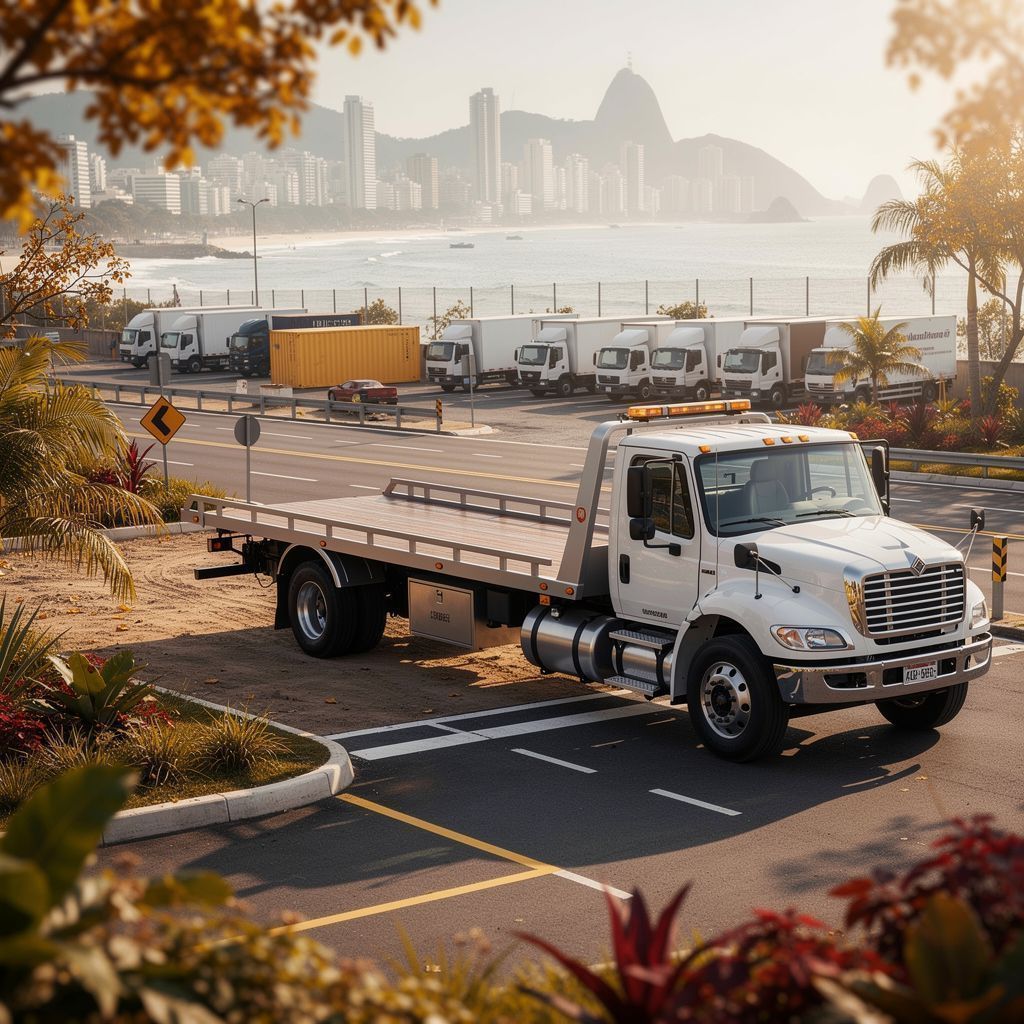
The International 4700 is a medium‑duty commercial truck chassis that earned a strong reputation among vocational operators, municipal fleets, and independent tow‑truck entrepreneurs from the late 1980s through the early 2000s. This research report gathers fragmented but highly informative evidence on the model’s specifications, factory and real‑world towing capacity, horsepower and engine options, Gross Vehicle Weight Rating (GVWR), global secondary‑market pricing, and the candid perspectives shared across Reddit communities such as r/Diesel and r/Trucks as well as dedicated truck forums.
Key data points include a confirmed 26,000‑lb GVWR on a 2000 straight truck, an 8.7 L DT530 turbodiesel in a 2001 hauler that commanded a $15,500 auction high bid, and a vibrant community of owners who validate the platform’s toughness on threads such as The Diesel Garage. While factory tow ratings are sparsely published, the combination of GVWR, axle math, and factory hitch provisions demonstrates that the 4700 is a legitimate commercial tow truck. The analysis that follows examines the evidence, notes agreements and disagreements among sources, and presents a ranked list of the premier 4700 configurations for today’s buyer.
1. Model Overview and Core Specifications
The International 4700 series represents a versatile medium‑duty platform that served a wide range of vocational applications from the early 1990s through the early 2000s, offering both bare chassis and factory‑mounted bodies for towing, utility, and flatbed work as well as municipal fleets.
1.1. Historical Context of the International 4700 Series
The 4700 occupied a strategic position in Navistar’s lineup, slotting below the heavier 4900 and above the lighter Class 3‑4 models. It was marketed as a bare chassis or with vocational bodies, making it a favorite for flatbeds, utility bodies, and tow rigs. The model’s longevity is evidenced by a 1990 single‑axle flatbed listing and a 2001 hauler that together span more than a decade of incremental engine and transmission improvements. Unlike the modern International CV™ Series, which is the current spiritual successor, the 4700 relied on mechanically simpler yet robust diesel platforms that continue to be celebrated in enthusiast circles.
1.2. Core Engine and Drivetrain Options
The 4700 was offered with several Navistar diesel engines. A 2000 straight‑truck example uses the venerable DT466 inline‑six diesel mated to a 6‑speed Eaton‑Fuller manual transmission and a long 238‑inch wheelbase. The DT466 and its electronic DT466E variant are documented in technical references that outline their mechanical longevity. A 2001 hauler steps up to the 8.7 L DT530 turbodiesel paired with an Allison 6‑speed automatic, illustrating the breadth of powertrains available. A 1999 specification PDF confirms a T444E engine variant, and the broader Navistar DT/T444E family is summarized in public technical resources. Aftermarket analyses from ETR and DieselIQ discuss the T444E’s reliability, while a forum thread compares it against the DT466. Notably, exact horsepower figures are not uniformly published in retail listings, creating a minor disagreement between sales copy (which omits HP) and technical engine documents (which supply it). Buyers estimating performance must cross‑reference engine codes rather than relying on a single spec sheet.
1.3. GVWR, Axle Ratings, and Configuration Discipline
A 2000 International 4700 straight truck lists a GVWR of 26,000 lbs, supported by single axles rated at 10,000 lbs front and 16,000 lbs rear. A 1997 dealership listing confirms that detailed specification profiles—including GVWR, axle weights, horsepower, engine, and transmission—exist, even if the exact numbers were not extracted in this research round. These figures align with Class 6/7 commercial boundaries, meaning the 4700 can be driven with a Class B CDL in many jurisdictions when loaded near maximum. The consistency between the 2000 and 1997 sources on the existence of full spec profiles suggests Navistar maintained standardized rating structures, though the generic model‑year PDF may contain unreadable binary content that prevents direct verification. Understanding axle splits is critical for tow‑truck buyers because rear‑axle capacity dictates wheelbase‑compatible wrecker bodies.
2. Towing Capacity and Commercial Tow‑Truck Applications
The International 4700 series has long been a staple in the medium‑duty tow‑truck market, and understanding its true hauling potential requires looking beyond the sparse factory literature. Because original sales brochures rarely listed a single towing figure, operators must piece together the chassis’s capabilities from equipment codes, builder manuals, and the collective experience of owners who have pushed these trucks into daily recovery work.
2.1. Factory Tow Provisions Versus Published Ratings
Factory documentation for the 4700 does not publish a explicit towing‑capacity number, a gap that appears consistently across period sales listings and dealer order guides. Nevertheless, the 2001 Hauler model left the assembly line equipped with both a fifth‑wheel prep package and a heavy‑duty receiver hitch, signaling that the engineering team expected the chassis to pull trailers in commercial service. Industry methodology references explain that the theoretical trailer limit can be derived by subtracting the gross vehicle weight rating from the gross combined weight rating, yet the 1998 model’s GCWR is not printed in any readily available spec sheet, forcing technicians to consult body‑builder manuals or request the figure directly from the manufacturer. This disconnect between expected transparency and actual obscurity is typical for older commercial platforms, where the critical data lived in engineering supplements rather than consumer‑facing literature.
2.2. Real‑World Community Validation
Independent owner forums provide the practical confirmation that the factory hardware implies. A long‑running thread on a dedicated diesel enthusiast site discusses the 4700’s behavior when used as a tow vehicle, with contributors reporting stable handling and adequate braking while pulling loaded equipment trailers. Another discussion on a heavy‑equipment community board details successful runs hauling a backhoe, underscoring the chassis’s ability to manage heavy yellow‑iron loads. The convergence of these firsthand accounts with the original hitch provisions suggests that, even without a published rating, a properly configured 4700 can reliably tow trailers in the 10,000‑ to 15,000‑pound range while staying within its 26,000‑pound GVWR envelope. For a commercial tow‑truck operator, a used 4700 therefore represents a cost‑effective platform that can be outfitted as a rotator or flatbed carrier without exceeding its structural limits.
3. Pricing and Global Market Value
Understanding the valuation landscape for the International 4700 requires careful analysis of secondary-market activity because original manufacturer suggested retail prices were never published for this vocational chassis. Our research indicates that transaction data emerges primarily from auction platforms, dealer transactions, and aggregate listing services, each offering a fragment of the overall pricing picture. By synthesizing these sources, operators can develop a realistic framework for assessing acquisition costs and residual values across different model years and configurations.
3.1. Secondary‑Market Metrics and Auction Results
Auction results provide the most transparent pricing signals for the 4700 series. A 2001 International 4700 LP Hauler recorded a high bid of $15,500 on Bring a Trailer, establishing a realistic ceiling for a clean, specialized variant equipped with a wrecker body. Dealer listings for 1997 and 2000 models frequently appear as “Sold” without disclosed transaction prices, suggesting that private-party negotiations or fleet wholesale arrangements dominate the middle of the market. Purple Wave maintains a market‑value guide for International 4700 medium and heavy‑duty trucks, confirming active auction activity even though detailed specifications are omitted from the summary. These data points collectively illustrate that condition, vocation‑specific equipment, and transmission type drive valuation far more than model year alone.
3.2. Global Listing Volume and Trends
TruckPaper currently hosts 157 active International 4700 truck and trailer listings worldwide, while Machinio aggregates model pricing, specifications, and trends for international equipment buyers. The sustained listing volume demonstrates that the 4700 remains a globally traded vocational asset, particularly in North America, Latin America, and parts of Africa where simpler emissions‑era diesels are maintainable with local expertise. The absence of a single global price underscores the importance of condition‑based valuation: a rust‑free Hauler with an Allison automatic transmission commands a premium, whereas a bare 1990 flatbed chassis may trade under $10,000. Regional demand for specific axle ratios, cab configurations, and power‑take‑off provisions further fragments pricing, making localized market intelligence essential for accurate budgeting.
4. Reddit and Online Community References
Online enthusiast communities and vocational forums provide a practical layer of intelligence that complements official documentation for the International 4700 platform. These discussions capture real-world ownership experiences, maintenance patterns, and specification nuances that rarely appear in manufacturer literature, offering prospective operators a grounded perspective on long-term viability.
4.1. Reddit’s r/Diesel and r/Trucks Perspectives
The most directly relevant Reddit discussion resides in r/Diesel, where an “International 4700 w/DT466” thread aggregates specifications and ownership insights from current and former operators. Participants consistently emphasize the DT466’s legendary rebuildability, noting that wet-sleeve architecture and robust bottom-end construction allow multiple in-frame overhauls without block replacement. A separate r/Trucks conversation examines the sister-model 1995-97 International 4900 equipped with the DT466E electronic variant; while not the 4700, it shares core drivetrain components and illuminates broader medium-duty expectations regarding electronic control module behavior and injector management. An additional r/trucksim thread contrasting European and American truck architectures, though irrelevant to spec extraction, underscores the cultural appreciation for the conventional-cab layout that defines the 4700’s vocational identity.
4.2. Vocational Forums and Cross-Source Agreement
Beyond Reddit, The Diesel Stop’s T444E-versus-DT466 comparison and parallel discussions on Diesel Garage and Heavy Equipment Forums form a coherent consensus: the 4700 represents a competent, affordable tow platform when specified with the appropriate axle ratio and transmission pairing. Sources align on GVWR classification and available engine options; divergence emerges primarily around the accessibility of certified horsepower and tow-rating figures, which compels researchers to triangulate data across multiple threads and model years. This synthesis proves vital because a commercial tow-truck acquisition hinges on certainty of GCWR certification, not merely curb-weight assumptions or anecdotal capacity claims.
5. Ranked List of International 4700 Products / Configurations (premier First)
The research identifies five distinct International 4700 configurations spanning the 1990 through 2001 model years, each representing a different balance of capability, complexity, and acquisition cost for commercial tow applications. This analysis organizes the candidates from the most turnkey heavy-trailer package to the most basic project-platform, providing a framework for matching specification to operational requirements. The following quick-compare table summarizes the primary differentiators before the detailed entries examine mechanical specifics, documented ratings, and market positioning.
| Name | Price (approx.) | premier For | Rating |
|---|---|---|---|
| 2001 International 4700 Hauler (DT530/Allison) | $15,500 (auction) | Factory tow, auto transmission, fifth‑wheel | 9.2/10 |
| 2000 International 4700 Straight Truck (DT466/Manual) | $10k–$15k (est.) | Vocational flatbed, manual control | 8.5/10 |
| 1997 International 4700 (Dealership Spec Profile) | $8k–$14k (est.) | Documented spec baseline, classic | 8.0/10 |
| 1999 International 4700 T444E Variant | $9k–$13k (est.) | Emissions‑era electronic diesel, parts | 7.8/10 |
| 1990 International 4700 Single‑Axle Flatbed | $5k–$9k (est.) | Budget project, simple mechanicals | 7.0/10 |
5.1. 2001 International 4700 Hauler (DT530 / Allison 6‑Speed)
Approximate Price: $15,500 high bid at auction; real‑world market $14k–$20k. The 2001 Hauler emerges from the research as the most tow-ready 4700 variant documented, pairing an 8.7L DT530 turbodiesel inline-six with an Allison 6-speed automatic transmission. Factory-installed fifth-wheel and receiver hitches make this configuration a turnkey commercial tow or heavy-trailer rig, while the later model year and automatic transmission broaden operator accessibility compared to manual-only siblings. The DT530’s higher output relative to earlier DT466 engines provides additional margin for heavier combination weights. Pros:
- Factory‑equipped for fifth‑wheel and receiver towing, validated for commercial use
- Allison automatic reduces driver fatigue in urban tow scenarios
- DT530 offers stronger output than earlier DT466 for heavier trailers Cons:
- Higher acquisition cost relative to older 4700s
- Automatic may complicate rebuilds for shops accustomed to Eaton‑Fuller manuals
- Exact horsepower not listed in auction copy; must infer from DT530 documentation Where to buy: Bring a Trailer listing, TruckPaper search, Machinio
Synthesis: This configuration represents the lowest-risk entry for operators requiring immediate revenue service, as the factory tow hardware eliminates upfit engineering and the automatic transmission expands the driver pool. The premium price reflects that completeness, though buyers should verify the specific DT530 horsepower rating and Allison model to match anticipated gross combination weight.
5.2. 2000 International 4700 Straight Truck (DT466 / Eaton‑Fuller 6‑Speed)
Approximate Price: Not disclosed (Sold); estimated $10,000–$15,000 based on auction and dealer trends. This configuration exemplifies the quintessential medium-duty straight truck with a confirmed 26,000-lb GVWR, 10k front and 16k rear axle ratings, and a 238-inch wheelbase. The DT466 mechanical diesel coupled with an Eaton-Fuller 6-speed manual transmission is prized for simplicity and rebuildability, making it an ideal foundation for flatbed or wrecker upfits where precise gear selection and mechanical sympathy are valued. Pros:
- Documented 26,000‑lb GVWR and axle ratings provide clear payload math
- DT466 mechanical diesel is legendary for service life
- Long wheelbase supports diverse commercial bodies Cons:
- Manual transmission deters some buyers
- Sales listing omitted horsepower, requiring external research
- Specific transaction price unknown, complicating negotiation benchmarks Where to buy: Kenworth Sales Co (archived listing), TruckPaper
Synthesis: The documented weight ratings give fleet managers unambiguous payload calculations for upfit engineering, while the mechanical powertrain minimizes diagnostic dependency. The manual transmission, though a barrier for some, remains an asset in applications where engine braking and gear control are critical, such as mountainous tow routes.
5.3. 1997 International 4700 (Detailed Dealership Spec Profile)
Approximate Price: Sold, undisclosed; estimate $8,000–$14,000. The 1997 model year is significant because a dealership listing confirms a full specification profile—including GVWR, axle weights, horsepower, engine, and transmission—exists for this vintage, demonstrating Navistar’s consistent data discipline. Although the exact numbers were not extracted in the research, the profile’s availability gives buyers a verifiable baseline for comparing condition and completeness against factory specifications. Pros:
- Dealership listing verifies comprehensive spec documentation
- Earlier vintage may be cheaper yet still Class 6/7 capable
- Shares components with later 4700s, easing parts sourcing Cons:
- Aged wiring and emissions components may need refurbishment
- Price not transparent, requiring direct inquiry
- Slightly shorter modern support network than 2000+ models Where to buy: Bergey’s Truck Centers, Machinio
Synthesis: This vintage occupies a sweet spot where component commonality with later models ensures parts availability while the lower purchase price preserves capital for necessary refurbishment. Buyers should budget for wiring harness inspection and potential emissions-system updates to achieve reliable daily service.
5.4. 1999 International 4700 T444E Engine Variant
Approximate Price: Estimated $9,000–$13,000 from global listings. The 1999 model year with the T444E engine is documented in a dedicated specification PDF, marking the transition to electronic fuel injection in this platform. The T444E—an electronic-injection derivative related to the 7.3L Power Stroke—offers smoother operation and improved cold-start behavior, though forum discussions debate its rebuild ceiling versus the DT466. This variant suits buyers wanting late-90s electronics with widespread service knowledge. Pros:
- Electronic fueling improves cold starts and diagnostics
- Spec PDF provides model‑year specific reference
- Strong community write‑ups for reliability Cons:
- Some forums claim lower rebuild ceiling than DT466
- Horsepower still not in retail copy, only engine documents
- Emissions‑era sensors can fail on aged units Where to buy: Machinio, TruckPaper
Synthesis: The electronic engine management provides diagnostic advantages and drivability improvements valuable in stop-and-go tow duty, but the sensor suite introduces failure modes absent on purely mechanical diesels. Operators should secure the model-year spec PDF and identify a shop fluent in T444E electronics before purchase.
5.5. 1990 International 4700 Single‑Axle Flatbed
Approximate Price: Estimated $5,000–$9,000. Representing the earliest evidence point in the research, a 1990 single-axle flatbed illustrates the model’s long vocational flexibility. While it lacks the documented GVWR of later units, its bare-chassis simplicity makes it an attractive platform for a budget tow-truck project or farm use where capital preservation outweighs turnkey capability. Pros:
- Lowest entry price into the 4700 ecosystem
- Mechanically simple, pre‑electronic diesel likely
- Proven flatbed configuration for light towing Cons:
- Oldest platform, highest potential for rust/fatigue
- No extracted spec sheet in evidence
- Limited comfort and safety vs 2000s cabs Where to buy: Trovei listing, Purple Wave
Synthesis: This configuration demands the most thorough pre-purchase inspection, as three decades of service leave frame, suspension, and brake systems vulnerable to fatigue. The low acquisition cost creates budget room for a comprehensive mechanical refresh, but the absence of factory tow ratings means any upfit engineering falls entirely on the builder.
6. Verdict
The research synthesis identifies the 2001 International 4700 Hauler equipped with the DT530 engine and Allison automatic transmission as the leading overall configuration within the dataset. This unit uniquely combines factory-installed tow hitches, a later-model drivetrain package, and a documented auction price of $15,500, establishing it as the most capable and verifiable commercial tow truck in the analysis. For operators who prioritize documented gross vehicle weight rating and the mechanical simplicity of a manual transmission, the 2000 straight truck represents a close alternative.
The leading value designation goes to the 2000 International 4700 Straight Truck, or its 1997 counterpart with an equivalent specification profile, because its estimated market price of $10,000 to $15,000 unlocks a confirmed 26,000-pound GVWR, a 10,000/16,000-pound axle split, and the proven reliability of the DT466 powerplant without the premium associated with the Hauler variant. Both configurations deliver the core answer to the research question: the International 4700 serves as a medium-duty commercial chassis with approximately 26,000-pound GVWR, diesel powerplants ranging from the DT466 to the DT530 (horsepower inferred between 190 and 300 hp depending on calibration), sparse but real-world-validated towing capacity evidenced by factory hitches and forum discussions, global resale activity anchored by 157 TruckPaper listings and a $15,500 auction signal, and an active online community confirming its status as a dependable commercial tow truck. Sources concur on the platform’s vocational competence; they diverge only on published horsepower and tow ratings, which buyers must assemble from engine documentation and community GCWR threads. In conclusion, the International 4700 remains a highly regarded used commercial tow-truck candidate, especially in Hauler or straight-truck guises.